
Paid online consultations are available by appointment. For booking, please contact us via Whatsapp.

In short
What Is the Treatment for a Brain Tumor?
Doctors treat brain tumors with surgery, radiation therapy and medicines, often in combination. For most tumors, surgery comes first: it removes the mass, relieves pressure and provides tissue for an exact diagnosis. The tumor's type and grade then shape the rest of the plan.
For example, complete removal can cure many meningiomas. In contrast, brain cancers such as glioblastoma grow into healthy tissue, so radiation and chemotherapy usually follow surgery.
Doctors also sort primary tumors by the cells they come from. Glial tumors, such as gliomas, start in the brain's support cells. Non-glial tumors, however, grow from the coverings, nerves, glands or blood vessels, as meningiomas do.
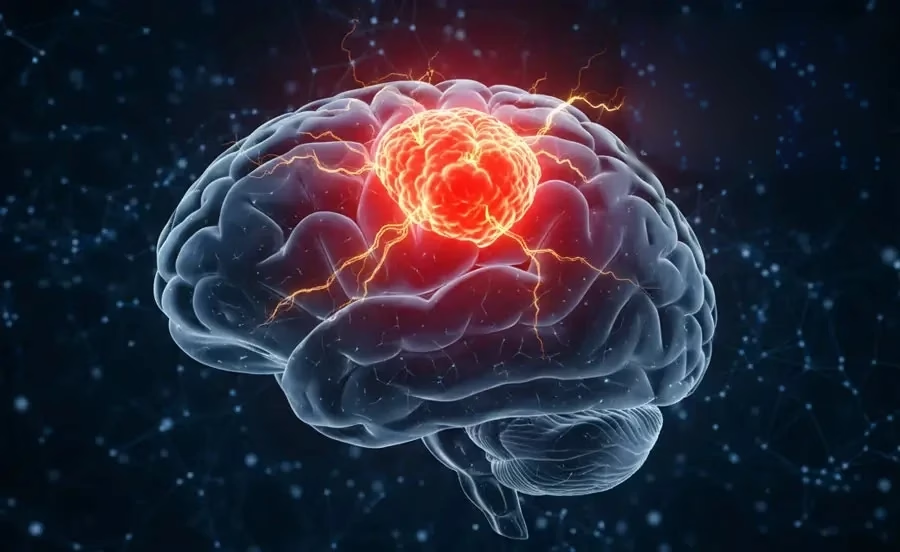
What is a brain tumor?
A brain tumor is a mass of abnormal cells inside the skull. The skull cannot expand, so even a benign tumor can press on vital areas and cause symptoms.
- PrimaryStarts in the brain or its coverings
- SecondarySpreads from cancer elsewhere; more common than primary tumors
- BenignGrows slowly, usually with a clear border
- MalignantGrows fast and invades nearby brain tissue
- Grade 1 to 4The WHO scale of how aggressive the cells are
- 120+ typesEach type follows its own treatment plan
Which Brain Tumor Were You Told You Have?
First, find the name on your MRI report or pathology result. Then, each link opens a detailed guide to that tumor and its treatment.
- 01Frontal lobe tumorPersonality change, seizures or weakness from a tumor behind the forehead
- 02MeningiomaA usually benign tumor that grows from the brain's covering
- 03Glioblastoma or another brain cancerMalignant tumors, their grades and the surgical options
- 04Metastatic brain tumorCancer that spread to the brain from the lung, breast, skin or kidney
- 05Insular gliomaA glioma deep inside the brain, often removed with awake surgery
- 06Skull base tumorAcoustic neuroma, pituitary tumor, chordoma and similar growths
- 07CraniopharyngiomaA tumor near the pituitary gland that can affect vision and hormones
- 08Glomus jugulare tumorA skull base tumor that often causes a pulsing sound in one ear
- 09Spinal cord tumorTumors inside or around the spinal cord and spine
No diagnosis yet? Then start with the guide to brain tumour symptoms.
Brain Tumor Treatment Options
In fact, most patients receive more than one treatment. Each option has a clear role, and a tumor board then decides the order.
The goal depends on the tumor. For a benign tumor, for example, the aim is often a cure through complete removal. For a malignant one, however, surgery removes what it safely can, and other treatments target the rest.
Surgery
Surgery is the first treatment for most brain tumors. In a craniotomy, the surgeon first opens a small window in the skull. Then, the tumor comes out, and the bone returns to its place.
- Can cure tumors with a clear border, such as many meningiomas
- Relieves pressure, so headaches and other symptoms often ease quickly
- Provides tissue for the final diagnosis and gene tests
- Takes only a small sample through a needle (biopsy) when removal carries too much risk
Radiosurgery
Stereotactic radiosurgery focuses many thin radiation beams on the tumor, usually in one session. Despite its name, it involves no incision. Doctors especially use it for small metastases, acoustic neuromas and small meningiomas.
Radiotherapy
Radiotherapy treats tumor cells that surgery cannot reach. Generally, patients attend short daily sessions, Monday to Friday, over several weeks. Moreover, in selected cases proton therapy spares more of the healthy tissue nearby.
Chemotherapy and targeted drugs
Chemotherapy, often temozolomide tablets, is standard for many gliomas. In addition, targeted drugs act on specific gene changes in some tumors. Meanwhile, steroids reduce the swelling around a tumor.
Watch and scan
Some small, slow-growing tumors cause no symptoms at all. In these cases, regular MRI scans can be the safest first step, and treatment starts only if the tumor grows.
Can surgeons remove every brain tumor?
No. A tumor with a clear border, such as a meningioma, can often come out completely. In contrast, a tumor inside speech or movement areas may allow only partial removal. Radiation or medicines then treat the rest.
When does treatment start without surgery?
- Primary CNS lymphoma: a biopsy confirms it, then chemotherapy treats it.
- Several small metastases: radiosurgery can treat them in one plan.
- Small tumors without symptoms: observation or radiosurgery comes first.
- Deep tumors in vital areas: a biopsy guides radiation and medicines.
Questions at this stage
Can a brain tumor be treated without surgery?
Sometimes. For example, radiosurgery, radiotherapy and chemotherapy can control certain tumors without an operation. Even so, most patients need at least a biopsy, because only tissue confirms the exact diagnosis.
What is the best treatment for a brain tumor?
No single treatment suits every tumor. Therefore, the plan follows the tumor's type, grade and position, and your health. For most tumors, it begins with the safest possible surgery.
Do brain tumors come back after treatment?
Some do. Benign tumors that come out completely rarely return. Malignant tumors return more often, so follow-up MRI scans continue for years.
When Should You See a Neurosurgeon?
See a neurosurgeon as soon as a scan shows a mass in the brain. Early advice also keeps more options open, even when the tumor looks small.
Generally, symptoms depend on where the tumor sits. They include signs such as worsening headaches, seizures, nausea, vision changes and weakness on one side. Our guide to brain tumour symptoms explains each sign and its pattern.
Book a consultation if:
- An MRI or CT report mentions a mass, lesion or tumor
- A known tumor grows on a follow-up scan
- Headaches, vision or balance keep getting worse
- You want a surgeon's view before choosing a treatment
Seek emergency care for:
- A sudden, extremely painful headache
- A first seizure
- Weakness, speech loss or confusion that appears or worsens quickly
- Repeated vomiting with headache or drowsiness
In an emergency, a CT scan gives a quick first answer. Next, an MRI with contrast shows the tumor in detail and guides the treatment plan.
Types of Brain Tumors and Their Treatment
In fact, doctors know more than 120 types of brain and spinal cord tumors. The common ones below show how the type changes the plan, especially the role of surgery.
| Tumor type | Group | Usual behavior | Typical treatment |
|---|---|---|---|
| Glioblastoma | Glial | Malignant, grade 4; the most common malignant brain tumor in adults | Maximal safe surgery, then radiotherapy with temozolomide |
| Insular glioma | Glial | Low or high grade; lies deep, close to speech and movement pathways | Awake surgery with brain mapping, then further treatment by grade |
| Frontal lobe tumor | Glial or non-glial | Any tumor behind the forehead; often changes personality first | Surgery with mapping of speech and movement areas |
| Meningioma | Non-glial | Usually benign, grade 1; grows from the brain's covering | Surgery; observation or radiosurgery for small tumors |
| Brain metastasis | Secondary | Spread from cancer elsewhere; the most common brain tumor in adults | Surgery for a large single tumor, radiosurgery for small ones |
| Acoustic neuroma and pituitary tumor | Non-glial | Usually benign skull base tumors; affect hearing, vision or hormones | Observation, radiosurgery, microsurgery or surgery through the nose |
| Craniopharyngioma | Non-glial | Benign but sticky; sits near the pituitary gland and the optic nerves | Surgery through the nose or the skull, sometimes radiotherapy |
| Glomus jugulare tumor | Non-glial | Usually benign paraganglioma at the skull base | Microsurgery, radiosurgery or observation |
| Medulloblastoma | Embryonal | Malignant; grows in the cerebellum, mostly in children | Surgery, then radiotherapy and chemotherapy |
| Spinal cord tumor | Glial or non-glial | Grows inside or around the spinal cord; often causes back pain and numbness | Microsurgery with nerve monitoring |
What is the difference between glial and non-glial brain tumors?
Glial tumors start in the brain's own support cells and often grow into nearby tissue. Non-glial tumors start in other structures, such as the coverings, nerves or glands, and many have a clear border. As a result, surgeons can often remove non-glial tumors completely.
How Modern Brain Tumor Surgery Protects the Brain
Brain tumor surgery aims to remove as much tumor as possible without harming speech, movement or vision. Several technologies make this balance safer.
First, before each craniotomy, Prof. Albayrak plans the route on a neuronavigation system. As a result, the incision and bone opening stay as small as the tumor allows. Finally, at the end of surgery, mini titanium plates fix the bone back in place.
- Neuronavigation works like GPS for the brain and shows the tumor's position during surgery.
- Intraoperative neuromonitoring warns the team when a movement or speech pathway is close.
- Awake craniotomy lets the patient talk during brain mapping when the tumor lies near language areas.
- Fluorescence guidance makes some high-grade tumors glow under special light.
- Endoscopic surgery through the nose reaches pituitary and other skull base tumors without a skin incision.
- Laser ablation (LITT) heats and destroys selected deep tumors through a small hole in the skull.
For malignant tumors, these tools matter even more. For this reason, our guide to brain cancer surgery explains when surgeons choose each one.
| Option | How it works | Best suited for | Recovery |
|---|---|---|---|
| Craniotomy | Removes the tumor through a small window in the skull | Most tumors that press on the brain or need a diagnosis | Hospital stay usually 4-6 days; daily activities within weeks |
| Endoscopic surgery through the nose | Reaches the tumor through the nasal passage | Pituitary tumors, craniopharyngioma, some skull base tumors | No visible scar; often a shorter stay |
| Stereotactic biopsy | Takes a small sample with a thin needle | Deep tumors and suspected lymphoma | Usually a short stay |
| Laser ablation (LITT) | Heats the tumor with a laser probe under MRI guidance | Selected deep or recurring tumors | Small opening; usually a short stay |
| Radiosurgery | Focuses radiation beams in one to five sessions | Small metastases, acoustic neuromas, small meningiomas | Usually no hospital stay |
| Radiotherapy | Gives radiation in daily sessions over several weeks | Tumor cells left after surgery; high-grade gliomas | Tiredness during and after the course |
| Chemotherapy and targeted drugs | Tablets or infusions in cycles | Gliomas, lymphoma, some metastases | Given over months, mostly as an outpatient |
How long does brain tumor surgery take?
Many brain tumor operations take 3 to 4 hours. However, complex skull base surgery can last 12 hours or more. Overall, the tumor's size, position and blood supply set the time.
Coming to Istanbul for Brain Tumor Treatment
So far, patients from 64 countries have come to Istanbul for surgery with Prof. Albayrak. The clinical team also plans each step of the visit with you.
Travelling from abroad? Read the guide to planning brain surgery in Turkey for flights, insurance and length of stay.
- Request an appointment with the form on this page.
- The clinical team contacts you to plan dates, travel and hospital admission.
- Bring earlier reports and scan discs to your first consultation in Istanbul.
- After the examination and any new scans, you and the surgeon agree on the plan.
- After a craniotomy, expect a hospital stay of about 4-8 days, then a check before you fly.
What affects the cost of brain tumor surgery?
The cost depends on the operation and on what follows it. For this reason, the clinical team explains each item after the consultation.
- The tumor's type, size and position, which set the length of surgery
- Technologies such as neuromonitoring or awake mapping
- The number of days in intensive care and on the ward
- Pathology and gene tests on the tumor tissue
- Radiotherapy or chemotherapy after surgery
- Travel, accommodation and a companion's stay
Your treatment path
From Diagnosis to Recovery
Four steps take you from the first scan to recovery. At each step, the team answers one question about your tumor.
STEP 01
Diagnosis: what is the tumor?
First, a neurological exam checks strength, reflexes, vision and speech. Then, an MRI with contrast shows the tumor's size, position and the swelling around it.
- CT scan: fast in an emergency and good for bone and bleeding.
- Advanced MRI, such as perfusion and spectroscopy, estimates how aggressive the tumor is.
- Pathology after surgery or biopsy gives the final diagnosis, including gene markers such as IDH.
Can a CT scan show a brain tumor?
Often, yes. For example, a CT scan can show a mass, bleeding or swelling within minutes. However, an MRI with contrast shows the tumor and the brain around it in far more detail, so surgeons plan with MRI.
STEP 02
Planning: which route is safest?
Next, the team maps the tumor against the brain's vital areas. For example, functional MRI shows speech and movement areas, and tractography (DTI) shows nerve pathways.
A tumor board of neurosurgeons, oncologists, radiologists and pathologists also discusses complex cases. The board then agrees on the order of treatments and the goal of surgery.
STEP 03
Surgery: maximal safe removal
On the day of surgery, general anesthesia keeps you asleep, except during awake mapping. Then, the surgeon removes the tumor under the microscope, guided by navigation and monitoring.
Like any operation, brain surgery carries risks. However, the team takes specific steps against each one:
- Brain swelling: steroids before and after surgery lower this risk.
- Seizures: anti-seizure medicines protect you around the operation.
- Bleeding or infection: careful technique and antibiotics keep these rare.
- New weakness or speech problems: mapping lowers the risk, and many such problems improve.
Is brain tumor surgery dangerous?
Every brain operation carries some risk. However, serious complications are not common, and your surgeon weighs them against the risk of leaving the tumor in place. Also, ask about the specific risks for your tumor's position.
STEP 04
Recovery: Prof. Albayrak's usual routine
Recovery starts in intensive care. In Prof. Albayrak's practice, patients usually spend 1-2 days there, then 3-6 days on the ward for wound care and treatment.
- Day 1 after surgery: most patients stand up and walk with help.
- Day 3: most patients can take a shower.
- Following weeks: a gradual return to daily life as the wound heals.
- Pathology result: decides whether radiotherapy or chemotherapy follows.
- Follow-up MRI scans: track the result at regular intervals.
When can international patients fly home after brain tumor surgery?
Your surgeon decides this at the check after discharge. Generally, you can fly once the wound heals well and your condition stays stable. Further treatment, such as radiotherapy, can often continue in your home country.
Your Brain Tumor Surgeon in Istanbul
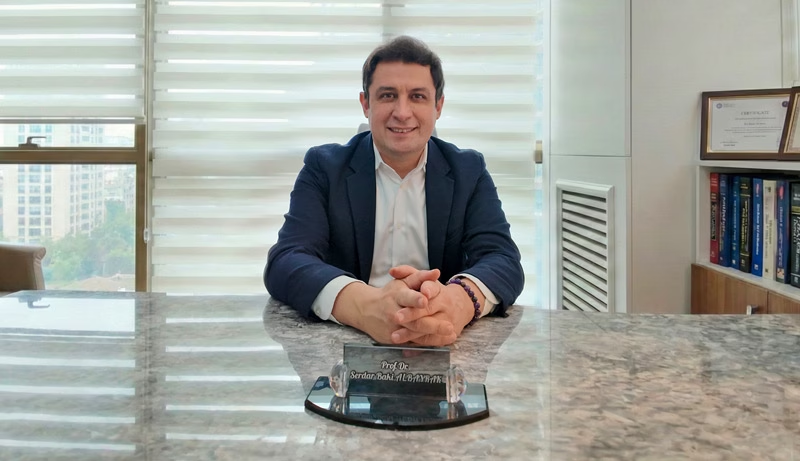
Prof. Dr. Serdar Baki Albayrak
Neurosurgeon · Brain Tumor and Skull Base Surgery
Prof. Albayrak trained in advanced surgery at Harvard Medical School's Brigham and Women's Hospital. He also completed a clinical fellowship at the University of Helsinki. Today, he treats all kinds of brain tumors in Istanbul, such as meningiomas and glioblastoma.
27+Years
5,000+Operations
64Countries
Figures from Prof. Albayrak's professional profile, September 2026.
Request an AppointmentFrequently Asked Questions
What is the success rate of brain tumor surgery?
It depends on the tumor type more than on the operation itself. For example, complete removal can cure many meningiomas, while glioblastoma needs further treatment after surgery. Therefore, your surgeon estimates your outlook once the pathology result is ready.
Does brain tumor surgery affect memory or personality?
It can, usually for a short time. For example, swelling after surgery may affect memory or mood for a few weeks. However, lasting changes depend mostly on where the tumor was.
Is brain tumor surgery painful?
The brain itself does not feel pain. After surgery, the scalp wound feels sore for some days, and regular painkillers control this well.
Which doctor treats brain tumors?
A neurosurgeon leads surgical treatment, together with neuro-oncologists, radiation oncologists and pathologists. In Istanbul, Prof. Dr. Serdar Baki Albayrak operates on all types of brain tumors.
Prof. Albayrak's Published Research
Peer-reviewed articles and book chapters written or co-written by Prof. Dr. Serdar Baki Albayrak on brain tumor surgery and research. Each link opens the record on PubMed or at the publisher. The full list of his 33 publications is on his profile.
- Intra-operative magnetic resonance imaging in neurosurgery
- The Origin of Meningiomas
- Microsurgical management of pineal region lesions: personal experience with 119 patients
- Microsurgical treatment of third ventricular colloid cysts by interhemispheric far lateral transcallosal approach: experience of 134 patients
- The effects of tibolone on the human primary glioblastoma multiforme cell culture and the rat C6 glioma model
- Cerebral metastasis of small-cell lung carcinoma mimicking a supratentorial cystic astrocytoma
Public health information
- National Cancer Institute. Adult Central Nervous System Tumors Treatment (PDQ), patient version.
- National Institute of Neurological Disorders and Stroke. Brain and Spinal Cord Tumors.
This page gives general medical information and does not replace a consultation. Diagnosis and treatment decisions need an examination by your own doctor.
Plan Your Brain Tumor Treatment in Istanbul
Request an appointment with Prof. Dr. Serdar Baki Albayrak. The clinical team then helps you plan the visit, from the first consultation to the flight home.
Request an Appointment