Brain Tumour Symptoms: Early Signs and When to Worry
Worsening headaches, a first seizure or a slow change in personality can signal a brain tumour. Most such signs have other causes, so the pattern matters more than any one symptom.
Career figures from Prof. Albayrak's professional profile, updated September 2026.
Request an Appointment
Prof. Albayrak's team will contact you to plan your visit.
Your details are used only to arrange your appointment.
In short
What Are the Symptoms of a Brain Tumour?
The most common brain tumour symptoms are headaches, seizures, nausea or vomiting, vision problems, weakness and changes in memory or behaviour. They come from a growth that presses on or damages brain tissue. As a result, they depend mostly on where the tumour sits.
Speed matters too. A slow-growing tumour may cause mild changes for months or even years. In contrast, a fast-growing one can cause clear symptoms within weeks.
Most people with these symptoms do not have a brain tumour. For example, a headache on its own rarely points to one. However, symptoms that persist, worsen or appear together deserve a doctor's check.
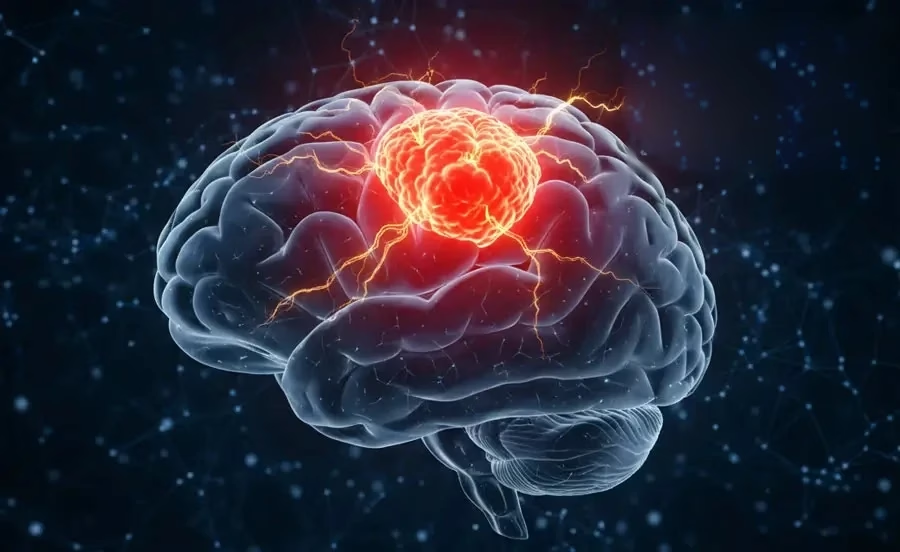
A growing tumour presses on nearby brain tissue.
The six most common symptoms
According to the American Cancer Society, about half of people with brain tumours have headaches. Up to half also have a seizure at some point. Therefore, doctors take a first seizure seriously.
HeadachesOften new, and worse over weeks
SeizuresFrom jerking to brief staring spells
Nausea and vomitingOften in the morning, with headache
Vision changesBlurred or double vision, lost side vision
Weakness or numbnessUsually on one side of the body
Memory and moodConfusion, poor focus, personality change
Start with what you noticed
Which Symptom Brought You Here?
First, pick the change you noticed. Then, each link explains when that symptom may point to a brain tumour.
Symptoms fall into two groups. First, general symptoms come from rising pressure inside the skull. Second, local symptoms reflect the job of the affected area.
Early signs are often mild. For example, a tumour may first show itself as tiredness, a subtle personality change or a single seizure. As a result, many people only connect the signs in hindsight.
Headaches
Headaches are common with brain tumours, yet most headaches have nothing to do with a tumour. Warning features include:
New headaches in someone who rarely had them
Headaches that get worse over days or weeks
Pain that is worse on waking or wakes you at night
Pain that grows with coughing, sneezing or bending
Headaches with vomiting, weakness or vision changes
Seizures
A seizure is often the first sign, especially with slow-growing tumours. However, seizures do not always mean shaking.
Twitching or jerking of one hand, arm or side of the face
A strange smell, taste or feeling of déjà vu
Staring spells or brief loss of awareness
A full convulsion with loss of consciousness
Therefore, any first seizure in an adult needs a brain scan.
Nausea, vomiting and drowsiness
A growing tumour takes up space inside the closed skull. It can also block the flow of brain fluid. As a result, the pressure inside the head rises.
Nausea or vomiting, often in the morning and with headache
A headache that eases for a while after vomiting
Unusual sleepiness, slowness or confusion
Sickness on its own rarely comes from a brain tumour. In contrast, vomiting with a worsening headache needs prompt medical advice.
Vision, hearing and balance
Blurred or double vision, or glasses that no longer help
Loss of side vision, typical of tumours near the pituitary gland
Hearing loss or ringing in one ear, typical of acoustic neuroma
Dizziness, unsteady walking or clumsy hands
An eye doctor can also spot swelling of the optic nerve, a key pressure sign. In fact, an optician sometimes finds it first during a routine eye test.
Weakness, numbness and speech
A tumour near the brain's movement strip weakens the opposite side of the body. Also, a tumour in a language area can make it hard to find or understand words.
Weakness in an arm or leg on one side
Numbness or tingling on one side
Slurred speech or trouble finding words
Drooping of one side of the face
Memory, mood and personality
Thinking problems are common, and families often notice them first. For example, a person may become apathetic, irritable or careless, or may struggle at work.
These changes are typical of frontal lobe tumours. They develop slowly, so people often mistake them for stress, depression or ageing.
Early signs and later signs
Early: mild headaches, one seizure, tiredness or a subtle personality change.
Later: daily headaches with vomiting, drowsiness, clear weakness or confusion.
Do symptoms come and go?
Yes, especially early on. Seizures come in episodes, and headaches may ease for a few days. Still, with a tumour the overall trend points to slow worsening.
Questions at this stage
What does a brain tumour headache feel like?
It often feels dull and pressing, not throbbing like a migraine. However, the key feature is change: the headache is new and keeps getting worse. It may also feel worst in the morning.
Can a brain tumour cause dizziness?
Yes. For example, tumours in the cerebellum or near the hearing nerve can cause dizziness. On its own, however, dizziness usually comes from the inner ear.
How long can you have a brain tumour without knowing?
Slow-growing tumours, such as many meningiomas, can grow for years without symptoms. In fact, doctors sometimes find them by chance on a scan done for another reason.
Act early
When to See a Doctor About Brain Tumour Symptoms
Most of these symptoms have a harmless cause. Even so, the NHS advises a GP visit for headaches that feel different or keep worsening.
Book a doctor's visit if you have:
Headaches that keep coming back, do not go away or get worse
Headaches that wake you at night or are worse in the morning
Vision changes that new glasses do not fix
Memory or personality changes that others notice
Any new symptom that feels unusual for you and does not settle
Seek emergency care for:
A sudden, extremely painful headache
A first seizure
Sudden weakness, numbness or loss of speech
Confusion, drowsiness or repeated vomiting with headache
In an emergency, call your local emergency number. At a routine visit, the doctor first checks your eyes, balance and reflexes. Next, the doctor decides whether you need a brain scan.
Compare
Brain Tumour Headache vs Migraine and Tension Headache
No single feature proves or rules out a tumour. However, some patterns raise concern, and this table sets them side by side.
Feature
Brain tumour headache
Migraine
Tension-type headache
Pattern over time
New, and steadily worse over weeks
Repeated attacks with normal days between
Comes and goes, often with stress
Timing
Often worse on waking or at night
Attacks last hours to 3 days
Often builds later in the day
How it feels
Dull pressure, sometimes throbbing
Throbbing, often on one side
A tight band around the head
Made worse by
Coughing, sneezing, bending or straining
Light, noise and movement
Stress, poor sleep and posture
Other signs
Vomiting, seizures, weakness, vision or personality change
Aura, nausea, sensitivity to light
Usually none
Painkillers
Help less and less over time
Often help early in an attack
Usually help
Is a headache on one side a sign of a brain tumour?
Rarely on its own. Migraine, for example, often causes one-sided headaches. Even so, a new or worsening one-sided headache needs a check.
By location
Brain Tumour Symptoms by Location
Each part of the brain has its own job. Therefore, a tumour's location predicts its local symptoms better than its type does.
Back pain, numbness or weakness in the limbs, bladder changes
Overall, location explains why the same tumour type causes different symptoms in different people.
Children
Brain Tumour Symptoms in Children
Brain tumours are the most common solid tumours in children and teenagers. Their signs can mimic everyday illnesses, so the pattern matters most.
In school-age children
Morning headaches or vomiting that keep returning
Clumsiness, unsteady walking or a new head tilt
A squint, double vision or unusual eye movements
Falling school performance, tiredness or behaviour change
Early or delayed puberty, or slow growth
In babies and toddlers
A head that grows too fast, with a bulging soft spot
Irritability, poor feeding or weight loss
Delayed development or loss of skills already learned
Repeated vomiting
A child with persistent symptoms, or with several of these signs together, needs a doctor's assessment. Our paediatric neurosurgery page also explains how surgeons treat brain tumours in children.
Are brain tumour symptoms different in children?
Partly. Many childhood tumours grow near the cerebellum, so vomiting and balance problems are common. Babies, on the other hand, may only show a growing head and irritability.
Other causes
Conditions That Cause Similar Symptoms
Many common conditions share these symptoms and are far more likely. For this reason, doctors look at the whole picture.
Common look-alikes
Migraine and tension-type headache
Epilepsy without a tumour
Stroke or mini-stroke, which starts within minutes
Inner ear problems that cause dizziness
Multiple sclerosis, infections or sinus disease
Depression, which can mimic frontal lobe changes
Signs that rarely point to a tumour alone
Eye twitching
Floaters in the eyes
Nosebleeds
Ringing in both ears
Brief dizziness when standing up
Timing also helps to tell them apart. For example, stroke symptoms appear within minutes, but tumour symptoms build up over weeks.
Getting answers
From First Symptom to Diagnosis
Diagnosis usually follows four steps. At each step, the question then becomes more precise.
First, note when each symptom started and what makes it worse. For example, write down headache times, seizures and any vomiting. This record then helps the doctor see a pattern quickly.
ExaminationSTEP 02
Examination: the neurological check
Next, the doctor tests your strength, reflexes, coordination, sensation and speech. An eye check can also reveal swelling of the optic nerve.
Can a GP tell if you have a brain tumour?
A GP cannot confirm a tumour, but a careful examination raises or lowers concern. If warning signs appear, the GP then refers you for a scan or to a specialist.
ScanSTEP 03
Scan: an MRI shows the tumour
An MRI with contrast is the key test. It shows the tumour's size, position and surrounding swelling, so it guides every later decision.
A CT scan is faster and useful in an emergency. However, it shows brain tissue in less detail than MRI.
Prof. Albayrak reviews a brain MRI and explains how a malignant glioma appears on the scan.
Can a brain tumour be missed on an MRI?
It is rare with a contrast MRI. Very small tumours can be hard to see, so doctors repeat the scan if symptoms continue.
SpecialistSTEP 04
Specialist: a plan for treatment
If the scan shows a tumour, a neurosurgeon explains the likely type and the urgency. Next, a biopsy or surgery confirms the exact type and grade.
Treatment options include surgery, radiosurgery, radiotherapy and medicines. For an overview, see brain tumour treatment and surgery. For malignant tumours, also read the guide to brain cancer.
Does a brain tumour always need surgery?
No. Small, slow-growing tumours may only need regular scans, and some respond well to radiosurgery. Your specialist then explains which option fits your tumour.
Your specialist
See a Brain Tumour Specialist in Istanbul
Prof. Dr. Serdar Baki Albayrak
Neurosurgeon · Brain Tumor and Skull Base Surgery
An early specialist opinion saves time and keeps more treatment options open. Prof. Albayrak examines each patient in person and then explains the MRI in plain language.
27+Years
5,000+Operations
64Countries
Figures from Prof. Albayrak's professional profile, September 2026.
The first signs are often a new headache, a seizure or a subtle personality change. Many people also feel unusually tired.
Can a blood test detect a brain tumour?
No. Routine blood tests cannot show a brain tumour, although they check your general health. An MRI scan, however, is the test that finds it.
Are brain tumor symptoms different in women?
Mostly not, because pressure and location cause the same signs in everyone. However, pituitary tumours can change periods or cause milk production from the breasts. Meningiomas also occur more often in women than in men.
Which doctor should I see for brain tumour symptoms?
Start with your GP or family doctor. If tests suggest a tumour, a brain tumour neurosurgeon or a neurologist then takes over.
Prof. Albayrak's Published Research
Peer-reviewed articles and book chapters written or co-written by Prof. Dr. Serdar Baki Albayrak on brain tumors and how they first show themselves. Each link opens the record on PubMed or at the publisher. The full list of his 33 publications is on his profile.
This page gives general medical information and does not replace a consultation. Diagnosis and treatment decisions need an examination by your own doctor.
Talk to a Brain Tumour Specialist
Request an appointment with Prof. Dr. Serdar Baki Albayrak in Istanbul. The clinical team then guides you through every step of the visit.