
Paid online consultations are available by appointment. For booking, please contact us via Whatsapp.

In short
What Is Pediatric Neurosurgery?
Pediatric neurosurgery is surgery of the brain, skull, spine and nerves in children. It covers every age, from newborns to teenagers. It treats many conditions, especially hydrocephalus, craniosynostosis, spina bifida, brain tumors, epilepsy and spasticity.
Children are not small adults. For example, a baby's skull and spine are still growing. Therefore, the surgeon plans each operation around that growth.
Many of these conditions begin before birth, so care often starts in the first days of life. Then, regular check-ups continue into adulthood.
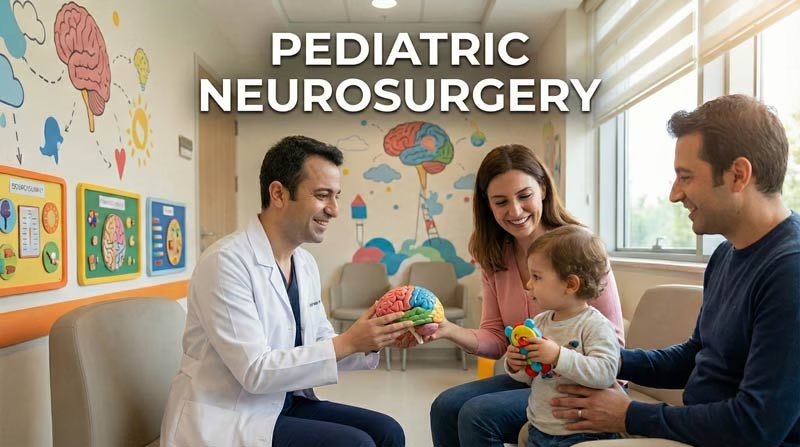
What does a pediatric neurosurgeon do?
A pediatric neurosurgeon diagnoses and operates on problems of a child's nervous system. In addition, they work closely with pediatric neurologists, oncologists, urologists and orthopedic surgeons.
- Brain and skull surgeryTumors, cysts, craniosynostosis and head injury
- Spine and spinal cord surgerySpina bifida, tethered cord and spinal tumors
- Fluid problemsShunts and endoscopic surgery for hydrocephalus
- Seizures and stiffnessEpilepsy and spasticity surgery
- Planning for growthTiming each operation around growth
- Long-term follow-upCheck-ups through childhood and on to adult care
What Did You Notice in Your Child?
First, pick the sign or diagnosis closest to your child's. Then, each line opens the right section on this page or a detailed guide.
- 01A fast-growing head or an unusual head shapeHydrocephalus and craniosynostosis, explained below
- 02A dimple, hairy patch or lump on the lower backClosed spina bifida, tethered cord and split cord
- 03An open sac on the back at birthMyelomeningocele, often found on a pregnancy scan
- 04Morning headaches with vomiting or clumsinessBrain and spinal cord tumors in children
- 05Seizures that continue despite medicinesEpilepsy surgery for drug-resistant seizures
- 06Stiff, tight legs that make walking hardSpasticity surgery, for example in cerebral palsy
Hydrocephalus and Craniosynostosis in Children
Both conditions change the size or shape of a child's head. However, their causes differ, and each needs a different operation.
Hydrocephalus
Hydrocephalus is a build-up of cerebrospinal fluid inside the brain's fluid spaces, the ventricles. As a result, pressure rises on the growing brain. It affects about 1 to 2 in every 1,000 babies.
Common causes include spina bifida, bleeding in premature babies, infection and tumors. In addition, some babies have a narrow fluid channel from birth.
- In babies: a head that grows faster than the growth chart, a tense or bulging soft spot, eyes that turn downward, vomiting, sleepiness or irritability
- In older children: headaches on waking, vomiting, blurred or double vision, balance problems and slipping school performance
Therefore, most children need surgery to drain or bypass the extra fluid. The two main operations are a shunt and an endoscopic third ventriculostomy (ETV).
Shunt or ETV: how do they compare?
A shunt drains fluid away from the brain. In contrast, ETV opens a new path for it inside the brain. So, age and the cause of the blockage guide the choice.
| Question | Shunt (ventriculoperitoneal) | Endoscopic third ventriculostomy (ETV) |
|---|---|---|
| How it works | A thin tube with a valve carries extra fluid from the brain to the belly | A small camera makes an opening in the floor of the third ventricle, so fluid flows around the blockage |
| Best suited to | Most types and causes of hydrocephalus, at any age | Blocked-flow (obstructive) hydrocephalus; in some babies, surgeons add choroid plexus cauterization to lower fluid production |
| Implant | Yes, it stays under the skin, usually for life | No implant |
| Long-term care | A shunt can block or become infected, so some children need a revision | The opening can close again, so check-ups continue |
Craniosynostosis
Craniosynostosis means a seam (suture) between a baby's skull bones closes too early. As a result, the skull grows in the wrong direction and the head changes shape.
- Sagittal, the most common type: a long, narrow head
- Metopic: a pointed, triangular forehead
- Coronal: a forehead that looks flat on one or both sides
- Lambdoid, the rarest type: flattening at the back on one side
- Syndromic: several seams, linked to a genetic condition such as Apert or Crouzon syndrome
However, positional flattening, from lying in one position, is far more common. It does not need surgery, and position changes or a helmet usually help.
Surgery releases the fused seam and reshapes the skull, often together with a craniofacial surgeon. Generally, experts operate between 3 and 8 months of age. For some babies, surgeons offer a smaller endoscopic operation around 3 months, then a helmet.
Questions at this stage
Does a shunt stay in for life?
Usually, yes, most children keep their shunt for life. However, some need a revision if it blocks or gets infected. For that reason, parents learn the warning signs of shunt failure before going home.
Is my baby's flat head craniosynostosis?
Usually not. Positional flattening is common, and it also improves with position changes or a helmet. In contrast, craniosynostosis causes a typical head shape, and a scan confirms it.
Other Conditions Pediatric Neurosurgeons Treat
Each condition below has its own detailed guide, so here you will find a short summary.
Spina bifida and tethered cord
Spina bifida is a gap in the spine that forms early in pregnancy. Its open form needs closure within days of birth, as our myelomeningocele guide explains.
However, closed forms hide under the skin, sometimes with a dimple or hairy patch. Surgery then frees a tethered or split cord, as our spina bifida surgery page shows.
Brain and spinal cord tumors
Brain tumors are the most common solid tumors in children. Many grow in the back of the brain, so headaches, vomiting and clumsiness often come first.
Types include low-grade astrocytoma, medulloblastoma, ependymoma and craniopharyngioma. Usually, the first step is maximal safe removal, as our brain tumor treatment guide explains. Also, see spinal cord tumors.
Epilepsy that medicines do not control
Surgery becomes an option after two suitable medicines fail. It also helps when a scan shows a clear seizure source. In children, frequent seizures can hold back learning, so an early epilepsy surgery assessment matters.
Spasticity
Spasticity means stiff, tight muscles after brain or spinal cord damage, usually cerebral palsy in children. For suitable children, selective dorsal rhizotomy or a baclofen pump eases stiff legs. Our spasticity surgery guide explains who fits each option.
Why would a baby need brain surgery?
The most common reasons are hydrocephalus, spina bifida and craniosynostosis. Less often, a baby needs surgery for a tumor, a cyst or bleeding. In each case, the goal is to protect the growing brain and spinal cord.
Warning Signs: When Should Parents Seek Help?
Most headaches, bumps and odd head shapes in children are harmless. However, some signs deserve a prompt check by a doctor.
Book a doctor's visit if you notice:
- A head that grows faster than the growth chart, or an unusual head shape
- A dimple, hairy patch, fatty lump or birthmark over the lower spine
- Late walking, new toe-walking or a foot that changes shape
- Trouble with toilet training, or repeated urine infections
- Headaches that wake your child or come with morning vomiting
Seek emergency care for:
- A first seizure, or a seizure that lasts more than five minutes
- Repeated vomiting with headache or unusual sleepiness
- A tense, bulging soft spot with vomiting or irritability
- In a child with a shunt: headache, vomiting, drowsiness, fever or redness along the tube
- Sudden weakness, loss of balance or new double vision
In most cases, your pediatrician is the first step. Then, an MRI or ultrasound often answers the question quickly. Also, for headaches and other tumor signs, see our guide to brain tumour symptoms.
Pediatric Neurosurgery Conditions at a Glance
This table matches each condition with its usual operations and typical timing. In fact, timing matters as much as technique in a growing child.
| Condition | Main operations | Typical timing |
|---|---|---|
| Hydrocephalus | Shunt or ETV | Soon after diagnosis; urgently if pressure is high |
| Craniosynostosis | Endoscopic release with a helmet, or open skull reshaping | Endoscopic around 3 months; most surgery at 3-8 months |
| Myelomeningocele (open spina bifida) | Closure of the back; shunt or ETV if needed | Usually within 48 hours of birth; in selected pregnancies, before 26 weeks |
| Closed spina bifida, tethered or split cord | Untethering, bony spur removal, lipoma surgery | When signs appear; earlier for some forms, such as a bony spur |
| Brain or spinal cord tumor | Maximal safe removal or biopsy | Soon after diagnosis |
| Drug-resistant epilepsy | Removal or disconnection of the seizure source | As soon as tests confirm a good candidate |
| Spasticity | Selective dorsal rhizotomy or a baclofen pump | When therapy and medicines help too little |
Which doctor should see my child first?
Start with your pediatrician or a pediatric neurologist, who can arrange the first scans. If a scan shows a surgical problem, see a pediatric neurosurgeon next.
Anesthesia and Intensive Care for Children
Prof. Albayrak operates in a hospital with pediatric anesthesia and a pediatric intensive care unit. First, the anesthesia team checks your child's health and weight. Then, it adjusts every drug and fluid to that weight.
Is anesthesia safe for a baby's developing brain?
Many parents worry about this, especially for babies. In 2016, the US FDA urged caution with repeated or long anesthesia in children under 3. Specifically, it defined long as more than three hours.
However, the large GAS trial studied babies who had about one hour of anesthesia. At age 5, their IQ matched that of babies who had a numbing injection instead. Therefore, surgeons do not delay a necessary operation, but they avoid extra anesthesia sessions.
Intensive care and pain control
After major brain surgery, children usually spend one or two nights in pediatric intensive care. There, nurses also check breathing, alertness, pain and the wound around the clock. After smaller operations, such as an untethering, most children go straight to the ward.
Is general anesthesia safe for a newborn?
Yes, when a pediatric anesthesia team gives it and the operation is necessary. Specifically, newborn anesthesia needs extra care with temperature, breathing and fluids. Therefore, newborns have surgery in hospitals with neonatal intensive care.
Traveling to Istanbul With Your Child
Prof. Albayrak has treated patients from 64 countries. Good planning keeps the trip calm for your child. So, the clinical team guides your family through each step.
For flights, insurance and visas, see the guide to neurosurgery in Turkey for international patients.
Before you travel
- Bring all previous scans on disc, with the written reports
- Bring discharge letters, a medicine list and allergies, including latex
- Plan for one or both parents to stay for the whole treatment
- Check passports and visa rules early
During and after your stay
- One parent usually stays in the child's hospital room
- The surgeon explains the plan and answers questions before consent
- Take the operation report home for your local pediatrician
How long will we stay in Istanbul?
The stay depends on the operation. For example, many children go home a few days after a shunt or an untethering. However, tumor surgery needs a longer stay.
When can my child fly home after surgery?
Your surgeon decides this at the final check. Generally, children fly once the wound heals well and they eat, sleep and move normally.
Your child's treatment path
From First Visit to Follow-Up
Care follows four steps. Each one answers a simple question, so your family always knows what comes next.
STEP 01
Assessment: what is the problem?
The first visit starts with a careful examination of head size, development, reflexes, skin and walking. Next, the team chooses the right test:
- MRI shows the brain and spinal cord without radiation.
- Ultrasound through the soft spot suits young babies.
- Low-dose CT shows skull bones and seams in craniosynostosis.
- EEG records seizures, and bladder tests check spinal nerves.
Does my child need sedation for an MRI?
Many babies sleep through a short MRI after a feed. In contrast, older children who cannot lie still may need sedation, planned in advance.
STEP 02
Planning: when is the right time to operate?
Timing matters in a growing child. Some problems need surgery within hours, such as high pressure from hydrocephalus. Others have an ideal age window, such as 3-8 months for craniosynostosis.
Meanwhile, the surgeon shares the plan with the other specialists. Finally, your family meets the surgeon to discuss goals, risks and recovery.
STEP 03
Surgery: protect function and plan for growth
The goal is to treat the problem and protect every working nerve. For this, surgeons use several tools:
- Neuronavigation guides the surgeon with the child's own MRI, much like GPS.
- Intraoperative neuromonitoring warns the team when a nerve pathway is near.
- Microsurgery and endoscopy allow small openings, for example in ETV.
- Absorbable plates hold reshaped skull bones and dissolve over time.
How long does pediatric brain surgery take?
It depends on the operation. For example, an endoscopic procedure may take about an hour. In contrast, tumor removal or skull reshaping can take several hours.
STEP 04
Recovery and follow-up
Recovery depends on the operation and on your child's age. Meanwhile, nurses and physiotherapists help your child sit, walk and play again.
Afterward, follow-up continues for years, because growth can change the picture. Check-ups also track head size, development, shunt function and, when needed, MRI scans.
When can my child go back to school?
After a smaller spinal operation, such as an untethering, many children return within a few weeks. However, after brain surgery the return is gradual and depends on energy and healing.
Will my child need more operations later?
Some children will. For example, a shunt may need a revision, and growth can tether the spinal cord again. Regular check-ups find these problems early, before they cause damage.
Pediatric Neurosurgery in Istanbul
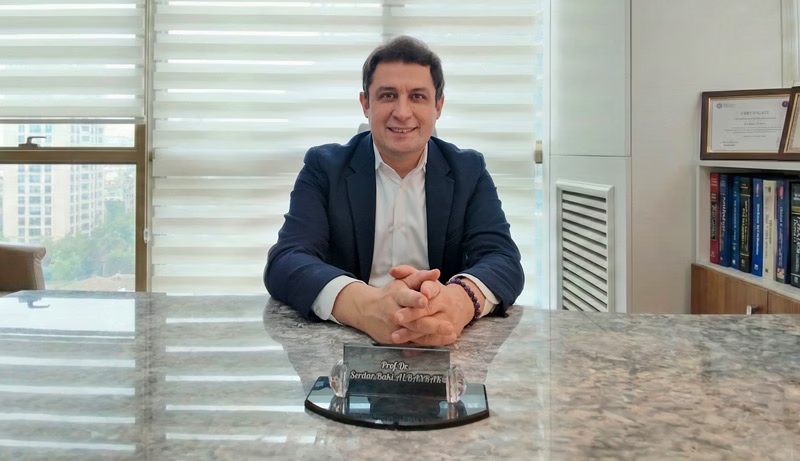
Prof. Dr. Serdar Baki Albayrak
Neurosurgeon · Brain and Spine Surgery for Children and Adults
Surgery on a child protects a brain and spine that are still growing. Therefore, Prof. Albayrak plans each operation around the child's growth, schooling and family life.
27+Years
5,000+Operations
64Countries
Figures from Prof. Albayrak's professional profile, September 2026.
Request an AppointmentFrequently Asked Questions
What is the difference between a pediatric neurosurgeon and a neurosurgeon?
The main difference is the age group and the extra training. Specifically, pediatric neurosurgeons focus on babies, children and teens with growing brains and bodies.
Is a pediatric neurosurgeon the same as a pediatric neurologist?
No. A pediatric neurologist diagnoses and treats nervous system conditions with tests and medicines. In contrast, a pediatric neurosurgeon operates when surgery can help. Often, both work as one team.
Up to what age does a pediatric neurosurgeon treat children?
They treat children from birth through the teenage years. Then, care moves to adult specialists for lifelong follow-up.
Prof. Albayrak's Published Research
Peer-reviewed articles and book chapters written or co-written by Prof. Dr. Serdar Baki Albayrak on pediatric neurosurgery. Each link opens the record on PubMed or at the publisher. The full list of his 33 publications is on his profile.
- Tethered cord syndrome in childhood: special emphasis on the surgical technique and review of the literature with our experience
- Rare Cause of Persistent Headache in a Child: Spontaneous Idiopathic Subdural Hematoma
- Persistent bilateral amaurosis in a child caused by damage to the calcarine cortex and the claustrum in contralateral hemispheres after a closed head injury
- Intra-operative magnetic resonance imaging in neurosurgery
Public health information
- National Institute of Neurological Disorders and Stroke. Hydrocephalus.
- National Cancer Institute. Childhood Brain and Spinal Cord Tumors Summary Index (PDQ).
- National Institute of Neurological Disorders and Stroke. Epilepsy and Seizures.
This page gives general medical information and does not replace a consultation. Diagnosis and treatment decisions need an examination by your own doctor.
Plan Your Child's Treatment in Istanbul
Request an appointment with Prof. Dr. Serdar Baki Albayrak. The clinical team then guides your family through every step of the visit.
Request an Appointment