Paid online consultations are available by appointment. For booking, please contact us via Whatsapp.

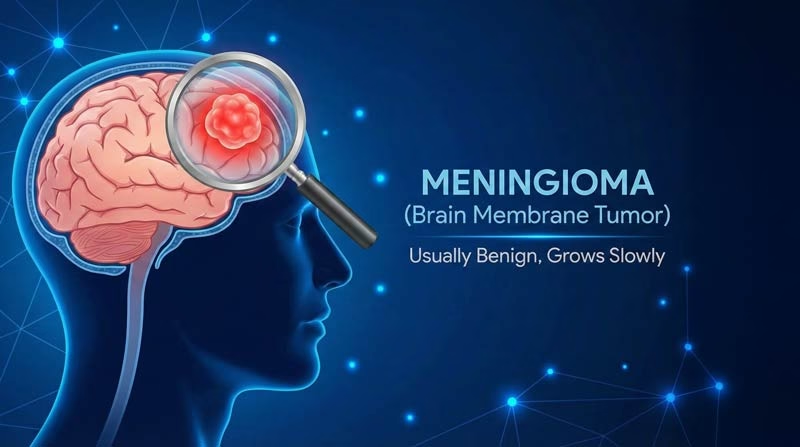
Meningioma: Comprehensive Guide to Symptoms, Diagnosis, and Treatment
Receiving a diagnosis of a brain tumor is frightening. However, knowledge is power. Meningioma is the most common type of primary brain tumor. Understanding this condition is the first step toward recovery. This guide covers everything you need to know. We will discuss symptoms, diagnosis, and effective treatments.
What is a Meningioma?
A meningioma is a tumor that forms on membranes that cover the brain and spinal cord. These membranes are called the meninges.
Most often, these tumors grow slowly. In fact, they may not cause symptoms for years. Because they grow slowly, they are often found accidentally. For example, you might have an MRI for a headache and find one.
Crucially, the vast majority of meningiomas are benign. This means they are not cancer. However, they can still cause problems. They take up space within the skull. Consequently, they press on the brain or nerves.
Are All Meningiomas the Same?
No, doctors classify them into grades. The World Health Organization (WHO) defines three grades:
- Grade I (Benign): These are the most common. The cells look nearly normal. They grow slowly.
- Grade II (Atypical): These grow faster than Grade I. They have a higher chance of coming back after surgery.
- Grade III (Malignant): These are rare. They grow quickly and invade nearby brain tissue. They are cancerous.
Note: Most patients diagnosed with this condition have Grade I tumors. This is a positive prognostic factor.
Common Symptoms of Meningioma
Symptoms depend heavily on the tumor’s size and location. A small tumor may cause no issues. However, a large tumor creates pressure. This pressure leads to specific signs.
You should watch for these common indicators:
- Headaches: These often worsen in the morning.
- Vision Changes: You might experience blurriness or double vision.
- Hearing Loss: This usually happens on one side.
- Seizures: Sudden onset of seizures is a warning sign.
- Weakness: You may feel weak in an arm or leg.
- Personality Changes: Family members might notice memory loss or confusion.
Symptoms Based on Tumor Location
The brain controls different functions in specific areas. Therefore, the location matters.
- Falx and Parasagittal: These may cause leg weakness.
- Convexity: These grow on the surface. They often cause headaches and seizures.
- Sphenoid Wing: These press on optic nerves. Vision problems are common here.
- Olfactory Groove: These affect your sense of smell. You might lose smell completely.
Causes and Risk Factors
Why do these tumors develop? Researchers are still studying the exact causes. However, we know several risk factors.
Radiation Exposure: This is the most significant environmental risk. People who had radiation therapy to the head are at higher risk. This includes childhood treatments for ringworm or leukemia.
Hormones: These tumors are more common in women. This suggests a hormonal link. Female hormones may influence tumor growth. Some studies link hormone replacement therapy to risk.
Genetics: Most cases occur sporadically. However, some are genetic. A condition called Neurofibromatosis type 2 (NF2) increases risk. People with NF2 often develop multiple tumors.
Obesity: High Body Mass Index (BMI) is an established risk factor. Doctors believe diet and exercise play a preventive role.
How We Diagnose Meningioma
Early diagnosis leads to better outcomes. If you have symptoms, consult a neurosurgeon immediately. The doctor will perform a neurological exam first. They check your vision, hearing, and reflexes.
If they suspect a tumor, they will order imaging tests.
MRI (Magnetic Resonance Imaging)
This is the gold standard. It uses magnetic fields to create detailed images. An MRI with contrast dye is best. The dye helps the tumor show up clearly. It helps the surgeon plan the operation.
CT Scan (Computerized Tomography)
This uses X-rays. It is faster than an MRI. It is excellent for showing bone involvement. Sometimes, the tumor causes the skull bone to thicken. A CT scan reveals this well.
Meningioma Treatment Options
Treatment is not “one size fits all.” Your treatment depends on several factors. These include tumor size, location, and your overall health.
1. Active Surveillance (Wait and See)
Not all tumors need immediate surgery. If the tumor is small and benign, we may wait. This is common for older patients with no symptoms. You will have regular MRI scans. We monitor for any growth.
2. Surgery (Resection)
Surgery is the most common treatment. The goal is total removal. Surgeons aim to remove the tumor and the membrane it grows from.
Microsurgery Techniques: Modern neurosurgery uses high-powered microscopes. This allows precise removal. The surgeon protects normal brain tissue. Intraoperative monitoring checks nerve function during surgery. This ensures safety.
If the tumor is near vital veins or nerves, total removal might be risky. In these cases, the surgeon removes as much as is safe.
[Link to: Neurosurgery Services at Dr. Serdar Baki Albayrak’s Clinic]
3. Radiation Therapy
Sometimes, surgery cannot remove the whole tumor. Or, the patient cannot undergo surgery. In these cases, radiation helps.
- Stereotactic Radiosurgery (SRS): This delivers high-dose radiation. It targets the tumor precisely. Gamma Knife represents a common type of SRS.
- Fractionated Radiotherapy: This delivers radiation over several sessions. It is used for larger tumors.
Recovery After Surgery
Recovery is a journey. It requires patience. Immediately after surgery, you stay in the hospital. You will likely spend a night in the ICU. This allows close monitoring.
Most patients go home within 3 to 5 days. However, full healing takes weeks. You may feel tired. This is normal. Your brain is healing.
Rehabilitation: Some patients need therapy.
- Physical Therapy: To improve strength and balance.
- Occupational Therapy: To help with daily tasks.
- Speech Therapy: If the tumor affected speech or swallowing.
Follow-up is crucial. You will need regular MRIs. This ensures the tumor does not return.
Frequently Asked Questions (FAQ)
Here are answers to common questions patients ask.
Q: Is a meningioma a brain cancer? A: Usually, no. About 90% are benign (Grade I). They do not spread to other parts of the body like lung cancer. However, they can still be dangerous due to location.
Q: Can stress cause a meningioma? A: No scientific evidence links stress to brain tumors. Stress affects overall health, but it does not cause tumors.
Q: Will I be the same person after surgery? A: Most patients return to their normal selves. However, temporary changes can occur. Fatigue and mood swings happen. With time and rehabilitation, most symptoms improve.
Q: How long does the surgery take? A: It varies greatly. Simple cases may take 3-4 hours. Complex skull base tumors can take 12 hours or more. Your surgeon will give you an estimate.
Q: Can I use a cell phone? A: Yes. Current studies do not prove a clear link between cell phone use and meningiomas. However, research is ongoing.
Why Choose Prof. Dr. Serdar Baki Albayrak?
Brain surgery requires extreme precision. Experience matters. Dr. Serdar Baki Albayrak specializes in complex brain tumors. He uses the latest microsurgical techniques. This ensures the best possible outcome for you.
We focus on the patient, not just the tumor. We create a personalized plan for you. From diagnosis to rehabilitation, we stand by your side.
Conclusion
A meningioma diagnosis changes your life. But it is treatable. Modern medicine offers excellent options. Most patients go on to live full, healthy lives. Do not ignore persistent headaches or vision changes. Early detection simplifies treatment.
If you have symptoms, seek professional help. A consultation gives you clarity. It provides a path forward. Trust your health to experts who care.
Ready to Take the Next Step?
Schedule your consultation with Dr. Albayrak today and start your journey towards better health.