
Paid online consultations are available by appointment. For booking, please contact us via Whatsapp.

In short
What Are Brain Metastases?
Brain metastases are tumors that form when cancer spreads to the brain from another organ. Doctors also call them metastatic or secondary brain tumors.
Overall, they outnumber tumors that start in the brain itself. In fact, about 10 to 30 percent of adults with cancer develop them.
Cancer cells reach the brain through the bloodstream. Therefore, several tumors can appear at once. However, surgery, radiosurgery and modern drugs can control many of them.
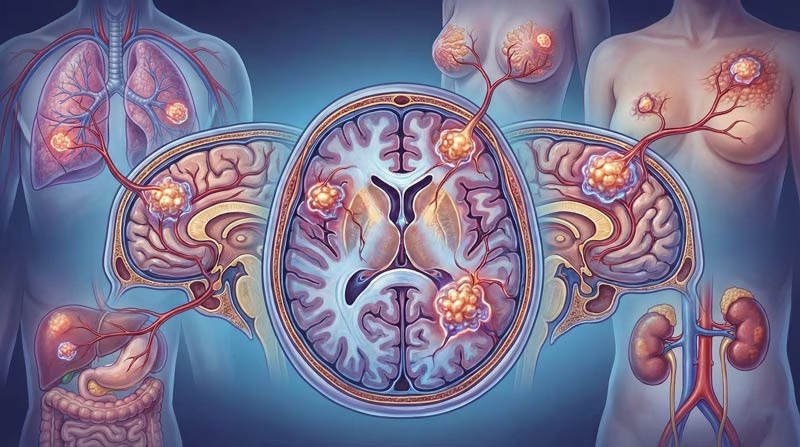
Where can cancer spread in and around the brain?
Generally, metastases grow inside the brain tissue. However, cancer can also reach the brain's coverings and the fluid around it.
- Cerebral hemispheresThe most common site, where tumors cause weakness, speech trouble or seizures
- CerebellumAffects balance and can block the brain's fluid flow
- LeptomeningesThe thin lining and fluid around the brain; causes headaches and nerve problems
What Brings You Here?
People reach this page at different points in their cancer journey. First, pick the line that fits you. Then, each link opens the right section.
- 01New symptoms during cancer careHeadache, weakness, confusion or a first seizure
- 02A scan found spots in the brainWhich cancers spread to the brain, and what that means
- 03Choosing between surgery and radiosurgeryHow the options compare, and how size and number decide
- 04A treated spot is growing againRegrowth or radiation effect, and how doctors tell them apart
- 05Questions about life expectancyThe factors that shape the outlook, explained honestly
Symptoms of Brain Metastases
Symptoms come from the tumor and from the swelling around it. As a result, they often build up over days or weeks.
Headache and nausea
About half of patients notice a headache first. It typically feels worse in the morning, and it often comes with nausea too. In fact, swelling that raises pressure inside the skull causes it.
Weakness, numbness or speech trouble
A tumor on one side of the brain affects the opposite side of the body. For example, a left-sided metastasis can weaken the right arm or disturb speech.
Seizures
Seizures affect about a third of people with brain tumors. Therefore, a first seizure in someone with cancer always needs an urgent MRI.
Confusion, balance or vision problems
- Slower thinking, forgetfulness or unusual behavior, often noticed by family first
- Unsteady walking and clumsy hands from tumors in the cerebellum
- Blurred vision or loss of part of the visual field
Can brain metastases cause stroke-like symptoms?
Yes. Some metastases bleed, especially those from melanoma, kidney and thyroid cancers. Bleeding then causes sudden weakness, speech loss or a severe headache, much like a stroke.
Can a brain metastasis be the first sign of cancer?
Yes, in some patients. Scans of the chest, abdomen and pelvis then look for the source. Surgery can also provide tissue that confirms it.
Questions at this stage
Do brain metastases always cause symptoms?
No. Some cause no symptoms and appear on routine scans, for example during lung cancer staging. Finding them early also allows gentler treatment.
Can brain metastases cause hallucinations?
Rarely, but temporal or occipital tumors can cause odd smells or visions. These often occur as part of a seizure. New hallucinations therefore need a prompt medical check.
When to Call Your Doctor
If you live with cancer, then report new neurological symptoms quickly. Early treatment also protects memory, movement and speech.
Call your cancer team within days if you notice:
- A new headache that keeps coming back
- Growing clumsiness or weakness on one side
- Changes in speech, vision or balance
- Memory or personality changes that family members notice
Seek emergency care for:
- A seizure
- A sudden, severe headache
- Sudden weakness, numbness or speech loss
- Drowsiness, confusion or repeated vomiting
Generally, an MRI with contrast answers the question quickly. Also, you can compare these signs with other brain tumour symptoms.
Which Cancers Spread to the Brain?
Any cancer can spread to the brain, but a few cause most cases. Specifically, lung cancer is the most common source in men, and breast cancer in women.
| Original cancer | How it behaves in the brain | Treatments that can reach the brain |
|---|---|---|
| Lung cancer | The most common source overall; small cell and EGFR- or ALK-positive types spread there often | Radiosurgery, surgery, targeted tablets and immunotherapy |
| Breast cancer | HER2-positive and triple-negative types carry the highest risk | Radiosurgery, surgery and HER2-targeted drugs |
| Melanoma | The strongest tendency to spread to the brain; metastases often bleed | Immunotherapy, BRAF-targeted drugs and radiosurgery |
| Kidney cancer | Blood-rich tumors that may bleed and resist standard radiation | Surgery or radiosurgery, plus immunotherapy or targeted drugs |
| Bowel and other cancers | Less common; usually appear late in the illness | Surgery or radiosurgery within the overall cancer plan |
Is a brain metastasis the same as brain cancer?
Not exactly. In fact, a metastasis keeps the features of the original cancer. So lung cancer in the brain still behaves, and responds, like lung cancer.
Also, see brain cancer and its surgery for tumors that start in the brain.
Metastatic Brain Tumor Treatment: Options Compared
Treatment aims to control each brain tumor, relieve symptoms and protect memory. Most plans also combine local treatment with drugs for the cancer elsewhere.
| Treatment | Usually chosen when | What it involves | Trade-offs |
|---|---|---|---|
| Surgery (craniotomy) | A reachable tumor over about 3 cm presses on the brain, or tissue is needed | Removal through a small skull opening, then radiosurgery to the cavity | Fast relief of pressure; a few days in hospital |
| Stereotactic radiosurgery (SRS) | 1 to 4 tumors, often up to 10, each usually under 3 cm | Focused radiation in 1 to 5 outpatient sessions | Protects memory better than whole-brain radiation; works over weeks |
| Whole-brain radiation (WBRT) | Many tumors, spread to the lining, or small cell lung cancer | 10 to 15 sessions over 2 to 3 weeks | Also treats hidden spots, but can affect memory |
| Targeted drugs and immunotherapy | Tumors with markers such as EGFR, ALK, HER2 or BRAF, or melanoma and lung cancer | Tablets or infusions that cross into the brain | Treats the whole body; needs close MRI checks |
Generally, Prof. Albayrak operates first on a single metastasis over about 3 cm. He also operates first when any tumor causes pressure. In contrast, smaller tumors, even up to four at once, often suit outpatient radiosurgery.
How do the number and size of metastases change the plan?
For example, joint ASCO, SNO and ASTRO guidelines weigh tumor number, size and type. The table then summarizes the usual first step.
| Situation | Usual first choice | Why |
|---|---|---|
| One large tumor or one causing pressure | Surgery, then radiosurgery to the cavity | Quick relief, and tissue confirms the diagnosis |
| 1 to 4 small tumors | Radiosurgery alone | Standard care, except in small cell lung cancer |
| 5 to 10 small tumors | Radiosurgery or whole-brain radiation | Radiosurgery suits a small total tumor volume |
| More than 10 or spread to the lining | Whole-brain radiation or drug treatment | Hippocampal sparing and memantine help protect memory |
| Small, silent tumors with a targetable marker | Targeted drug or immunotherapy first | MRI every 2 to 3 months; radiation if they grow |
Is surgery or radiosurgery better for a single brain metastasis?
It depends on size, position and symptoms. Large tumors that press on the brain usually need surgery, then cavity radiosurgery. Small or deep tumors, however, often suit radiosurgery alone.
After Treatment: Follow-Up, Regrowth and Support
Regular MRI scans are, in fact, part of the treatment itself. Usually, the first scan comes 2 to 3 months after treatment, then every few months.
New spots can appear elsewhere in the brain, so early scans matter. However, a growing spot may be regrowth or radiation necrosis, a scar-like reaction. Perfusion MRI or PET scans then help tell them apart.
Supportive care also protects quality of life:
- Corticosteroids such as dexamethasone reduce swelling within days; doctors then taper them to limit side effects
- Anti-seizure medicine treats seizures once they occur; doctors do not give it routinely without seizures
- Rehabilitation, including physiotherapy and speech therapy, restores daily skills
- Palliative care eases symptoms at any stage, alongside active treatment
Will I lose my hair after brain radiation?
Generally, radiosurgery causes no hair loss, apart from a small patch near the target. In contrast, whole-brain radiation usually causes hair loss, which mostly grows back within months.
Life Expectancy With Brain Metastases
No single number fits everyone. Instead, survival depends mainly on the original cancer and its markers. It also depends on how well treatment controls the cancer elsewhere.
Signs of a better outlook
- Good general fitness and independence
- Few brain metastases
- Cancer outside the brain under control
- A targetable marker such as EGFR, ALK or HER2
Signs of a harder course
- Poor general fitness
- Many metastases, or spread to the brain's lining
- Active cancer in several organs
- Few remaining treatment options
Doctors combine these factors in scoring tools such as the Graded Prognostic Assessment. In the past, however, doctors often measured survival in months. Today, a growing number live for years, especially with targeted drugs or immunotherapy.
Is a brain metastasis stage 4 cancer?
Yes. Spread to the brain means the original cancer is stage 4. However, stage 4 no longer means untreatable. In fact, treatment can often control brain tumors for a long time.
Can brain metastases be cured?
Surgery or radiosurgery can often control individual metastases for good. Whether the whole illness is curable, however, depends on the original cancer. Your oncologist and neurosurgeon can then explain your own situation.
Your treatment path
From Diagnosis to Recovery
Care follows four steps. Throughout, your neurosurgeon and oncologist also work as one team.
STEP 01
Diagnosis: how many tumors, and from where?
An MRI with contrast is the key test, because it shows even small metastases. In an emergency, however, a CT scan comes first.
- Body CT or PET scans show where the cancer started and whether it has spread elsewhere.
- Perfusion MRI helps separate a metastasis from a primary tumor, an abscess or a meningioma.
- Surgery or biopsy gives tissue when the original cancer is unknown.
STEP 02
Planning: one team, one plan
A tumor board of neurosurgeons, radiation oncologists and medical oncologists reviews each case. Together, they then match local treatment to the cancer's type, markers and activity.
Timing matters too. For example, the team fits surgery or radiosurgery around drug treatment, so cancer care continues.
STEP 03
Treatment: surgery, radiosurgery or both
For surgery, neuronavigation first guides a small skull opening to the tumor. Metastases usually have a clear border, so Prof. Albayrak can often remove them completely.
Radiosurgery, in contrast, needs no incision. A mask or frame then keeps the head still, while focused beams meet at the tumor.
How long does radiosurgery take?
Generally, a session lasts under an hour to a few hours, depending on the targets. Most patients then go home the same day.
STEP 04
Recovery and follow-up
Generally, patients walk the day after surgery and go home within a few days. Afterward, radiosurgery to the tumor cavity lowers the chance of local regrowth.
- Drug treatment restarts once the wound heals, as your teams agree.
- MRI scans follow every 2 to 3 months at first.
- Rehabilitation helps if weakness or speech trouble remains.
When can I restart chemotherapy or targeted drugs?
Usually soon, especially after radiosurgery, which needs little or no break. After surgery, however, drug treatment waits until the wound heals. Your neurosurgeon and oncologist then agree on the exact timing.
Metastatic Brain Tumor Treatment in Istanbul

Prof. Dr. Serdar Baki Albayrak
Neurosurgeon · Brain Tumor and Skull Base Surgery
Brain metastasis care works best as teamwork, so Prof. Albayrak plans each case with your oncologists. He also favors the least invasive option that controls the tumor and protects function.
27+Years
5,000+Operations
64Countries
Figures from Prof. Albayrak's professional profile, September 2026.
Request an AppointmentFrequently Asked Questions
How fast do brain metastases grow?
Often faster than most primary brain tumors, over weeks to months. Doctors therefore start treatment soon after diagnosis.
Can I travel to Istanbul for treatment during cancer care?
Often, yes, when your oncologist agrees that travel is safe. The clinical team then coordinates the dates with your ongoing treatment.
Which doctor treats brain metastases?
A team does: a neurosurgeon, a radiation oncologist and a medical oncologist. Prof. Dr. Serdar Baki Albayrak then leads the surgical side for patients in Istanbul.
For an overview of all tumor types, also see our brain tumor treatment guide. In addition, spinal spread has its own page on spinal tumors.
Prof. Albayrak's Published Research
Peer-reviewed articles and book chapters written or co-written by Prof. Dr. Serdar Baki Albayrak on brain and spinal metastases. Each link opens the record on PubMed or at the publisher. The full list of his 33 publications is on his profile.
- Cerebral metastasis of small-cell lung carcinoma mimicking a supratentorial cystic astrocytoma
- Sudden cessation of respiration in a patient with a solitary metastatic focus of renal cell carcinoma in medulla oblongata
- Concomitant existence of giant epidural supra and infratentorial metastatic osteosarcoma
- Cervical leptomeningeal and intramedullary metastasis of a cerebral PNET in an adult
Public health information
- National Cancer Institute. Adult Central Nervous System Tumors Treatment (PDQ), patient version.
This page gives general medical information and does not replace a consultation. Diagnosis and treatment decisions need an examination by your own doctor.
Plan Your Brain Metastasis Treatment in Istanbul
Request an appointment with Prof. Dr. Serdar Baki Albayrak. The clinical team then guides international patients through every step of the visit.
Request an Appointment