
Paid online consultations are available by appointment. For booking, please contact us via Whatsapp.

In short
What Is Peripheral Nerve Entrapment?
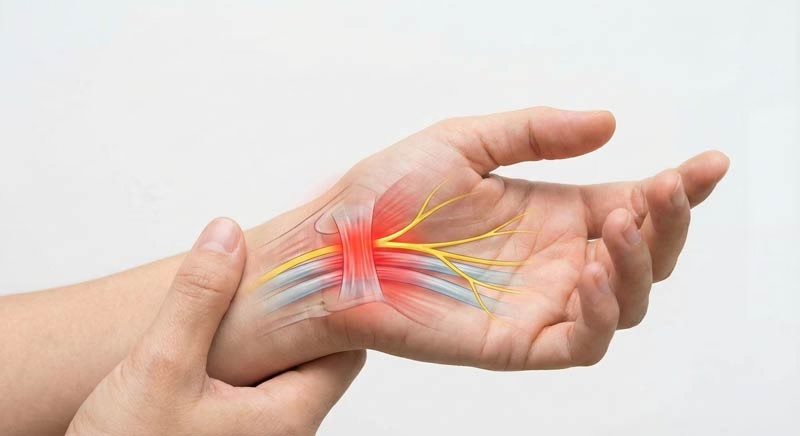
Peripheral nerve entrapment is pressure on a nerve outside the spine, where it passes through a narrow tunnel. As a result, the squeezed nerve causes numbness, tingling, pain and, later, weakness.
Carpal tunnel syndrome is the most common form, affecting about 3% of adults. Other nerves, however, get trapped at the elbow, thigh, knee and ankle.
In fact, most entrapments improve with simple measures if care starts early. When they do not, a short operation then frees the nerve.
Why do nerves get trapped?
Nerves pass through tight spaces at several joints. So anything that narrows the space or swells the tissue can press on them.
- Narrow tunnelsSome people inherit a smaller carpal or cubital tunnel
- Repetitive movementGripping, typing or vibrating tools irritate the tendons
- Pregnancy and weightExtra fluid and pressure crowd the nerve
- Diabetes and thyroid diseaseNerves become more sensitive to pressure
- Outside pressureCrossing the legs, tight belts, leaning on the elbow
- Injury and cystsFractures, scar tissue or a ganglion near the nerve
Where Do You Feel It?
First, pick where the numbness or pain sits. Then, each link shows the nerve behind it and what helps.
- 01Thumb, index and middle fingerNumbness that wakes you at night and eases when you shake the hand
- 02Ring and little fingerTingling that grows when the elbow stays bent
- 03Sole of the foot and toesBurning that grows with standing or walking
- 04Outer side of the thighBurning or numb skin, often with tight belts or weight gain
- 05Top of the foot, or a dropping footTripping on the toes after leg crossing or long squatting
- 06The whole arm, or both hands and feetA pinched neck nerve or a wider neuropathy may be the cause
Common Nerve Entrapment Syndromes
Each syndrome has its own nerve, tunnel and skin map. However, the neck or a wider neuropathy can mimic them, so the exam comes first.
Carpal tunnel syndrome
The median nerve runs through a tunnel of wrist bones under the transverse carpal ligament. So when the tunnel narrows or the tendons swell, they squeeze the nerve.
- Numbness in the thumb, index, middle and half of the ring finger
- Symptoms that wake you at night and ease when you shake the hand
- Weak grip, dropped objects and, late on, a flat muscle at the thumb base
Women, especially during pregnancy, and people with diabetes or thyroid disease face a higher risk. Repetitive hand work also adds to it.
Cubital tunnel syndrome
The ulnar nerve, the funny bone nerve, runs behind the inner elbow. So keeping the elbow bent, on the phone or in sleep, stretches and presses it.
- Tingling in the ring and little finger
- Clumsy fingers and a weak pinch
- In late stages, wasted hand muscles and a clawed hand
It is also common. One US study, for example, found it in 2 to 6% of adults.
Tarsal tunnel syndrome
The tibial nerve passes behind the inner ankle bone into the sole. There, flat feet, an old sprain, a ganglion cyst or swollen veins can crowd it.
- Burning, tingling or numbness in the sole and toes
- Pain that grows with standing, walking or sport
In fact, more than 2 in 5 patients recall an earlier ankle injury.
Meralgia paresthetica
Meralgia paresthetica traps the lateral femoral cutaneous nerve at the groin. This nerve carries only feeling. So it causes burning or numb skin on the outer thigh, but no weakness.
- Tight belts, heavy tool belts and tight clothing
- Weight gain, pregnancy and diabetes
Most cases, however, settle with looser clothing, weight loss and time. Rarely, surgery frees or divides the nerve.
Peroneal nerve entrapment
The common peroneal (fibular) nerve winds around the bony bump below the outer knee. Pressure there therefore weakens the muscles that lift the foot.
- Foot drop: the toes catch and the foot slaps when walking
- Numbness over the top of the foot and the outer shin
- Triggers: crossing the legs, long kneeling or squatting, long bed rest
However, a slipped disc in the lower back can cause the same foot drop. Tests must therefore separate the two.
Look-alikes: the neck, double crush and neuropathy
A pinched neck nerve, for example, can cause hand numbness that mimics carpal tunnel syndrome. Some people have both, a pattern called double crush.
Diabetes can also cause a wider neuropathy in both hands and feet. Rarely, a spinal nerve root tumor also produces similar numbness. Therefore, a neurosurgeon checks the spine and the limb together before any release.
How does entrapment progress?
- Early: symptoms come and go, often at night.
- Middle: numbness lasts through the day.
- Late: muscles weaken and shrink, and feeling may not fully return.
Can it heal on its own?
Mild cases often improve once the pressure stops. For example, carpal tunnel syndrome in pregnancy often settles after the birth. However, constant numbness or weakness rarely resolves without treatment.
Questions at this stage
Can carpal tunnel syndrome be cured without surgery?
Often, yes, when treatment starts early. For example, a night splint, activity changes and a steroid injection relieve many cases. However, steroid relief is often temporary.
Is it carpal tunnel syndrome or a pinched nerve in the neck?
Both cause hand numbness. However, neck problems usually add neck pain and symptoms above the wrist. An EMG and nerve conduction study then tell them apart.
Why is carpal tunnel worse at night?
Most people sleep with the wrist bent, which raises pressure inside the tunnel. For this reason, a night splint that keeps the wrist straight often helps first.
When to See a Doctor
Early treatment protects the nerve. So do not wait for weakness before you seek help.
Book a visit if you notice:
- Numbness that wakes you at night for more than two weeks
- Dropping things or trouble with buttons
- Symptoms that return after a splint or an injection
- A thinning muscle at the base of the thumb or between the fingers
Seek urgent care for:
- Sudden foot drop or sudden hand weakness
- Numbness that spreads quickly after an injury, a cast or a tight bandage
- Numbness in both legs with bladder or bowel changes
- Severe pain, swelling or color change after a fracture
Overall, an exam and a nerve conduction study usually give a clear answer.
Nerve Entrapment Syndromes Compared
In fact, the site of the numbness usually names the nerve.
| Syndrome | Nerve and site | Main symptoms | First treatment | Surgery |
|---|---|---|---|---|
| Carpal tunnel | Median nerve, wrist | Night numbness from thumb to ring finger; weak grip | Night splint, activity change, steroid injection | Carpal tunnel release |
| Cubital tunnel | Ulnar nerve, inner elbow | Tingling in ring and little finger; clumsy hand | Avoid long elbow bending, night splint | Decompression, sometimes moving the nerve forward |
| Tarsal tunnel | Tibial nerve, inner ankle | Burning in the sole and toes | Supportive shoes, insoles, rest | Tarsal tunnel release |
| Meralgia paresthetica | Lateral femoral cutaneous nerve, groin | Burning, numb outer thigh; no weakness | Loose clothing, weight loss | Nerve release or division, rarely needed |
| Peroneal nerve | Common peroneal nerve, outer knee | Foot drop; numb top of the foot | Stop leg crossing, ankle brace | Decompression at the fibular head |
Which test confirms nerve entrapment?
An EMG with a nerve conduction study measures how fast signals cross the trapped spot. As a result, it confirms the site and shows how severe the damage is. Ultrasound or MRI can add a picture of the nerve.
Nonsurgical Treatment Comes First
Most mild and moderate cases improve without an operation. The aim, therefore, is to take pressure off the nerve and let it recover.
- Splints: a wrist splint at night, or an elbow splint that limits bending
- Activity changes: breaks from gripping, typing and vibrating tools
- Nerve gliding exercises: gentle movements that help the nerve slide
- Medicines: anti-inflammatory tablets for short-term pain relief
- Steroid injection: calms the swelling around the nerve, often for months
- Underlying conditions: better control of diabetes or thyroid disease
First, give these measures about six weeks. However, constant numbness, weakness or muscle loss calls for earlier surgery. A long-crushed nerve may not fully recover.
Microsurgical Carpal Tunnel Release
Carpal tunnel release cuts the tight ligament that forms the roof of the tunnel. As a result, the tunnel widens and the pressure on the median nerve drops.
Prof. Albayrak performs a mini-open microsurgical release. Through a 2 cm palm incision, he divides the ligament under the microscope. He also watches the nerve throughout.
| Feature | Microsurgical (mini-open) | Classic open | Endoscopic |
|---|---|---|---|
| Incision | About 2 cm in the palm | About 4-5 cm in the palm | One or two small portals |
| Anesthesia | Local | Local or regional | Regional or general |
| Operation time | 15-20 minutes | About 30 minutes | 20-30 minutes |
| View of the nerve | Direct and magnified | Direct, naked eye | Camera image |
| Going home | Same day | Same day | Same day |
Times and incision sizes reflect Prof. Albayrak's practice. Overall, studies show similar long-term results for open and endoscopic release.
Is carpal tunnel surgery painful?
No, the local anesthetic numbs the hand, so the operation itself does not hurt. Afterwards, the palm stays sore for a few weeks, and simple painkillers usually control it.
Your treatment path
From Diagnosis to Recovery
Care follows four steps, from the first exam to full use of the hand. Most patients also go home on the day of surgery.
STEP 01
Diagnosis: confirming the trapped nerve
First, the exam maps numbness, strength and muscle bulk. Next, simple tests try to bring on the symptoms.
- Tinel's test: tapping over the nerve sends tingling into the fingers.
- Phalen's test: holding the wrists bent for one minute brings on numbness.
- EMG and nerve conduction study: the gold standard, confirming the site and the severity.
- Ultrasound or MRI: shows a cyst, a mass or a swollen nerve when needed.
STEP 02
Planning: timing and technique
The EMG result and the symptoms set the timing. Mild cases try splinting first, but severe or constant cases move to surgery soon.
For international patients, the team also plans a short stay. The operation and the first wound check fit into a few days in Istanbul. Then a local doctor can remove the stitches.
STEP 03
Surgery: releasing the nerve
Under local anesthesia, only the hand goes numb and the patient stays awake. The surgeon then divides the ligament through a small palm incision in 15-20 minutes.
For other entrapments, the principle also stays the same. For example, cubital tunnel release frees the ulnar nerve and sometimes moves it forward.
Do I need general anesthesia for carpal tunnel surgery?
No. Local anesthesia numbs only the hand. So patients with heart or lung disease can also have it safely.
STEP 04
Recovery: using the hand again
- First night: night numbness eases for most patients.
- Next day: light use of the hand, with the fingers moving freely.
- Two weeks: stitches out; eating, writing and light housework.
- Four to six weeks: heavy lifting and full grip work.
- Two to three months: grip strength returns; severe cases can take 6 to 12 months.
In Prof. Albayrak's practice, recurrence after a complete microsurgical release stays below 1%. Also, the scar fades into the palm crease over time. When nerve pain lingers, however, neuromodulation and pain surgery offer further options.
When can international patients fly home?
Usually within a day or two, because the operation is a day procedure. Your surgeon, however, confirms the wound check first.
Peripheral Nerve Surgery in Istanbul

Prof. Dr. Serdar Baki Albayrak
Neurosurgeon · Peripheral Nerve and Spine Surgery
Hand and foot numbness can start in the neck, the back or a limb tunnel. Therefore, Prof. Albayrak checks the spine and the nerve together before choosing a release.
27+Years
5,000+Operations
64Countries
Figures from Prof. Albayrak's professional profile, September 2026.
Request an AppointmentFrequently Asked Questions
What is the success rate of carpal tunnel surgery?
Surgery relieves the symptoms for most patients. Night numbness, in fact, often improves within the first week. However, recovery takes longer when long-standing pressure has already harmed the nerve.
How long does carpal tunnel surgery take?
The operation takes about 15 to 20 minutes under local anesthesia. So with preparation and a short rest, most patients leave the same day.
Can carpal tunnel come back after surgery?
Rarely. In Prof. Albayrak's practice, it returns in under 1% of cases after a complete release. When it does, the usual reason is an incomplete release or heavy scarring.
Which doctor treats nerve entrapment?
Neurosurgeons, hand surgeons and orthopedic surgeons all treat it. A neurosurgeon also checks the spine, which matters when the neck may play a part. Prof. Dr. Serdar Baki Albayrak treats nerve entrapments in Istanbul.
Prof. Albayrak's Published Research
Peer-reviewed articles and book chapters written or co-written by Prof. Dr. Serdar Baki Albayrak on peripheral nerve injury, scarring and repair. Each link opens the record on PubMed or at the publisher. The full list of his 33 publications is on his profile.
- Management outcome of peroneal nerve injury at knee level: experience of a single military institution
- Doxorubicin for prevention of epineurial fibrosis in a rat sciatic nerve model: outcome based on gross postsurgical, histopathological, and ultrastructural findings
- Topical Application of Cyclosporine Reduces Epineurial Fibrosis: Gross Postsurgical, Histopathological and Ultrastructural Analysis in a Rat Sciatic Nerve Model
- The Axon Protective Effects of Syringic Acid on Ischemia/Reperfusion Injury in a Rat Sciatic Nerve Model
Public health information
- NHS. Carpal tunnel syndrome.
- NHS. Foot drop.
This page gives general medical information and does not replace a consultation. Diagnosis and treatment decisions need an examination by your own doctor.
Free the Trapped Nerve in Istanbul
Request an appointment with Prof. Dr. Serdar Baki Albayrak. The clinical team then guides international patients through every step of the visit.
Request an Appointment