
Paid online consultations are available by appointment. For booking, please contact us via Whatsapp.

What Is Hemifacial Spasm?
Hemifacial spasm makes the muscles on one side of the face twitch on their own. The twitching usually starts around the eye and then spreads to the cheek and mouth. In most people, an artery presses on the facial nerve at the brainstem.
The spasm rarely hurts, and the condition itself is not dangerous. However, it seldom goes away by itself and often becomes more frequent over the years.
Botulinum toxin injections calm the muscles for a few months at a time. In contrast, microvascular decompression (MVD) frees the nerve and aims for lasting relief.
At a Glance
- What it isTwitching you cannot control on one side of the face
- First signA lower eyelid twitch that comes and goes
- Usual causeAn artery or vein pressing on the facial nerve
- DiagnosisAn examination and an MRI of the brain
- TreatmentRepeat injections, or MVD surgery to free the nerve
- Flying homeUK guidance advises about 7 days after brain surgery
What Brought You Here?
First, choose the line closest to your situation. Each one then opens the matching part of this guide.
- 01An eyelid twitch that keeps coming backHow the spasm usually begins
- 02Not sure it is hemifacial spasmBlepharospasm, tics and other twitches
- 03Injections help less or wear off too soonWhen to consider surgery
- 04Your MRI shows a vessel on the nerveHow microvascular decompression works
- 05Worried about hearing or facial weaknessRisks and how the team lowers them
- 06Planning surgery from abroadLength of stay, flights and follow-up
Hemifacial Spasm Symptoms
The main symptom is twitching on one side of the face that you cannot stop. It usually begins in the lower eyelid and then spreads over months or years.
It starts around the eye
At first, the lower eyelid flickers now and then, much like a tired eye. Over time, however, the twitch grows stronger and can squeeze the eye shut.
Next, the spasm pulls the corner of the mouth to one side. Less often, it starts in the cheek and moves up toward the eye instead.
Other signs
In addition, the eyebrow may lift while the eye closes. Unlike many twitches, the spasm can continue even during sleep. Some people even hear a faint clicking in the ear on that side.
Stress, tiredness, talking and eating often make spasms worse. Rarely, both sides twitch, but usually at different times.
Questions at this stage
Is hemifacial spasm painful?
Usually not. The spasms can feel tiring or tight, but they rarely hurt. So if your face hurts, ask your doctor about other causes, such as trigeminal neuralgia.
What is the difference between hemifacial spasm and blepharospasm?
Hemifacial spasm affects one side and spreads toward the mouth. Blepharospasm, in contrast, closes both eyes and starts in the brain itself. So MVD does not help blepharospasm.
When to See a Doctor About Face Twitching
Most eyelid twitches are harmless and stop within days or weeks. However, the NHS advises seeing a GP if a twitch lasts more than 2 weeks.
Book a doctor's visit if you notice:
- An eyelid twitch that lasts more than 2 weeks
- Twitching that spreads to the cheek or mouth
- An eye that shuts while you drive or read
- Hearing loss, numbness or weakness on the same side
Call 911, 999 or 112 at once for:
- A face that suddenly droops on one side
- Sudden weakness or numbness in an arm or leg
- Slurred or confused speech
- A sudden, severe headache unlike any before
Twitching alone is not a sign of stroke, but sudden weakness can be. So get help where you are; do not wait for a visit abroad.
What Causes Hemifacial Spasm?
In most people, a blood vessel presses on the facial nerve at the brainstem. Doctors call this primary hemifacial spasm. It usually starts in the 40s or 50s and affects women more often.
The vessel is usually a small artery and sometimes a vein. Then, with every heartbeat, it rubs the nerve's insulating layer. Over time, the nerve fires extra signals, and the face twitches.
Less Common Causes
Sometimes another problem irritates the nerve, which doctors call secondary hemifacial spasm:
- A benign growth, such as an acoustic neuroma or a meningioma
- A cyst or a tangle of abnormal vessels
- Multiple sclerosis or another brainstem lesion
- An earlier nerve injury or facial paralysis, such as Bell's palsy
For this reason, doctors usually order an MRI before treatment. A growth then needs its own plan, such as skull base tumor surgery.
Can hemifacial spasm cause a stroke?
Hemifacial spasm itself does not cause a stroke. The twitch comes from an irritated nerve, not from a blocked or bleeding vessel. However, sudden drooping of the face needs emergency care.
Is hemifacial spasm hereditary?
Rarely. In fact, most people with hemifacial spasm have no affected relatives. Families with several cases do exist, but they remain unusual.
How Doctors Diagnose Hemifacial Spasm
The diagnosis starts with an examination, because the pattern of the spasm tells a lot. An MRI then shows the vessel on the nerve and rules out other causes.
- Examination: the spasm pattern, facial strength, feeling and hearing
- MRI with contrast: rules out a growth or another cause
- Thin-slice MRI and MR angiography: show which vessel touches the nerve
- Nerve test (EMG): sometimes, when the spasm looks unusual
Prof. Albayrak therefore asks for an MRI with contrast before he plans treatment. However, vessels also touch the nerve in some people without twitching. So the examination confirms the diagnosis.
Will an MRI show hemifacial spasm?
An MRI cannot show the twitching itself. Still, it often shows the vessel on the facial nerve. It also rules out a growth near the nerve.
Hemifacial Spasm vs Blepharospasm, Tics and Other Twitches
Other conditions also make the face twitch. However, where the twitch starts usually tells them apart.
| Condition | Side | Typical pattern | Usual next step |
|---|---|---|---|
| Hemifacial spasm | One side | Eye first, then cheek and mouth; continues in sleep | MRI, then injections or MVD |
| Blepharospasm | Both eyes | Blinking and forced closing of both eyes | Eye exam; injections |
| Eyelid twitch (myokymia) | One eyelid | Fine flicker with stress or caffeine; stops within weeks | Rest; see a GP after 2 weeks |
| Facial myokymia | Usually one side | Constant, wave-like rippling under the skin | MRI for multiple sclerosis or a brainstem lesion |
| Facial tics | One or both | Blinks or grimaces you can briefly hold back | Often no treatment |
| Synkinesis | The side that was weak | The eye narrows when you smile, after facial paralysis | Facial therapy, sometimes injections |
For facial pain, in contrast, see our guide to facial nerve pain.
Hemifacial Spasm Treatment Options
Treatment either calms the twitching muscles or frees the nerve from pressure. Injections do the first and need repeating. MVD surgery does the second and aims for a lasting result.
Injections often suit you if:
- The spasm is new or mild
- You prefer to avoid an operation
- Your health makes general anesthesia risky
MVD surgery is worth discussing if:
- Your MRI shows a vessel pressing on the nerve
- Injections help less or cause side effects
- You want a lasting solution and can have anesthesia
Hemifacial Spasm Treatments Compared
| Option | How it works | How long it lasts | Main downsides |
|---|---|---|---|
| Botulinum toxin injections | Relax the twitching muscles | Usually 3-4 months, then a repeat | Brief droopy eyelid, facial weakness or dry eye; the cause stays |
| Medicines | Calm the nerve signals in mild cases | Only while you take them | Help few people; drowsiness is common |
| Microvascular decompression (MVD) | Moves the vessel off the nerve and keeps them apart | Aims for a permanent result | Brain surgery; risks include hearing loss and facial weakness |
| Radiosurgery | Focused radiation, without an incision | Effect builds slowly over months | Limited evidence; rarely a first choice |
What Botulinum Toxin Injections Involve
First, a doctor injects small amounts into the twitching muscles with a fine needle. The effect starts within days and usually lasts 3-4 months.
Side effects, such as a droopy eyelid, usually fade within weeks. Over the years, however, some people find that each injection works less well.
Can hemifacial spasm be treated without surgery?
Yes, with botulinum toxin injections, which control the spasm well in most people. However, the effect wears off after a few months. Neither injections nor medicines remove the pressure on the nerve.
Microvascular Decompression for Hemifacial Spasm
Microvascular decompression (MVD) frees the facial nerve from the vessel that presses on it. The surgeon moves the vessel away and places a small soft pad in between.
This same operation, microvascular decompression, also treats trigeminal neuralgia.
The Operation Step by Step
Prof. Albayrak performs MVD under general anesthesia, using an operating microscope. In his practice, it usually takes about 2-3 hours.
- You lie on your side, with your head held still.
- A short cut behind the ear leads to a small window in the skull.
- Under the microscope, the surgeon finds the facial nerve and moves the vessel away.
- A small soft pad then keeps the two apart.
- Finally, the surgeon puts the bone back and closes the skin.
Why Nerve Monitoring Matters
Throughout surgery, Prof. Albayrak monitors a facial nerve signal, the lateral spread response (LSR). This abnormal signal then usually disappears once the nerve is free. So it tells the surgeon, before closing, that the pressure has gone.
How long does hemifacial spasm surgery take?
Usually about 2-3 hours under general anesthesia. Complex anatomy can take longer, so ask your surgeon for your own estimate.
What Are the Risks of Hemifacial Spasm Surgery?
MVD is brain surgery, so it carries real risks, although serious problems are uncommon. Specifically, the main risks affect hearing and facial movement on the side of surgery.
- Hearing loss: the hearing nerve lies right beside the facial nerve
- Facial weakness: may appear days later and usually recovers over months
- Spinal fluid leak: clear fluid from the wound or the nose
- Infection or bleeding: mostly at the wound, rarely inside the head
- Dizziness, headache or nausea: common at first, then they settle
- Spasm that continues or returns: may need time, injections or another operation
- Stroke or death: very rare
To lower these risks, Prof. Albayrak watches the facial nerve's signals throughout surgery. Many teams also track the hearing nerve during MVD.
Recovery After Hemifacial Spasm Surgery
Most people spend 1-2 days in hospital and resume normal life within weeks. The spasm itself, however, can take longer, because an irritated nerve calms down slowly.
A Typical Timeline
| When | What usually happens |
|---|---|
| Days 1-2 | Close monitoring, walking, then discharge; mild dizziness can come and go |
| Days 7-10 | First check-up, including the wound |
| Weeks 2-4 | Back to desk work and social life for many people |
| Months 1-3 | Check-ups at about 1 and 3 months; any remaining twitch keeps fading |
| Up to 1 year | Most remaining spasms settle; a new MRI if the spasm persists |
When Will the Spasm Stop?
In some people, the twitching stops as soon as they wake up. In others, it fades over weeks or months, which does not mean the operation failed. If it persists for months, Prof. Albayrak repeats the MRI and plans the next step.
Can hemifacial spasm come back after surgery?
It can, but this is uncommon once the pressure on the nerve has gone. If it returns, injections or a second operation can help again.
Coming to Istanbul from the US, Canada, the UK or Europe
MVD is brain surgery, so plan the trip around recovery and a safe flight home. Also keep your return date flexible.
How Long to Stay in Istanbul
First, add up the consultation, any new tests, the operation and 1-2 days in hospital. Then rest at a nearby hotel until your check-up about a week later. Overall, that usually means 10-14 days in Istanbul.
When You Can Fly Home
First, UK aviation guidance advises about 7 days between brain surgery and a flight. The US CDC also warns that flying after surgery raises the risk of blood clots. So your neurosurgeon confirms the date after a check-up.
Follow-Up at Home
Before you leave, ask for your discharge summary and copies of your scans. Then plan the 1-month and 3-month check-ups, for example with your local doctor.
In the UK, you must not drive after MVD until a doctor confirms your recovery. You must also tell the DVLA, according to its guidance. Elsewhere, rules differ, so ask your doctor before you drive.
For insurance and Medicare, see brain surgery in Turkey: planning from the US. For NHS rules and travel insurance, see planning from the UK. From Canada, check with your provincial health plan and private insurer before you book.
Your treatment in Istanbul
From Your First Message to Flying Home
Hemifacial spasm surgery in Istanbul follows four steps. Each step then answers one practical question.
STEP 01
Request an appointment
Use the form on this page, WhatsApp or call +90 532 308 97 72. A short message is enough, such as your diagnosis, country and travel dates.
STEP 02
Consultation and tests in Istanbul
Prof. Albayrak examines you at his clinic in Teşvikiye and discusses your MRI with you. If newer images would help, you can also have them in Istanbul. Before surgery, blood tests, a heart check and an anesthesia assessment then follow.
Also bring the dates of your recent injections and a list of your medicines.
STEP 03
Surgery and hospital stay
If you choose surgery, the operation takes place in a hospital in Istanbul. Prof. Albayrak names the hospital at the consultation, along with the likely stay.
STEP 04
Recovery, fitness to fly and follow-up
After discharge, you then rest at a nearby hotel, ideally with a companion. About a week later, your surgeon checks the wound and confirms that you can fly.
Back home, get urgent help for any of these signs:
- A severe headache, or a stiff neck with fever
- Clear fluid from the wound or nose, or a red, swollen wound
- Sudden hearing loss, or new weakness in an arm or leg
What if my face feels weak after I get home?
Contact your doctor and the clinic team promptly. Delayed facial weakness after MVD usually improves over weeks to months. Meanwhile, ask about eye drops if the eye does not close fully.
Your Hemifacial Spasm Surgeon in Istanbul
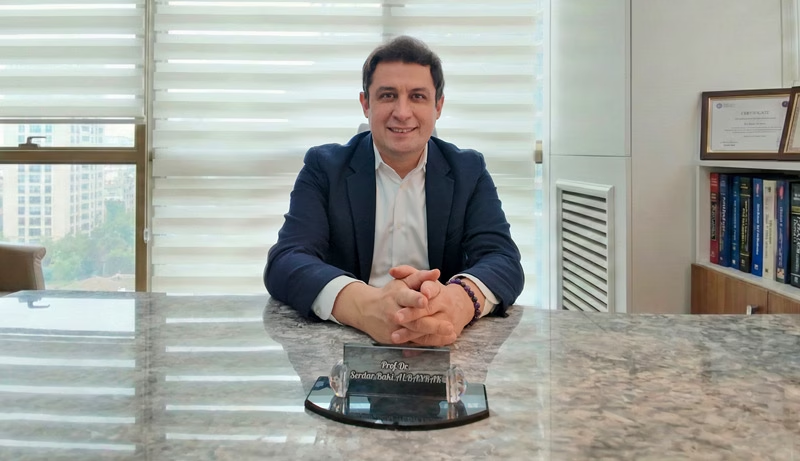
Prof. Dr. Serdar Baki Albayrak
Neurosurgeon · Full Professor of Neurosurgery
Prof. Albayrak uses the same microvascular decompression technique for hemifacial spasm and trigeminal neuralgia. In hemifacial spasm, he also follows the lateral spread response until the nerve is free.
He completed his neurosurgery training at Istanbul University in 2004. Clinical fellowships then followed at the University of Helsinki and at Harvard Medical School. Consultations take place in English or Turkish.
27+Years
5,000+Operations
64Countries
33Publications
Figures from Prof. Albayrak's professional profile, September 2026. See his full publication list.
Request an AppointmentFrequently Asked Questions
Can hemifacial spasm be cured?
MVD treats the usual cause, and many people stay free of spasms afterward. Injections, in contrast, control the spasm without removing the cause. Still, no treatment works for everyone, so discuss your own chances with your surgeon.
What is the success rate of hemifacial spasm surgery?
Overall, most people improve after MVD, and many become free of spasms. However, studies define success in different ways. So ask your surgeon what result to expect in your case.
How much does hemifacial spasm surgery cost in Turkey?
The cost depends on the hospital, the nights in hospital and the tests you need. Your hotel stay and flights also add to it. So ask for the cost of your own plan at the consultation, before you decide.
Prof. Albayrak's Published Research
Prof. Albayrak has not published on hemifacial spasm itself. Instead, his closest papers cover microvascular decompression and the posterior fossa, where MVD takes place. See his full list of 33 publications.
- Microvascular decompression as a surgical management for trigeminal neuralgia: a critical review of the literature
- Giant intradiploic leptomeningeal cyst of the posterior fossa
Public health information
- NHS. Twitching eyes and muscles.
- National Eye Institute. Blepharospasm.
- MedlinePlus, US National Library of Medicine. Facial tics.
- NHS. Symptoms of a stroke.
- UK Civil Aviation Authority. Surgical conditions: guidance for health professionals.
- US Centers for Disease Control and Prevention. Medical tourism.
- GOV.UK, Driver and Vehicle Licensing Agency. Neurological disorders: assessing fitness to drive.
This guide gives general medical information and does not replace a consultation. Diagnosis and treatment decisions need an examination by your own doctor.
Last updated: 1 October 2026. Website editor: Prof. Dr. Serdar Baki Albayrak's clinic, [email protected].
Plan Your Hemifacial Spasm Consultation in Istanbul
Request an appointment with Prof. Dr. Serdar Baki Albayrak. The team then helps you plan the dates of your visit.
Request an Appointment