
Paid online consultations are available by appointment. For booking, please contact us via Whatsapp.

Brain Surgery in Turkey: The Short Answer
Prof. Dr. Serdar Baki Albayrak operates on the brain, spine and nerves in Istanbul. So far, patients from 64 countries have come to him. You meet him in person before any decision, and he performs the operation himself.
Safety depends more on the surgeon, the hospital and the aftercare than on the country. So check all three before you book, including the hospital's intensive care.
Money and timing need planning too. Medicare and the NHS generally do not pay for planned surgery in Turkey. In addition, UK aviation guidance advises about 7 days between brain surgery and the flight.
At a Glance
- Who operatesProf. Albayrak himself, after an in-person consultation
- Where you meetHis clinic in Teşvikiye, Şişli, on the European side of Istanbul
- LanguageConsultations in English or Turkish
- Flying homeAfter a check-up; UK guidance advises about 7 days after brain surgery
- Medicare and the NHSGenerally no cover for planned surgery in Turkey
- CostDepends on your treatment plan; ask before you decide
What Brings You to Istanbul?
First, pick the line that fits you. Each one then leads to the matching conditions and guides.
- 01A brain tumor diagnosisGlioma, meningioma, metastases and other tumors
- 02Facial pain or a skull base tumorTrigeminal neuralgia, facial nerve problems, glomus tumors
- 03An aneurysm, AVM or cavernomaBlood vessel disorders of the brain
- 04Epilepsy, tremor or spasticityEpilepsy surgery, deep brain stimulation, spasticity and pain surgery
- 05A spine or spinal cord problemTumors, disc problems and trapped nerves
- 06Surgery for a childSpina bifida, tethered cord and other conditions in children
Which Conditions Does Prof. Albayrak Treat in Istanbul?
Prof. Albayrak works across neurosurgery: the brain, the spine and the nerves. This guide covers the planning they all share, such as travel and aftercare. Each group below then links to guides on single conditions.
Brain Tumors
Most brain tumor operations aim to remove as much of the tumor as is safe. The laboratory then confirms the tumor type, which guides any further treatment.
For an overview, start with brain tumor treatment or read about brain tumour symptoms. Separate guides also cover frontal lobe tumors, meningioma and metastatic brain tumors. Others explain insular glioma and craniopharyngioma.
For malignant tumors, see brain cancer and glioblastoma. His own research also includes a book chapter on the origin of meningiomas.
Radiotherapy or other treatment after surgery, however, often continues at home. So plan early how your local team will take over.
Skull Base and Cranial Nerve Disorders
The skull base carries the nerves for facial feeling, facial movement, hearing and swallowing. So surgery in this area needs careful planning around each nerve.
For facial pain, see trigeminal neuralgia surgery in Turkey, which explains microvascular decompression. Other guides also cover skull base tumors and glomus jugulare tumors. For nerve problems of the face, see facial nerve pain and facial paralysis.
Aneurysms and Other Blood Vessel Disorders
An aneurysm is a bulge in an artery wall. An arteriovenous malformation (AVM), in contrast, is a tangle of abnormal vessels. Some cause no symptoms and turn up on a scan for another reason.
Read about brain aneurysms, arteriovenous malformations, cavernomas and dural arteriovenous fistulas. An aneurysm or AVM found by chance usually leaves time for a careful decision. A bleed in the brain, however, needs emergency care at the nearest hospital.
Epilepsy, Movement Disorders and Spasticity
Some operations change how the brain or nerves work instead of removing a lesion. These include operations such as epilepsy surgery and deep brain stimulation in Turkey. Deep brain stimulation treats symptoms of Parkinson's disease, tremor and dystonia.
Other guides cover spasticity surgery and spinal cord stimulation for chronic pain. Stimulators also need programming visits, so ask how follow-up works at home.
Spine, Spinal Cord and Nerve Surgery
Spine surgery covers very different operations, from removing a tumor to freeing a trapped nerve. Prof. Albayrak's spine work includes spinal cord and spine tumor surgery. He also operates on a herniated disc or spinal stenosis that presses on nerves.
Surgery for a disc problem, however, usually comes after other treatment has not helped. For carpal tunnel syndrome and other trapped nerves, see peripheral nerve entrapment treatment.
Neurosurgery for Children
Children need a team that treats children every day, from anesthesia to intensive care. So ask about the pediatric team as well as the surgeon.
Read about pediatric neurosurgery, myelomeningocele and spina bifida and split cord malformation. His published work also includes a review of surgery for tethered cord syndrome in childhood.
Finally, for the full list, see all conditions Prof. Albayrak treats.
Which spine and spinal cord problems can be treated in Istanbul?
Prof. Albayrak operates on spinal cord and spine tumors. He also treats a herniated disc, spinal stenosis and, in children, tethered cord. At the consultation, he then explains whether surgery suits your case.
Is Brain Surgery in Turkey Safe?
Safety depends on people and planning, not on the country alone. But no surgeon can promise a risk-free operation. So judge any offer by its answers to a few clear questions.
Questions to Ask Before You Book
- Who will operate, and how often does that surgeon perform your operation?
- In which hospital, and does it have intensive care for neurosurgery?
- Will the surgeon examine you in person before you agree to surgery?
- What are the main risks for you, and what happens if one occurs?
- Which records will you take home, and who follows you up there?
- Which language will the team use with you and your family?
Next, read how to choose a neurosurgeon for more on judging experience.
What UK and US Health Authorities Advise
The UK Foreign Office advises discussing treatment in Turkey with your UK doctor first. It also suggests doing your own research. The Turkish Ministry of Health, it notes, lists approved providers on the HealthTürkiye website.
The US CDC, too, suggests checking the surgeon's qualifications and the facility's accreditation. It also recommends a travel medicine visit at least 4-6 weeks before the trip.
The NHS and the CDC also advise planning your aftercare before you travel. For example, the CDC suggests bringing copies of your records. It also advises getting copies of all new records before you return.
Is it safe to have brain surgery in Turkey?
Yes, if your surgeon often performs your operation and the hospital has intensive care. Every operation still carries risks, so ask which ones apply to you. UK and US health agencies also advise talking to your own doctor first.
How Long to Stay in Istanbul and When to Fly Home
Your stay has four parts, from the consultation to a check before the flight. How long each part takes then depends on the operation and your recovery.
How Long You Will Stay
- Consultation and tests: the examination, new scans if your surgeon asks for them and checks before anesthesia.
- Operation and hospital stay: after brain surgery, many patients spend the first night in intensive care.
- Recovery nearby: rest at a hotel or apartment close to the hospital, ideally with a companion.
- Check before the flight: your surgeon examines you and confirms when you can fly.
The NHS advises staying long enough to recover before you travel home. So keep your return date flexible, and confirm it with the team before you book.
A companion also helps with the hospital days, the hotel stay and the journey home. Istanbul Airport (IST) lies on the European side, like the clinic. Sabiha Gökçen (SAW), the second airport, lies on the Asian side.
When You Can Fly Home
Your neurosurgeon decides when you can fly, after a check-up. Official guidance then gives a minimum frame for that decision.
| Source | What it says | What it means for you |
|---|---|---|
| UK Civil Aviation Authority | Air can remain inside the skull after neurosurgery and expand at altitude. It advises not flying for about 7 days. | After brain surgery, allow at least about a week before the flight. |
| US CDC | Flying after surgery can raise the risk of blood clots. Waiting 10-14 days after major surgery lowers the risks of pressure changes. | After a long operation, discuss a gap of 10-14 days with your surgeon. |
| UK Foreign Office (GOV.UK) | Check when you can fly before you book. Flying after major surgery raises the risk of blood clots that can threaten life. | Buy a flexible ticket, and ask how to lower your clot risk on the flight. |
Before You Book the Flight Home
The UK Civil Aviation Authority (CAA), however, gives no separate figure for spine surgery. After a spine operation, your surgeon therefore judges the timing case by case.
Also ask your airline whether it needs a medical form after recent surgery. An aisle seat then makes it easier to stand up and move during the flight.
How long should I stay in Turkey after brain surgery?
That depends on the operation and on your recovery. Plan for the consultation, the hospital stay, some days nearby and a final check. UK aviation guidance alone also means about 7 days between surgery and flight.
How long after brain surgery can I fly home from Turkey?
UK aviation guidance advises about 7 days, since trapped air can expand at altitude. For major surgery, the US CDC also suggests 10-14 days. Your surgeon then makes the final decision after a check-up.
How soon can I fly after spine surgery?
UK aviation guidance gives no set figure for spine surgery. Instead, your surgeon checks the wound, your walking and your risk of blood clots. Until then, keep your return ticket flexible.
Brain Surgery Cost in Turkey: What Affects the Price?
The cost of brain surgery in Turkey depends on the diagnosis, the operation and the hospital stay. So two estimates can differ widely, even for the same condition. Compare what each estimate covers, not only the total.
What a Complete Estimate Should Cover
A complete estimate lists each part of the treatment plan. Then you can see what you pay for now, and what may come later.
| Part of the plan | What to check |
|---|---|
| Surgeon and operating room | Which operation you will have, and how long it usually takes |
| Anesthesia | The whole operation, including an awake phase if your plan has one |
| Hospital nights | Nights in a regular room and nights in intensive care |
| Tests before surgery | MRI, CT, blood tests and special tests such as angiography |
| Tissue analysis | Pathology of a tumor, which guides any further treatment |
| Implants and devices | Stimulators, batteries, plates, screws, cages or shunt valves |
| Medicines and supplies | Medicines in hospital and the ones you take home |
| Check-ups in Istanbul | Wound checks and the visit before you fly home |
How the Type of Operation Changes the Cost
The operation itself shapes most of the bill. For example, a short spine decompression usually costs less than a long skull base operation.
| Type of surgery | Main cost drivers |
|---|---|
| Brain tumor surgery | Length of the operation, intensive care nights, tissue analysis and the MRI after surgery |
| Skull base and pituitary surgery | Longer operations, special instruments and hormone tests |
| Aneurysm and blood vessel surgery | Angiography, intensive care and close checks after surgery |
| Deep brain stimulation | The stimulator system and battery type, tests before surgery and programming visits |
| Spine surgery | Number of spinal levels, implants such as screws or cages, and rehabilitation |
| Surgery for children | Pediatric intensive care, the anesthesia team and a parent's stay |
Additionally, some operations use extra technology, such as neuronavigation, nerve monitoring or fluorescence-guided tumor surgery. These belong in the estimate only when your operation needs them.
Costs Outside the Hospital Bill
Some costs never appear on a hospital estimate. However, they still belong in your budget.
- Return flights for you and a companion
- Hotel nights before admission and after discharge, until you are fit to fly (see how long to stay)
- Local transport between your hotel, the clinic and the hospital
- Travel and medical insurance for the trip
- Scans and visits after you return home
- Time off work for you and your companion
Why Do Prices Differ Between Countries and Hospitals?
Hospital fees, staff costs and currency rates differ from country to country. So the same operation can carry very different prices. Within Istanbul, prices also vary between hospitals and room types.
However, price is not the only test. First, check the surgeon's experience with your condition, the intensive care unit and the follow-up plan, as the safety section explains.
What to Ask About an Estimate
- Does the estimate cover intensive care, and for how many nights?
- What happens to the cost if I need a longer stay or a second operation?
- Which costs fall outside it, such as new scans, medicines or a companion's bed?
- Does it cover the implant or device, and which model does the plan use?
- Which check-ups before my flight home does it cover?
- In which currency is it, and how and when do I pay?
The right moment to ask is the consultation, before you decide. By then, Prof. Albayrak has examined you, so the estimate fits your plan.
Also, talk to your insurer early. Some US plans and UK insurers cover part of the treatment abroad, so read the US and UK sections below.
Questions about cost
How much does brain surgery cost in Turkey?
There is no single price, because the cost depends on the operation, the hospital stay, implants and tests. So prices online vary widely. Ask for the cost of your own plan at the consultation, before you decide.
Why can brain surgery cost less in Turkey than in the US or UK?
Hospital fees, staff costs and currency rates differ between countries. So a complete estimate in Istanbul can be lower than a self-pay price at home. Still, compare full estimates, including travel and follow-up, before you decide.
Does a deep brain stimulation estimate include the device?
Ask before you decide, because the stimulator system is a large part of the cost. Also check which battery type the plan uses, rechargeable or not, and whether programming visits belong in the estimate.
Do I pay for follow-up after I fly home?
Usually, yes. Scans and visits in your home country fall outside an estimate in Istanbul. So plan them early with your local doctor or your insurer.
Planning from the US: Insurance and Medicare
Medicare generally does not cover health care outside the US. Private plans differ widely, so ask your insurer in writing before you book.
Its exceptions cover rare cases, such as a US emergency when a foreign hospital is closer. Planned surgery in Turkey, however, does not fit them.
Some Medigap policies pay for emergency care abroad, but not for planned operations. Medicare drug plans also do not pay for medicines you buy outside the US.
What to Ask Your Insurer
For a private plan, these questions help:
- Does my plan cover planned surgery outside the US, and does it require prior approval?
- Which documents do you need for a claim, such as an itemized bill or a medical report?
- Will my plan pay for follow-up visits and scans at home after surgery abroad?
- Does it cover medical evacuation, or do I need separate travel health insurance?
The CDC also warns that insurance may not cover follow-up care after treatment abroad. So arrange it with your local doctor before you leave. Tell the clinic team early, too, which documents your insurer needs.
Will Medicare or my US insurance cover surgery in Turkey?
Medicare usually does not, because it pays for care abroad only in rare cases. Private plans vary, so ask your insurer about coverage and prior approval in writing. Also check whether your plan includes medical evacuation and follow-up at home.
Planning from the UK: NHS, Insurance and Waiting Lists
The NHS generally does not pay for planned treatment in Turkey. Its routes for treatment abroad, such as S2 and the EU directive, apply only in Europe.
So outside Europe, the NHS website advises talking to your local integrated care board (ICB). Your EHIC or GHIC also does not cover planned treatment or work in Turkey.
On an NHS waiting list? Then talk to your GP before you decide. Also agree how the NHS will continue your care after you return.
Travel Insurance, Medicines and Driving
According to the UK Foreign Office, standard travel insurance normally excludes trips for elective surgery. Complications may fall outside your policy too. So look for a specialist policy, and declare your condition and the planned treatment.
The Foreign Office also treats planned treatment abroad as a private arrangement. It generally cannot help with problems over care or costs.
Turkish pharmacies do not accept UK prescriptions, so bring enough of your medicines. Back home, check the DVLA rules too: after some brain operations, drivers must stop driving and tell the DVLA.
Can the NHS pay for surgery in Turkey?
Generally, it does not, because its routes for planned treatment abroad cover only Europe. EHIC and GHIC cards also do not work in Turkey. So speak to your GP and your local ICB before you make plans.
US and UK Patients: What to Check Before You Travel
The table puts the main official rules side by side. Rules change, however, so check the official pages in the sources before you book.
| Topic | From the US | From the UK |
|---|---|---|
| Cover for planned surgery | Medicare generally does not pay for care abroad. Private plans vary, so get prior approval in writing. | NHS routes for treatment abroad apply only in Europe. EHIC and GHIC do not cover planned treatment and are not valid in Turkey. |
| Travel insurance | Choose travel health insurance that includes medical evacuation (CDC). | Standard policies normally exclude elective surgery. Declare your condition and treatment (GOV.UK). |
| Visa | Ordinary passport holders can stay up to 90 days in any 180 days without a visa. | Ordinary passport holders on tourist trips can stay up to 90 days in any 180 days without a visa. |
| Passport | Valid for at least 60 days beyond your permitted stay. | Valid for at least 60 days beyond your permitted stay. |
| Medical records | Bring copies, and take copies of all new records home (CDC). | Agree with your GP how to share your notes before and after treatment (NHS). |
| Medicines | Medicare drug plans do not cover medicines bought abroad. | Turkish pharmacies do not accept UK prescriptions, so bring enough. |
| Flying home | The CDC suggests waiting 10-14 days after major surgery. | The CAA advises about 7 days after brain surgery. |
| Aftercare at home | Arrange follow-up before you go; insurance may not cover it (CDC). | Plan with your GP how the NHS continues your care (NHS). |
| Driving after surgery | Rules vary by state, so ask your doctor before you drive. | After some brain operations, you must stop driving and tell the DVLA (GOV.UK). |
Visa Rules for Medical Travel
The visa-free days count your whole stay, including recovery. A second trip within 180 days also counts toward the same limit. So if treatment and recovery could take longer than 90 days, ask a Turkish consulate before you travel.
Do I need a visa to travel to Turkey for surgery?
Ordinary US and UK passports usually allow 90 days in any 180 without a visa. The UK rule, however, mentions tourist travel and does not list medical treatment. So check the Turkish Ministry of Foreign Affairs page or ask a consulate first.
Your visit to Istanbul
From Your First Message to Flying Home
Whatever operation you need, the visit follows four steps. Each step then answers one practical question.
STEP 01
Request an appointment
Use the form on this page, WhatsApp or call +90 532 308 97 72. A short message is enough: your diagnosis, your country and your travel dates.
You can write in English or Turkish, so use the language you prefer. The team then contacts you to arrange the consultation date.
STEP 02
Consultation in Istanbul
Prof. Albayrak examines you at his clinic in Terrace Fulya Center, Teşvikiye. Next, he goes through your scans and reports with you. He then explains each option, its risks and the recovery.
Sometimes treatment without surgery suits you better, and he tells you so. If newer scans would help, you can also have them in Istanbul first.
The clinic lies in Şişli, a central district on the European side of Istanbul. Get directions on Google Maps.
What should I bring to my appointment in Istanbul?
First, bring your MRI and CT scans on a disc or USB drive. Then add the written reports, notes from earlier operations and a list of your medicines. Your insurance documents help, too.
STEP 03
Surgery and hospital stay
If you choose surgery, the operation takes place in a hospital in Istanbul. Prof. Albayrak names the hospital at the consultation, along with the likely stay.
Before you agree, also make sure you understand the aim, risks and recovery. Then ask about visiting rules, which differ between wards and intensive care.
STEP 04
Recovery, fitness to fly and follow-up
After discharge, you rest nearby until a check-up before the flight. Your surgeon then confirms when you can fly.
You leave with a discharge summary for your doctor at home. Also ask for copies of your scans and any tissue report. If a report exists only in Turkish, ask whether an English version is available.
Back home, your local doctor takes over routine follow-up. So book that visit before you travel, and keep the clinic's contact details for questions.
Especially after brain surgery, get urgent help if you notice any of these signs:
- A severe or worsening headache
- Fever, or redness, swelling or discharge at the wound
- Clear fluid leaking from the wound or the nose
- A seizure, new weakness, numbness or confusion
- New problems with speech or vision
What happens if I have a problem after I return home?
For any urgent problem, contact your local doctor or emergency services first. Your discharge summary then shows them which operation you had. You can also message the clinic team with questions.
Your Neurosurgeon in Istanbul
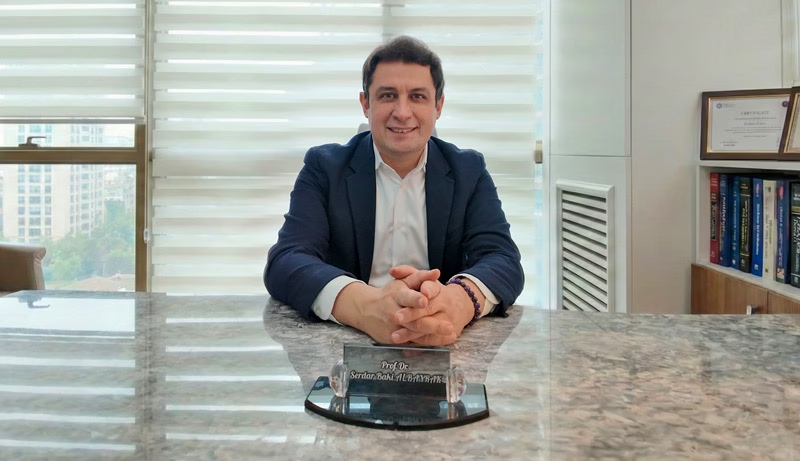
Prof. Dr. Serdar Baki Albayrak
Neurosurgeon · Full Professor of Neurosurgery
Prof. Albayrak completed his neurosurgery training at Istanbul University in 2004. He then took clinical fellowships at the University of Helsinki and Harvard Medical School. At Harvard, he trained at Brigham and Women's Hospital.
He sees patients at Terrace Fulya Center, Hakkı Yeten Cad. No: 11, D:13, Teşvikiye, Şişli, Istanbul. Consultations take place in English or Turkish, so you can talk to him directly.
27+Years
5,000+Operations
64Countries
33Publications
Figures from Prof. Albayrak's professional profile, September 2026. See his full publication list.
Request an AppointmentFrequently Asked Questions
Do I need special travel insurance for surgery abroad?
Usually, yes. Standard travel insurance normally excludes trips for elective surgery and their complications. So look for a specialist policy that covers the journey home, and declare your treatment.
Can a family member stay with me in hospital?
Hospitals in Turkey often let one companion stay in the patient's room on the ward. Intensive care units, however, have stricter rules. So ask about the rules of your hospital at the consultation.
Do the doctors and nurses speak English?
Prof. Albayrak speaks English, and consultations take place in English or Turkish. Some hospital staff may speak less English. For this reason, ask at the consultation how the team supports communication on the ward.
Prof. Albayrak's Published Research
These peer-reviewed articles and book chapter by Prof. Albayrak cover topics in this guide. Each link opens the record on PubMed or at the publisher. The full list of his 33 publications is on his profile.
- Intra-operative magnetic resonance imaging in neurosurgery
- The Origin of Meningiomas
- Microsurgical management of pineal region lesions: personal experience with 119 patients
- Microneurosurgical management of middle cerebral artery bifurcation aneurysms
- Microvascular decompression as a surgical management for trigeminal neuralgia: a critical review of the literature
- A case of intra-dural malignant peripheral nerve sheath tumor in thoracic spine associated with neurofibromatosis type 1
- Tethered cord syndrome in childhood: special emphasis on the surgical technique and review of the literature with our experience
Public health information
- NHS. Going abroad for medical treatment.
- NHS. Treatment abroad checklist.
- GOV.UK, Foreign, Commonwealth & Development Office. Medical emergencies, treatment and hospitalisation abroad.
- GOV.UK. Turkey travel advice: health.
- US Centers for Disease Control and Prevention. Medical tourism.
- Medicare.gov. Travel outside the U.S.
- UK Civil Aviation Authority. Surgical conditions: guidance for health professionals.
- Republic of Türkiye Ministry of Foreign Affairs. Visa information for foreigners.
- GOV.UK, Driver and Vehicle Licensing Agency. Neurological disorders: assessing fitness to drive.
This guide gives general information and does not replace a consultation. Diagnosis and treatment decisions need an examination by your own doctor. Insurance, visa and travel rules change, so check the official pages above before you book.
Last updated: 10 October 2026. Website editor: Prof. Dr. Serdar Baki Albayrak's clinic, [email protected].
Plan Your Consultation in Istanbul
Request an appointment with Prof. Dr. Serdar Baki Albayrak. The team then helps you plan the dates of your visit.
Request an Appointment