
Paid online consultations are available by appointment. For booking, please contact us via Whatsapp.

In short
What Is a Brain Aneurysm?
A brain aneurysm is a bulge on a weak spot of a brain artery. Most stay small and never cause symptoms. However, if one bursts, blood floods the space around the brain and needs emergency care.
Doctors call this bleed a subarachnoid hemorrhage, which is also a type of stroke. Overall, about 3 in 100 adults have an unruptured aneurysm, usually without knowing it. In fact, many turn up by chance on a scan for headaches or dizziness.
Most aneurysms, especially saccular ones, sit on the circle of Willis at the brain's base. So after diagnosis, one question matters most: should you treat it, and how?
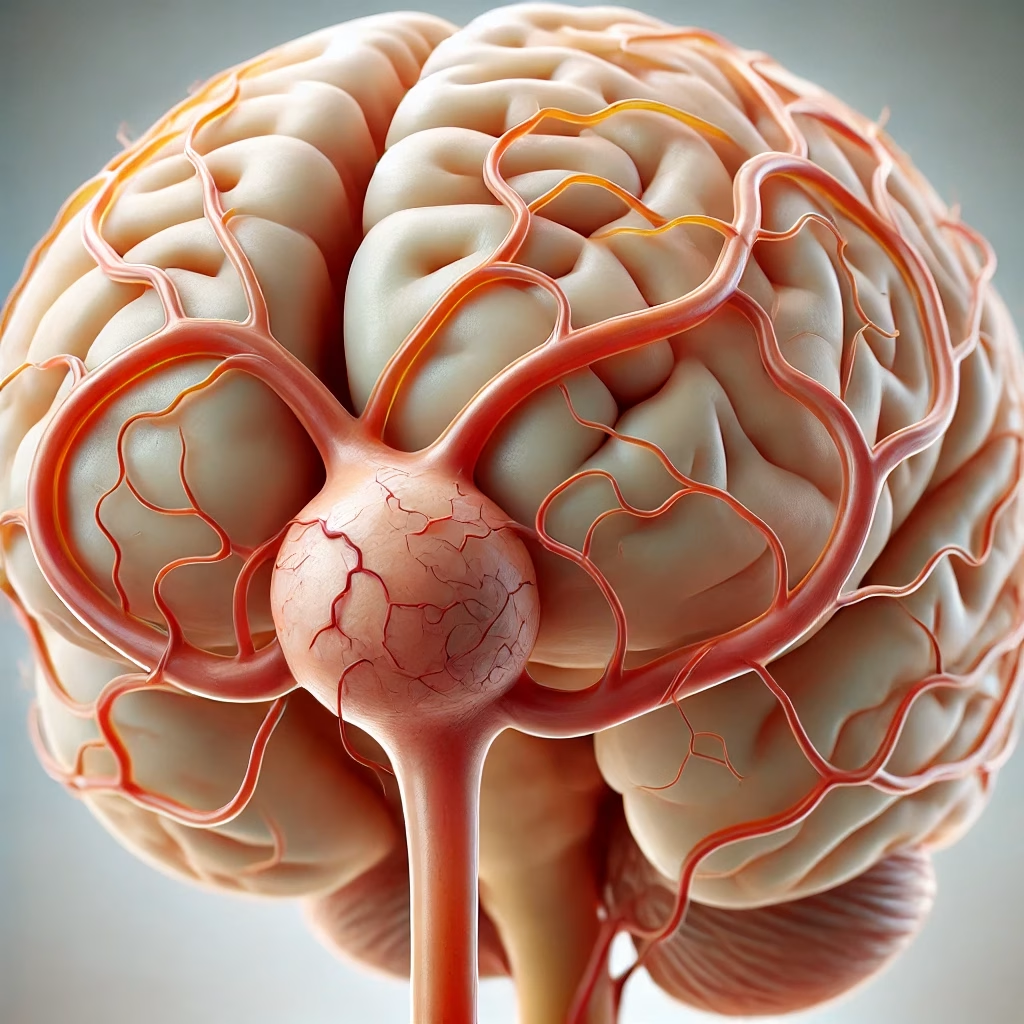
What types of brain aneurysm are there?
Doctors describe an aneurysm by its shape, cause and size. Each feature also changes the rupture risk and the best way to repair it.
- Saccular ("berry")A rounded pouch at a branch point; the most common type
- FusiformThe artery widens on all sides, often with hardened arteries
- DissectingA tear lets blood split the layers of the artery wall
- MycoticAn infection weakens the artery wall; rare
- SizeSmall under 11 mm, large 11-25 mm, giant over 25 mm
- NumberAbout 1 in 5 patients has more than one aneurysm
What Brings You Here?
First, pick the situation closest to yours. Then, each link jumps to the part of this page that answers it.
- 01A sudden, severe headacheThe worst headache of your life, often with vomiting or a stiff neck
- 02An aneurysm found by chanceSeen on an MRI or CT that you had for another reason
- 03Eye pain, a drooping eyelid or double visionSigns that a larger aneurysm presses on a nerve
- 04Aneurysms in the familyClose relatives with an aneurysm, or polycystic kidney disease
- 05Choosing a treatmentClipping, coiling, a flow diverter or watchful waiting
- 06A family member after a ruptureIntensive care, vasospasm, hydrocephalus and recovery
Brain Aneurysm Symptoms
Most aneurysms cause no symptoms until they leak or burst. However, the warning signs differ by situation, so the blocks below follow the list above.
Speed tells them apart. A ruptured aneurysm causes a headache that peaks within seconds to a minute. In contrast, an unruptured aneurysm causes nothing, or it slowly presses on a nerve.
Sudden, severe headache: a rupture
A ruptured aneurysm causes a thunderclap headache, so the pain peaks almost at once. Many patients call it the worst headache of their life, and other signs then follow:
- Nausea and vomiting
- A stiff or painful neck
- Strong sensitivity to light
- Blurred or double vision
- A seizure, confusion or fainting
Therefore, call an ambulance at once, and do not drive yourself. The risk of a second bleed peaks in the first hours, so fast treatment saves lives.
A sudden, milder warning headache
Sometimes an aneurysm leaks a little blood days or weeks before a major rupture. This sentinel headache starts suddenly but may fade within hours.
However, only a few patients get this warning. So any sudden, unusual headache deserves a same-day medical check.
An aneurysm found by chance
Most unruptured aneurysms cause no symptoms at all. They usually show up on a scan done for other reasons, such as headaches.
Yet finding one does not mean it will burst. For example, pooled data from six studies showed an average 5-year rupture risk of 3.4%. Your own risk also depends on size, location, age and blood pressure.
Eye pain, drooping eyelid or double vision
A large aneurysm can press on nearby nerves before it ever bleeds. For example, an aneurysm near the posterior communicating artery can squeeze the nerve that moves the eye.
- Pain above or behind one eye
- A drooping eyelid
- A widened (dilated) pupil
- Double vision
- Numbness or weakness on one side of the face
A new drooping eyelid with a widened pupil therefore needs same-day imaging. It can signal a growing aneurysm that may soon rupture.
Aneurysms in the family
A parent, sibling or child with an aneurysm raises your own risk. Polycystic kidney disease and some connective tissue disorders raise it too.
Therefore, doctors often offer screening with MR or CT angiography in these families. As a result, screening can find an aneurysm while it is still small.
Ruptured vs. unruptured: how do they differ?
- Unruptured: no bleeding, usually no symptoms, and time to decide calmly.
- Ruptured: bleeding around the brain and an emergency that needs repair within hours to days.
- After repair: both need follow-up scans, especially after coiling.
Is a brain aneurysm a stroke?
Not by itself. However, a ruptured aneurysm causes a hemorrhagic stroke, because blood leaks around the brain. In contrast, most strokes come from a blocked artery, not a bleed.
Questions at this stage
Can you feel a brain aneurysm before it ruptures?
Usually not. Small aneurysms rarely cause any feeling. However, a large one can press on a nerve, causing eye pain or double vision.
Can stress or exercise make an aneurysm burst?
A sudden rise in blood pressure, for example from heavy straining, can trigger a rupture. Even so, regular moderate exercise suits most people, and steady blood pressure control matters most.
Do all brain aneurysms rupture?
No. Most never rupture. Pooled data show an average first-year risk of about 1.4%. However, size, site and blood pressure change it.
When to See a Doctor
Most headaches, such as tension headaches, have harmless causes. Still, some patterns need a prompt check, and a few need an ambulance.
Book a doctor's visit if you have:
- An aneurysm found by chance on a scan
- Headaches that change their pattern over weeks
- Two or more close relatives with an aneurysm
- Polycystic kidney disease or a connective tissue disorder
Call emergency services for:
- A sudden, severe headache that peaks within a minute
- Headache with vomiting, a stiff neck or fainting
- A seizure or sudden confusion
- A drooping eyelid with a widened pupil
- Weakness, numbness or speech trouble on one side
First, in the emergency room, a CT scan shows fresh blood within minutes. If the CT looks normal but doubt remains, a lumbar puncture checks the spinal fluid. In fact, up to one in four ruptures gets missed at first, mostly because no one ordered a scan.
Bleeding can also come from other vessel problems. For example, an arteriovenous malformation (AVM) or a dural arteriovenous fistula can bleed as well, and so can the fragile backup vessels of moyamoya disease.
Brain Aneurysm Treatment: Clipping, Coiling or Flow Diverter?
Four main options exist, and none suits every aneurysm. The choice therefore depends on shape, size and location, and on your age and health.
| Option | How it works | Often chosen for | Stay after a planned repair | Main trade-off |
|---|---|---|---|---|
| Microsurgical clipping | Through a small skull opening, the surgeon closes the aneurysm neck with a titanium clip | Middle cerebral artery aneurysms, complex shapes, aneurysms with a blood clot, younger patients | A few days | Open surgery, but a completely clipped aneurysm rarely comes back |
| Endovascular coiling (with or without a stent or balloon) | Through a catheter from the groin or wrist, soft platinum coils fill the aneurysm so it clots | Many ruptured aneurysms, deep sites such as the basilar tip, older patients | Usually short | No skull opening, but the aneurysm can reopen and need retreatment |
| Flow diverter stent | A fine mesh tube in the parent artery slows flow into the aneurysm, which clots and shrinks over months | Large, wide-necked or spindle-shaped aneurysms, mostly unruptured | Usually short | Closure takes months, and you take antiplatelet medicines for a long time |
| Observation | Regular MR or CT angiography, blood pressure control and no smoking | Small, stable, low-risk aneurysms, especially in older patients | None | A small ongoing rupture risk; growth changes the plan |
For instance, the ISAT trial favored coiling for ruptured aneurysms that suited both methods. At one year, coiling cut death or dependency by about 7 percentage points. However, coiled aneurysms re-bled slightly more often and needed more retreatment.
Moreover, the survival gap lasted: at 10 years, 83% versus 79% of patients remained alive. But ISAT only included aneurysms that suited both methods. Many aneurysms suit one method far better, so an experienced team should compare both.
Meanwhile, European guidelines reserve flow diverters for aneurysms without another low-risk option.
Which is safer, clipping or coiling?
Neither is safer for every aneurysm. In ISAT, coiling gave better one-year results, but clipping gave fewer re-bleeds. Therefore, the right choice depends on the aneurysm and the team's experience with both.
Does an Unruptured Aneurysm Need Treatment?
Not always. The team therefore weighs the aneurysm's own rupture risk against the risk of repair. Both also change with age.
Accordingly, European guidelines suggest treatment when the 5-year rupture risk exceeds the procedure's risk. Specifically, doctors estimate that risk with the PHASES score and the features below.
| Factor | Lower rupture risk | Higher rupture risk |
|---|---|---|
| Size | Under 7 mm | 7 mm or more; much higher from 13 mm |
| Location | Internal carotid artery | Arteries at the back of the brain and the posterior communicating artery |
| Growth | Stable on repeat scans | Growing between scans, even when small |
| Shape | Smooth and round | Irregular, with a small extra bulge |
| Earlier bleeding | None | A past rupture of another aneurysm |
| Blood pressure and smoking | Controlled; non-smoker | High blood pressure; current smoker |
| Age and origin | Under 70 | 70 or older; Finnish or Japanese origin |
For example, in the large ISUIA study, small front-circulation aneurysms under 7 mm almost never ruptured. In contrast, the 5-year rate reached 14.5% at 13-24 mm and 40% from 25 mm.
However, many aneurysms that rupture measure under 7 mm. So size alone never decides; the whole profile does.
Also, if you choose observation, stop smoking, control your blood pressure and avoid stimulant drugs. However, guidelines do not advise aspirin or statins just to prevent rupture.
What is the PHASES score?
PHASES estimates the 5-year rupture risk of an unruptured aneurysm. The name also spells out its parts: Population, Hypertension, Age, Size, Earlier bleeding and Site.
What Causes a Brain Aneurysm?
Doctors rarely find one single cause. Generally, a weak spot in the artery wall meets years of pressure from blood flow.
Several risk factors also make that weak spot more likely:
- Smoking, which drives both the formation and the rupture of aneurysms
- High blood pressure, which strains and weakens artery walls
- Family history in a parent, sibling or child
- Female sex, especially after menopause
- Inherited conditions such as polycystic kidney disease or Ehlers-Danlos syndrome
- Drug use, especially cocaine or amphetamines, and heavy drinking
Less often, an infection or a head injury weakens the wall too. Importantly, nothing you did caused your aneurysm. In fact, most people with these risk factors never develop one.
What Happens After an Aneurysm Ruptures?
First, the team seals the aneurysm to stop a second bleed. Then, for two weeks, it watches for complications that can harm the brain later.
| Complication | When | What it does | How the team manages it |
|---|---|---|---|
| Re-bleeding | Mostly in the first hours and days | A second, often more severe bleed | Early clipping or coiling; blood pressure control |
| Hydrocephalus | Hours to weeks | Blood blocks fluid drainage and raises pressure in the skull | A temporary drain; a permanent shunt for some patients |
| Vasospasm and delayed ischemia | Mostly days 3-14 | Arteries narrow and starve parts of the brain of blood | Nimodipine, close monitoring, fluids; balloon or drug treatment inside the artery if severe |
| Sodium changes | First two weeks | Low sodium can cause confusion or seizures | Frequent blood tests and careful fluid balance |
| Seizures | Any time | Jerking movements or loss of awareness | Anticonvulsant medicines when needed |
As a result, most patients spend about two weeks under close watch, usually in intensive care. Afterward, many need physiotherapy, speech therapy or memory training.
Your treatment path
From Diagnosis to Recovery
Treatment follows four steps. Each step then answers one clear question, from diagnosis to follow-up.
STEP 01
Diagnosis: seeing the aneurysm clearly
Diagnosis starts with the right scan for the situation. In an emergency, speed matters most; for a planned decision, however, detail matters most.
- CT scan shows fresh bleeding within minutes, so it comes first after a sudden headache.
- CT angiography (CTA) adds contrast dye to show the aneurysm's size, shape and neck.
- MR angiography (MRA) needs no radiation, so it suits screening and follow-up.
- Lumbar puncture finds blood in the spinal fluid when the CT looks normal.
- Catheter angiography (DSA) gives the most precise 3D map and guides treatment.
Is a cerebral angiogram risky?
It carries a small risk, such as a stroke or bruising at the puncture site. Therefore, doctors use it when its detail can change the treatment plan.
STEP 02
Planning: weighing the options together
Next, the team studies the aneurysm in 3D, including its neck, dome and nearby branches. These details then decide whether a clip, coils or a flow diverter fits best.
European guidelines also advise a shared decision in an experienced team. In addition, they favor centers where each operator treats more than 30 aneurysm patients a year.
For an unruptured aneurysm, you generally have time. So ask about your personal rupture risk, the treatment risk and the follow-up each option requires.
STEP 03
Treatment: sealing the aneurysm
Both main methods take place under general anesthesia, so you sleep throughout. Their goal is also the same: stop blood entering the aneurysm, while normal branches keep flowing.
- Clipping: the surgeon opens a small window in the skull, frees the aneurysm under the microscope and closes its neck. Afterward, the bone goes back, held by small titanium plates.
- Flow checks: during clipping, a fluorescent dye confirms that the aneurysm has closed and nearby arteries stay open.
- Coiling: a catheter travels from the groin or wrist to the aneurysm, and coils fill it until blood no longer enters.
- Bypass: for rare giant or complex aneurysms, the surgeon reroutes blood around the diseased segment.
Is brain aneurysm surgery dangerous?
Every repair carries some risk, mainly stroke or bleeding during the procedure. For an unruptured aneurysm, that risk especially depends on size, site and age. Therefore, the team only recommends treatment when it lowers your overall risk.
STEP 04
Recovery and follow-up
Most patients go home within days after a planned repair of an unruptured aneurysm. In Prof. Albayrak's routine after planned brain surgery, patients usually stand up on day one. Most can also shower by day three.
After a rupture, however, the hospital phase and rehabilitation take much longer.
- Follow-up scans: coiled and flow-diverter aneurysms need repeat imaging; clipped ones need fewer checks.
- Lifestyle: stop smoking and keep your blood pressure normal, because new aneurysms can still form.
- Work and driving: timing depends on the repair and on any seizures; local driving rules apply.
How long is recovery after brain aneurysm surgery?
Many people return to light activities within a few weeks of a planned repair. Recovery after a rupture takes months, and some problems keep improving for a year or longer.
Can I have an MRI after clipping or coiling?
Yes, in most cases. Modern clips and coils are MRI-compatible, although they blur the image close to the device. Also, bring your implant card to every scan.
How soon can I fly home after aneurysm treatment?
Your surgeon decides at the check-up after treatment. Generally, you fly once you feel stable and the wound or puncture site heals.
Brain Aneurysm Surgery in Istanbul

Prof. Dr. Serdar Baki Albayrak
Neurosurgeon · Cerebrovascular Surgery
Aneurysm surgery is a matter of millimeters. The clip must close the neck, yet every nearby branch must keep flowing. Therefore, careful 3D planning and microsurgical experience shape the result.
Prof. Albayrak completed advanced surgical training at Harvard Medical School (Brigham and Women's Hospital). He also completed a clinical fellowship at the University of Helsinki.
27+Years
5,000+Operations
64Countries
Figures from Prof. Albayrak's professional profile, September 2026.
Request an AppointmentFrequently Asked Questions
Can a brain aneurysm go away on its own?
No. An aneurysm does not heal by itself. However, many small ones stay stable for years, so observation remains a sound option for them.
Can you live a normal life with an unruptured brain aneurysm?
Yes, most people do, but they should control blood pressure, avoid smoking and attend follow-up scans.
What is the survival rate after a ruptured brain aneurysm?
About half of people with a ruptured aneurysm do not survive, according to the Brain Aneurysm Foundation. However, fast care at an experienced center improves the odds. In ISAT, for example, about four in five survivors who answered at 10 years lived independently.
Is an aneurysm the same as an AVM or a cavernoma?
No. An aneurysm is a bulge on one artery. In contrast, an AVM is a tangle of arteries and veins, and a cavernoma is a cluster of leaky capillaries.
Which doctor treats brain aneurysms?
Generally, a cerebrovascular neurosurgeon and an interventional neuroradiologist decide together. Prof. Dr. Serdar Baki Albayrak is a neurosurgeon in Istanbul who treats brain aneurysms.
Prof. Albayrak's Published Research
Peer-reviewed articles and book chapters written or co-written by Prof. Dr. Serdar Baki Albayrak on brain aneurysm microsurgery. Each link opens the record on PubMed or at the publisher. The full list of his 33 publications is on his profile.
- Microneurosurgical management of proximal middle cerebral artery aneurysms
- Microneurosurgical management of middle cerebral artery bifurcation aneurysms
- Microneurosurgical management of distal middle cerebral artery aneurysms
- Co-existence of bilateral fetal type posterior cerebral artery and the bilateral giant internal carotid artery aneurysms in an ataxic patient
Public health information
- National Institute of Neurological Disorders and Stroke. Cerebral Aneurysms.
This page gives general medical information and does not replace a consultation. Diagnosis and treatment decisions need an examination by your own doctor.
Plan Your Aneurysm Treatment in Istanbul
Request an appointment with Prof. Dr. Serdar Baki Albayrak. The clinical team then guides international patients through every step of the visit.
Request an Appointment