
Paid online consultations are available by appointment. For booking, please contact us via Whatsapp.

What Is Neuromuscular Scoliosis?
Neuromuscular scoliosis is a sideways spinal curve that a nerve, cord or muscle condition causes. The muscles that hold the spine upright lose their balance, so the spine leans sideways. In children, it also tends to start early and grow fast.
Doctors also call it neurological or neurogenic scoliosis. Common causes include spina bifida, a tethered cord, a syrinx and cerebral palsy. Muscle diseases, such as spinal muscular atrophy, cause it too.
About 8 in 10 scoliosis cases have no known cause (idiopathic), the NHS notes. This guide, however, covers curves with a nerve or muscle cause. Here, the curve often signals a spinal cord problem that a neurosurgeon can treat.
At a Glance
- What it isA spinal curve from a nerve, spinal cord or muscle condition
- Warning signsA curve that bends left, grows fast or starts before age 10
- Key testMRI of the whole spine, often with a brain MRI
- First stepTreat the spinal cord cause, such as a tethered cord or a syrinx
- ThenSeating, a brace or curve surgery with the orthopedic spine team
- Follow-upX-rays every 6 months while your child grows, then yearly checks
What Brought You Here?
First, pick the line closest to your child's situation. It then takes you to the matching part of this guide.
- 01A curve that bends left or grows fastOr a curve that started before age 10
- 02Back pain, weak legs or bladder changesNerve signs that come with the curve
- 03Spina bifida, Chiari or a syrinxHow each condition bends the spine
- 04Cerebral palsy or a muscle diseaseWhen muscle tone or weakness drives the curve
- 05A surgeon suggested curve surgeryWhy the spinal cord comes first
- 06Planning treatment from abroadLength of stay, flights and follow-up at home
Signs That Point to a Neurological Cause
Uneven shoulders, a tilted waist or a rib hump often come first. The signs that come with the curve, however, point to a nerve cause.
A curve that bends left, grows fast or starts early
A rib hump on the left of the upper back calls for a closer look. So does a curve that grows within a few months or starts before age 10. In these cases, Prof. Albayrak asks for a whole-spine MRI first, rather than waiting.
Back pain that keeps coming back
Back pain that wakes your child at night, or never fully settles, needs a check. Such pain can point, for example, to a tumor, a syrinx or a tethered cord.
Weak legs, changing feet or bladder changes
Watch for frequent falls, slower running or a dragging foot. One foot may also turn hollow, with clawed toes.
Wetting again after toilet training, or repeated urine infections, also deserves attention. NINDS also lists these among the signs of a tethered cord.
A mark on the lower back
Look at the skin over the lower spine. For example, hair, a dimple or a fatty lump there can hide spina bifida. Such marks often come with a tethered cord, too.
Clumsy hands, unnoticed burns or headaches
A syrinx in the neck can dull heat and pain feeling in the hands. So some children burn themselves without noticing. A Chiari malformation, in turn, can cause a headache when the child coughs.
Questions at this stage
Can a syrinx cause scoliosis?
Yes. As a syrinx grows, it presses on the nerve cells that control the back muscles. In fact, NINDS notes that in children a curve may be the only sign. So a curve with any warning sign above calls for an MRI.
When to Get Your Child Checked
Most curves change over months, so families usually have time to plan a visit. Some signs, however, call for a prompt check, and a few need emergency care.
Book a visit with a pediatric neurosurgeon if you notice:
- A curve that bends left, or grows within a few months
- A curve that started before age 10
- Back pain at night, or pain that does not settle
- New weakness, frequent falls or a change in foot shape
- Wetting again after toilet training
Seek emergency care for:
- Leg weakness that gets worse over hours or days
- Sudden loss of bladder or bowel control
- Trouble breathing or swallowing
- A severe headache with vomiting in a child with a shunt
These signs can mean pressure on the cord or a blocked shunt. So go to the nearest hospital first, rather than waiting for a visit abroad.
What Causes Neuromuscular Scoliosis?
Doctors sort the causes into two groups. Some start in the spinal cord itself and often have a treatable cause. Others come from muscle tone or muscle weakness, so care then focuses on the curve.
| Cause | How it bends the spine | What neurosurgery can do |
|---|---|---|
| Spina bifida (myelomeningocele) | Weak muscles below the defect; the cord may also stick to the old repair scar | Free a tethered cord and check any shunt |
| Tethered cord | The cord stretches as the child grows and upsets the signals to the back muscles | Surgery to free the cord (untethering) |
| Chiari malformation and syrinx | A fluid cavity in the cord presses on the nerve cells for the back muscles | Chiari decompression, so the syrinx can shrink |
| Spinal cord tumor | The tumor harms the cord or the bones around it | Removal of the tumor |
| Spinal cord injury | Paralysis leaves the trunk muscles weak | Treat later problems, such as a new syrinx |
| Cerebral palsy | Stiff, unbalanced muscle tone pulls the spine sideways | Spasticity surgery may ease muscle tone |
| SMA and muscular dystrophy | Weak trunk muscles can no longer hold the spine | Usually nothing; care focuses on the curve |
Spina Bifida and a Tethered Cord
In spina bifida, a curve that suddenly speeds up needs a fresh look. The cord may have stuck to the old repair scar. Our myelomeningocele guide also covers that newborn operation.
In a tethered cord, tissue holds the lower end of the cord in place. So the cord stretches as the child grows; see our tethered cord syndrome guide.
Chiari Malformation and Syringomyelia
A syrinx means a pocket of fluid inside the spinal cord. As it widens, it then presses on the nerve cells that steer the back muscles. In children, a Chiari malformation causes it most often.
Also see our guides to syringomyelia and Chiari malformation.
Spinal Cord Tumors and Injuries
A spinal cord tumor can also bend a child's spine, NIAMS notes. Night pain often comes first; see spinal cord tumors in children. After a cord injury, too, weak trunk muscles let the spine curve.
Cerebral Palsy and Muscle Diseases
In cerebral palsy, stiff and unbalanced muscles pull on the spine. NINDS notes that some children with cerebral palsy develop scoliosis. Also, a baclofen pump or selective dorsal rhizotomy can ease muscle tone; see spasticity surgery.
In spinal muscular atrophy and muscular dystrophy, however, weak trunk muscles cause the curve. So care focuses on the spine itself.
Can a tethered spinal cord cause scoliosis?
Yes. As the child grows, a tethered cord stretches and disturbs the nerve signals. NINDS also lists spinal curves among its signs in children. Releasing the cord often slows the curve, especially while the curve stays small.
Is neuromuscular scoliosis genetic?
The curve itself does not pass down in families. Some causes, however, run in families, such as muscular dystrophy and SMA. Others, such as spina bifida, start during development before birth.
How Doctors Find the Cause: MRI and Nerve Checks
An X-ray measures the curve, but only an MRI shows the spinal cord. So when doctors suspect a neurological cause, an MRI comes before any treatment plan.
First, Prof. Albayrak examines your child standing, bending forward and lying down. He also checks reflexes, strength, the feet and the skin over the lower back.
| Test | What it shows | When doctors use it |
|---|---|---|
| Standing X-ray of the whole spine | The curve angle (Cobb angle), pelvic tilt and remaining growth | At diagnosis and at each follow-up |
| MRI of the whole spine | A tethered cord, a syrinx, Chiari, a tumor or a split cord | With any sign of a nerve cause, and always before curve surgery |
| MRI of the brain | Chiari, hydrocephalus and how a shunt works | In spina bifida and with a syrinx |
| Bladder test (urodynamics) | How well the nerves control the bladder | When a tethered cord seems likely, before and after surgery |
| Breathing tests | Lung capacity | For large curves, usually above 50 degrees |
With spina bifida or a syrinx, the MRI often shows more than one problem. A split cord malformation, for example, can also appear. So the plan follows the whole picture, not a single finding.
Why does my child need an MRI for scoliosis?
An MRI shows the cause of a curve, which an X-ray cannot. For example, it can find a tethered cord, a syrinx, Chiari or a tumor. Prof. Albayrak also asks for one before any curve surgery, since it changes the plan.
Treat the Spinal Cord First, Then the Curve
In neuromuscular scoliosis, the order of treatment matters most. First, the neurosurgeon treats the spinal cord problem that drives the curve. Only then does the team decide whether the curve itself needs treatment.
Straightening the spine around a tethered cord or a large syrinx stretches the cord further. This raises the risk of lasting paralysis. For this reason, Prof. Albayrak treats the cord problem before any decision on curve surgery.
| Problem | Neurosurgical step | Usual effect on the curve | Next step |
|---|---|---|---|
| Tethered cord | Release of the cord (untethering) | Progress often slows; small curves can improve | 6-12 months of checks, then curve care if needed |
| Chiari and syrinx | Chiari decompression | The syrinx shrinks; small curves often stop growing | A syrinx shunt if it stays large; then a spine review |
| Spina bifida with a shunt | Shunt check, and repair if it fails | A failing shunt can let a syrinx grow | A check for a tethered cord |
| Spinal cord tumor | Removal of the tumor | Removes the cause | Close watch of spinal balance |
| Spasticity in cerebral palsy | Baclofen pump or selective dorsal rhizotomy | Balances muscle tone | Orthopedic planning |
Nerve Monitoring During Surgery
During untethering, Chiari decompression and spina bifida surgery, Prof. Albayrak works with nerve monitoring. It tracks the spinal cord's signals and then warns the surgeon near a nerve. For surgery in children more broadly, see pediatric neurosurgery.
Which surgery comes first, the spine or the nerves?
The nerves come first. Correcting the spine around a tight cord raises the risk of paralysis. So the team reviews the curve 6-12 months after the neurosurgical step.
Can Chiari malformation cause scoliosis?
Yes, mostly through a syrinx that forms below it. After decompression, the syrinx often shrinks, so smaller curves often stop growing. Earlier surgery, while the curve stays small, also tends to give better results.
Bracing, Seating and Curve Surgery
Once the cord problem settles, attention turns to the curve itself. The goal, in fact, often means a child who sits without pain and breathes well. These treatments, however, usually belong to the orthopedic spine team.
| Option | Who it suits | Limits |
|---|---|---|
| Regular checks | Curves under about 20 degrees, after treatment of the cause | An X-ray every 4-6 months |
| Brace | Curves of about 20-40 degrees, or for sitting support | Delays the curve but does not stop it; skin sores where feeling is poor |
| Seating and physiotherapy | Children who do not walk | Support the trunk and daily function; do not correct the curve |
| Growth-friendly rods | Children under about 10, with curves above 50 degrees | Repeat lengthening, some by magnet (NHS); infection risk |
| Spinal fusion | Near the end of growth, curves above 50 degrees or a tilted pelvis | Permanent; higher infection risk in spina bifida |
What the Curve Angle Means
The X-ray report gives the curve as a Cobb angle. Yet age, sitting balance and the cause count just as much.
- 10-20 degrees: find the cause with MRI; X-rays every 6 months
- 20-40 degrees: treat the cause, then seating support or a brace
- 40-50 degrees: surgical planning starts
- Over 50 degrees, or a pelvic tilt over 15 degrees: surgery usually follows
For example, a 35-degree curve may only need watching after an untethering. With a tilted pelvis in a child who cannot walk, however, it may need surgery. MedlinePlus adds that surgery often aims to help a child sit upright or walk better.
Can a brace fix neuromuscular scoliosis?
Usually not, as MedlinePlus states that braces do not work for neuromuscular scoliosis. Still, a brace can delay the curve and help a child sit. Where skin feeling is poor, it can also cause sores, so check the skin daily.
What Are the Risks of Surgery?
Surgery for neuromuscular scoliosis carries more risk than many other spine operations. Children often have other problems too, such as fragile bones or poor nutrition. Knowing the risks, however, helps your family prepare.
Risks of the Neurosurgical Step
- A spinal fluid leak, which often settles with rest
- Wound infection
- New weakness, numbness or bladder changes, which remain uncommon
- The cord sticking down again years later (re-tethering)
To lower these risks, Prof. Albayrak operates under the microscope with nerve monitoring. In addition, regular checks catch a returning problem early.
Risks of Curve Surgery
The NHS lists bleeding, wound infection and problems with the rods or bone grafts. Rarely, nerve damage can also cause leg weakness or loss of bladder control. Good preparation, such as better nutrition and treating any urine infection first, lowers these risks.
Is surgery for neuromuscular scoliosis dangerous?
It carries real risks, especially infection, bleeding and slow bone healing. Serious spinal cord damage, however, stays rare. The right order of operations, nerve monitoring and good preparation lower these risks further.
Recovery and Follow-Up
After an untethering or a Chiari decompression, most children go home within 2-4 days. Follow-up, however, lasts until growth ends, and often beyond.
| When | What usually happens | What to do |
|---|---|---|
| First week | Wound checks, pain control and bladder checks | Follow the rest advice; report any fever |
| 1 month | The wound heals; back to daily life and school | Avoid bending, heavy lifting and contact sports |
| 3-6 months | Check-up MRI and X-ray | The team compares the curve angle |
| Every 6 months while growing | X-ray follow-up | Note shoe size, toilet habits and walking |
| After growth ends | Yearly check-ups | Keep going: these curves can still progress |
Severe curves, MedlinePlus also notes, tend to worsen even after growth stops. So keep the yearly checks, even when your child feels well.
Does neuromuscular scoliosis stop when growth ends?
Not always. The muscle imbalance continues, so the curve can keep growing into adult life. For this reason, yearly checks continue after growth ends.
Coming to Istanbul from the US, Canada, the UK or Europe
A neurosurgical step, such as an untethering, usually needs one planned trip. Curve surgery, if needed, often comes months later. So plan both stages with your home team.
How Long to Stay in Istanbul
First, add up the consultation, any new MRI, the operation and 2-4 days in hospital. Then rest near the hospital until the check-up before the flight. Overall, many families plan about two weeks.
When Your Child Can Fly Home
After a Chiari decompression, UK aviation guidance advises about 7 days before flying. Air left inside the skull can expand at altitude.
For spine operations, such as an untethering, the CAA gives no separate figure. The US CDC also warns that flying after surgery raises the risk of blood clots. So your surgeon sets the date after a final check.
Follow-Up at Home
First, before you leave, ask for the operation report, discharge summary and scan copies. Then book the 3-6 month MRI and X-ray with your local team.
For insurance and Medicare, see brain surgery in Turkey: planning from the US. For NHS rules and travel insurance, see planning from the UK. From Canada, check with your provincial health plan and private insurer before you book.
Your child's treatment in Istanbul
From Your First Message to Flying Home
Your child's treatment in Istanbul follows four clear steps. Each step then answers one practical question.
STEP 01
Request an appointment
Use the form on this page, WhatsApp or call +90 532 308 97 72. A short message is enough: your child's diagnosis, age, country and travel dates.
You can write in English or Turkish, so use whichever feels easier. The team then agrees the consultation date with you.
STEP 02
Consultation and tests in Istanbul
First, Prof. Albayrak examines your child at his clinic in Teşvikiye. Next, he goes through the X-rays and MRI scans with you. If the MRI misses part of the spine, a new one can then follow here.
He then explains which problem drives the curve and what to treat first. Questions worth asking include:
- Did the MRI show the cause of the curve?
- Which operation comes first, and why?
- If my child has a shunt, does it still work?
What should we bring to the consultation?
First, bring all X-rays and MRI scans on a disc, with the reports. Also add notes from earlier operations, shunt details and a list of medicines. A bladder test report helps, too.
STEP 03
Surgery and hospital stay
If you choose surgery, the operation takes place in a hospital in Istanbul. The hospital also has pediatric anesthesia and intensive care.
Prof. Albayrak names the hospital at the consultation, along with the likely stay. One parent also usually stays in the child's room.
STEP 04
Recovery, fitness to fly and follow-up
After discharge, you first rest at a nearby hotel with your child. Then, before the flight, your surgeon checks the wound and confirms fitness to fly.
Back home, get urgent help for any of these signs:
- Fever, or redness or discharge at the wound
- Clear fluid leaking from the wound, or a swelling under it
- New leg weakness, or new trouble with the bladder or bowel
- A severe headache or vomiting, especially in a child with a shunt
Can the follow-up X-rays and MRI take place at home?
Yes, usually with your local doctor. Also take the Istanbul scans and the operation report along. Your doctor can then compare the new images with them.
Your Child's Neurosurgeon in Istanbul
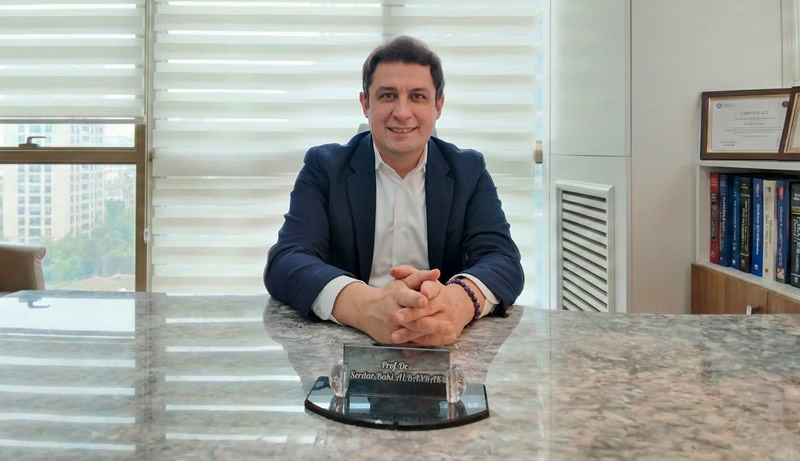
Prof. Dr. Serdar Baki Albayrak
Neurosurgeon · Full Professor of Neurosurgery
In a child with a curving spine, Prof. Albayrak first looks for a cord cause. He performs tethered cord release, Chiari decompression and spina bifida surgery with nerve monitoring.
Prof. Albayrak completed his neurosurgery training at Istanbul University in 2004. He then took clinical fellowships at the University of Helsinki and Harvard Medical School. At Harvard, he trained at Brigham and Women's Hospital.
27+Years
5,000+Operations
64Countries
33Publications
Figures from Prof. Albayrak's professional profile, September 2026. See his full publication list.
Request an AppointmentFrequently Asked Questions
Which doctor should my child see for scoliosis?
First, see a pediatric neurosurgeon if pain, weakness or bladder changes come with the curve. The same applies before age 10, or with spina bifida, Chiari or a syrinx. Afterwards, neurosurgery and orthopedics follow the curve together.
Is scoliosis a neurological disorder?
Not always. Neuromuscular scoliosis, however, comes from a nerve, spinal cord or muscle condition. So a curve with warning signs calls for a neurological exam and an MRI.
Can neuromuscular scoliosis be cured or reversed?
Sometimes, in part. If a treatable cord problem drives a small curve, early treatment can then stop it. Larger curves, however, need lifelong follow-up and often surgery.
How much does treatment for neuromuscular scoliosis cost in Turkey?
The cost depends on the operation, the hospital stay and the tests your child needs. Nerve monitoring, any shunt work and your hotel stay also count. So ask for the cost of your own plan at the consultation, before you decide.
Prof. Albayrak's Published Research
None of Prof. Albayrak's papers focuses on scoliosis itself. The closest, however, cover tethered cord surgery in children and tumors inside the spinal canal. Each link opens the record on PubMed; his profile lists all 33 publications.
- Tethered cord syndrome in childhood: special emphasis on the surgical technique and review of the literature with our experience
- A case of intra-dural malignant peripheral nerve sheath tumor in thoracic spine associated with neurofibromatosis type 1
- Cervical leptomeningeal and intramedullary metastasis of a cerebral PNET in an adult
Public health information
- National Institute of Neurological Disorders and Stroke. Tethered Spinal Cord Syndrome.
- National Institute of Neurological Disorders and Stroke. Syringomyelia.
- National Institute of Neurological Disorders and Stroke. Cerebral Palsy.
- National Institute of Neurological Disorders and Stroke. Spinal Muscular Atrophy.
- National Institute of Arthritis and Musculoskeletal and Skin Diseases. Scoliosis.
- MedlinePlus Medical Encyclopedia, US National Library of Medicine. Scoliosis.
- NHS. Scoliosis.
- NHS. Scoliosis: treatment in children.
- UK Civil Aviation Authority. Surgical conditions: guidance for health professionals.
- US Centers for Disease Control and Prevention. Medical tourism.
This guide gives general medical information and does not replace a consultation. So diagnosis and treatment decisions need an examination by your child's own doctor.
Last updated: 1 October 2026. Website editor: Prof. Dr. Serdar Baki Albayrak's clinic, [email protected].
Plan Your Child's Consultation in Istanbul
Request an appointment with Prof. Dr. Serdar Baki Albayrak. The team then helps you plan the dates of your visit.
Request an Appointment