
Paid online consultations are available by appointment. For booking, please contact us via Whatsapp.

What Is Spinal Stenosis Surgery?
Spinal stenosis surgery makes more room for nerves trapped in a narrowed spinal canal. In the lower back, the usual operation is a decompression, such as a laminectomy. The surgeon removes thickened ligament, bone spurs and part of the bony arch.
In contrast, a fusion joins two vertebrae with screws and rods. However, Prof. Albayrak adds it only when a slipped vertebra makes the spine unstable.
Lumbar stenosis mostly affects older adults, and many stay active with exercise or injections. So surgery comes into play when these no longer help.
At a Glance
- Main operationMicrosurgical decompression: laminectomy or laminotomy
- When fusion is addedA slipped, unstable vertebra (spondylolisthesis)
- Operating timeUsually 1-4 hours under general anesthesia
- Hospital stayFrom the same day to about 5 days; longer after fusion
- Back to normalLight work after about 4-6 weeks; most activities by 12 weeks
- Flying homeAfter a check-up; your surgeon sets the date
Where Are You in Your Decision?
Pick the line that sounds most like you.
- 01Your legs hurt when you walk and ease when you sitHow to tell stenosis from other causes
- 02Therapy or injections have not helpedWhen surgery comes up
- 03Your scan shows a slipped vertebraWhen a decompression needs a fusion
- 04You worry about your age or healthWho can safely have surgery
- 05New weakness, numbness or bladder changesSigns that need same-day care
- 06You are planning surgery from abroadStay, flights and follow-up at home
Who Needs Spinal Stenosis Surgery?
Surgery suits people whose leg symptoms limit daily life despite good non-surgical care. The MRI must also show matching narrowing, but imaging alone does not decide it.
Leg pain that comes with walking
The typical sign is pain, heaviness or numbness in the buttocks and legs on walking. Sitting or leaning forward then eases it, because bending forward widens the canal. Doctors call this pattern neurogenic claudication.
So leaning on a shopping cart often helps. Poor blood flow can cause similar leg pain, but it eases once you stand still.
Non-surgical care that no longer helps
Exercise, physical therapy (physiotherapy), medicine and sometimes a steroid injection ease symptoms. However, they cannot widen the canal.
So Prof. Albayrak usually discusses surgery after 3-6 months without enough progress. He also considers it sooner if you can walk only 50-100 meters (160-330 feet). Growing leg weakness, too, speeds up the decision.
A slipped vertebra or an unstable spine
Sometimes one vertebra slips forward over the one below (degenerative spondylolisthesis). Standing X-rays, taken as you bend forward and back, then show whether it moves. If it does, decompression alone may let it slip further.
In that case, Prof. Albayrak first frees the nerves. He then fixes the level with screws and rods, a spinal fusion. Without a slip, he generally avoids fusion, so the spine keeps its movement.
Older age and other health problems
Age alone does not rule out surgery. Instead, doctors weigh your heart and lungs, other illnesses and how you walk today.
Spinal stenosis or a herniated disc?
Both press on nerves in the lower back, but they behave differently:
- Stenosis builds up over years; leg pain comes with walking and eases with sitting.
- A herniated disc often starts suddenly, and sitting may worsen the leg pain.
So if one disc causes your sciatica, see herniated disc surgery. A nerve trapped lower in the leg can also mimic both. For that, see peripheral nerve entrapment treatment.
What if the neck narrows too?
Some people also have narrowing in the neck (tandem stenosis). Clumsy hands and poor balance then point to cord pressure (cervical myelopathy). Surgeons often treat the neck first.
For arm pain from a neck disc, see cervical disc herniation.
Questions at this stage
Is there an age limit for spinal stenosis surgery?
No. Surgeons judge your overall health, especially your heart and lungs, rather than your age. They also plan for age-related risks from the start.
Is spinal stenosis surgery a major operation?
A decompression alone is smaller than a fusion, and many people walk the same day. A fusion, however, adds screws and rods, so recovery takes longer.
When to See a Doctor About Spinal Stenosis
Spinal stenosis usually worsens slowly, so most people have time to plan. A few signs, however, need help the same day.
Book a specialist visit if you notice:
- You can walk a shorter distance every few months
- Numbness, tingling or cramps in the legs
- Leg weakness, tripping or poor balance
- Pain that stops your daily activities
Get emergency care the same day for:
- Severe or worsening weakness or numbness in both legs
- Numbness around the genitals or the back passage
- Trouble passing urine, or loss of bladder or bowel control
These signs can mean cauda equina syndrome, which needs urgent surgery. So call 999 in the UK or 112 elsewhere in Europe. In the US and Canada, call 911.
Night pain or weight loss without trying can also point to other causes. For example, a spinal cord or spine tumor can cause them, so mention them early.
Spinal Stenosis Treatment Options Compared
Treatment usually moves step by step, from exercise to surgery.
| Option | Best suited for | What it does | Recovery |
|---|---|---|---|
| Exercise and physical therapy | Mild to moderate symptoms; the usual first step | Flexion exercises, cycling and swimming; the canal stays narrow | No downtime; benefits build over weeks |
| Epidural steroid injection | Leg pain that limits walking | Calms irritated nerves without widening the canal | Same-day procedure; relief is often temporary |
| Interspinous spacer | Carefully selected patients (NICE) | A small implant holds two vertebrae slightly apart | It can fail and need further surgery (NICE) |
| Decompression (laminectomy or laminotomy) | Symptoms that limit daily life despite treatment | Removes the ligament and bone pressing on the nerves | Home within about 5 days; light work after 4-6 weeks |
| Decompression with fusion | Stenosis with a slipped, unstable vertebra | Frees the nerves, then joins the vertebrae with screws and rods | Longer stay and recovery |
Open or Minimally Invasive Decompression?
For suitable patients, Prof. Albayrak works through a smaller incision. This minimally invasive approach often means less blood loss and a faster recovery.
Can you treat spinal stenosis without surgery?
Yes, many people manage it with exercise, medicine and sometimes injections. These ease symptoms but do not widen the canal. So if your walking keeps getting worse, surgery becomes the main option.
Is Spinal Stenosis Surgery Successful?
For leg pain, usually yes. In fact, NIH guidance says most people have less leg pain and walk better after surgery. However, results depend on how long and how hard the nerves were under pressure.
- Leg pain responds better than back pain, which often eases only partly.
- Badly damaged nerves may leave some numbness or weakness.
So Prof. Albayrak talks through realistic goals with you before you decide. Finally, if nerve pain lasts, spinal cord stimulation for chronic pain is one further option.
What Are the Risks of Spinal Stenosis Surgery?
Serious complications are uncommon, but every spine operation carries some risk. The NHS and MedlinePlus list these main ones:
- A tear in the nerve sac, with a fluid leak and headaches
- Wound infection or, rarely, infection of the spine bones
- Bleeding, or blood clots in the legs or lungs
- Nerve damage with weakness or numbness; paralysis is rare
- Partial relief, or back pain that returns
- A vertebra that slips later and needs another operation
Older age adds general risks, such as heart, lung and anesthesia problems. Nerve monitoring and early walking also help protect the nerves and prevent clots.
Is spinal stenosis surgery dangerous?
Usually not, but no operation is free of risk. General risks rise with age, so the team checks your heart and lungs first. Your surgeon then weighs them against how much stenosis limits you.
Spinal Stenosis Surgery Recovery Time
Most people walk within a day and return to light activity within weeks. Full recovery, however, takes up to about 12 weeks, and longer after a fusion.
Week by Week
| When | What usually happens |
|---|---|
| Day of surgery | Walking with help once the anesthesia wears off, if you had no fusion |
| Days 1-5 | Discharge to a nearby hotel; painkillers for the wound |
| Weeks 1-2 | Short walks several times a day; driving again if your surgeon agrees |
| Weeks 4-6 | Back to light or desk work for many people |
| Up to 12 weeks | Most usual activities; a fusion keeps healing for longer |
| After 3 months | Numbness may keep fading slowly, and some may remain |
Your team also tells you which movements to avoid at first, such as heavy lifting.
How long does pain last after spinal stenosis surgery?
Wound pain usually settles within weeks, and many people take painkillers for several weeks. Leg pain often eases early, too. Numbness, however, can take months to fade.
Coming to Istanbul from the US, Canada, the UK or Europe
For a decompression, plan roughly two weeks in Istanbul. That covers tests, surgery, a few days nearby and a final check. A fusion usually needs longer, so Prof. Albayrak confirms the timing at your consultation.
Flying Home After Spine Surgery
Your surgeon sets the flight date after a check-up. The UK Civil Aviation Authority gives no separate figure for spine surgery. However, it advises older patients to delay flying for several days after surgery.
Long flights also raise the risk of blood clots, especially over 60 and after surgery. So walk the aisle every hour, drink water and skip alcohol on board. An aisle seat and a flexible ticket help, too.
Follow-Up at Home
You leave with a discharge summary and copies of your new scans. Before you travel, book a follow-up with your own doctor and plan physical therapy. Our guide to brain and spine surgery in Turkey also covers Medicare, the NHS and visas.
From Canada, check with your provincial health plan and private insurer before you book.
How soon can I fly home after spinal stenosis surgery?
Your surgeon decides after checking your wound, your walking and your risk of blood clots. UK aviation guidance gives no set figure for spine surgery. For major surgery such as a fusion, however, the US CDC suggests waiting 10-14 days.
Your visit to Istanbul
Your Surgery in Istanbul, Step by Step
The visit follows four steps.
STEP 01
Request an appointment
Use the form on this page, WhatsApp or call +90 532 308 97 72. A short message is enough: your symptoms, walking distance, country and travel dates.
The team then replies in English or Turkish to arrange the consultation.
Which records should I bring to my consultation?
First, bring your latest MRI on a disc or USB drive, with its report. Then add earlier X-rays, operation notes and a list of your medicines, including blood thinners.
STEP 02
Consultation and tests
Prof. Albayrak examines you at his clinic in Terrace Fulya Center, Teşvikiye, Şişli. First, he asks how far you can walk and what eases the pain. He then tests your strength, reflexes, feeling and balance.
Next comes imaging: MRI shows the nerves and soft tissue best, while CT shows bone. Nerve tests (EMG) then help when the exam and the MRI disagree.
Do I need a new MRI before spinal stenosis surgery?
Often, yes, especially if your symptoms have changed since the last scan. Surgeons plan each level from the images, so they must match your symptoms today. If needed, you can have a new MRI in Istanbul first.
STEP 03
Surgery: freeing the nerves
The operation takes place in a hospital in Istanbul, under general anesthesia. Prof. Albayrak names the hospital at the consultation. The main steps then follow this order:
- You lie face down; the surgeon opens the skin over the narrowed levels
- Under magnification, he removes thickened ligament, bone spurs and part of the lamina
- Nerve monitoring tracks nerve signals throughout
- For a slipped vertebra, screws and rods then fix that level (fusion)
- Finally, he closes the wound in layers
How long does spinal stenosis surgery take?
Usually 1 to 4 hours, according to MedlinePlus and the NHS. More levels or a fusion, however, take longer. Your surgeon then gives you a personal estimate.
STEP 04
Recovery, flight and follow-up
Most people walk with help on the day of surgery or the next morning. Before the flight home, Prof. Albayrak checks the wound and your walking. Back home, your own doctor then takes over.
Get urgent help if any of these signs appear after surgery:
- New or worsening pain, weakness or numbness in the legs
- Problems controlling urine or bowel movements
- A hot, red, oozing or swelling wound, or a fever
- A severe headache when you sit or stand up
- Calf pain or swelling, chest pain or shortness of breath
Your Spine Surgeon in Istanbul
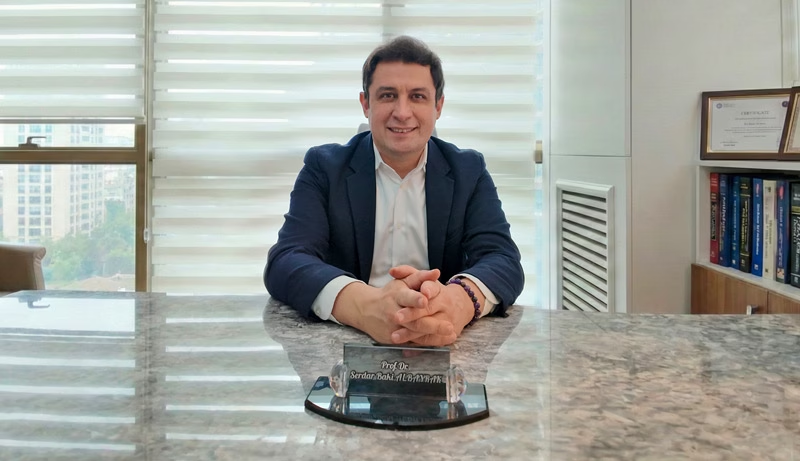
Prof. Dr. Serdar Baki Albayrak
Neurosurgeon · Spine and Spinal Cord Surgery
For lumbar stenosis, Prof. Albayrak plans each decompression from your examination and MRI. During spine operations, he also uses nerve monitoring. Physical therapy and pain specialists then support you before and after surgery.
He completed neurosurgery training at Istanbul University in 2004. Clinical fellowships then followed at the University of Helsinki and at Harvard Medical School's Brigham and Women's Hospital. Consultations take place in English or Turkish.
27+Years
5,000+Operations
64Countries
33Publications
Figures from Prof. Albayrak's professional profile, September 2026. See his full publication list.
Request an AppointmentFrequently Asked Questions
Can spinal stenosis come back after surgery?
It can, because wear in the spine continues with age. Narrowing may return at the same or another level, sometimes years later. After a fusion, the levels next to it also carry extra stress.
Can lumbar spinal stenosis cause paralysis?
Rarely. In the lower back, stenosis presses on nerve roots, not on the spinal cord. Severe pressure can still weaken the legs or bladder, so these signs need urgent care.
How much does spinal stenosis surgery cost in Turkey?
The cost depends on the operation, the number of levels and the hospital stay. A fusion also adds implants, such as screws and rods. So ask for the cost of your own plan at the consultation.
Prof. Albayrak's Published Research
Two of these peer-reviewed articles by Prof. Albayrak study scarring after laminectomy and nerve surgery in rats. The third describes a spinal infection that can mimic a slipped disc. In addition, the full list of his 33 publications is on his profile.
- Topical application of tacrolimus prevents epidural fibrosis in a rat postlaminectomy model: histopathological and ultrastructural analysis
- Doxorubicin for prevention of epineurial fibrosis in a rat sciatic nerve model: outcome based on gross postsurgical, histopathological, and ultrastructural findings
- Spinal epidural abscess due to Brucella
Public health information
- NIAMS, National Institutes of Health. Spinal stenosis: symptoms, causes and risk factors.
- NIAMS. Spinal stenosis: diagnosis, treatment and steps to take.
- MedlinePlus. Spinal stenosis.
- MedlinePlus. Laminectomy.
- NHS. Lumbar decompression surgery.
- NHS. Back pain.
- NHS. DVT (deep vein thrombosis).
- NICE. Interspinous distraction procedures for lumbar spinal stenosis causing neurogenic claudication (HTG238).
- UK Civil Aviation Authority. Surgical conditions: guidance for health professionals.
- US Centers for Disease Control and Prevention. Medical tourism.
This page gives general medical information and does not replace a consultation. So diagnosis and treatment decisions need an examination by your own doctor.
Last updated: 1 October 2026. Website editor: Prof. Dr. Serdar Baki Albayrak's clinic, [email protected].
Plan Your Spinal Stenosis Surgery in Istanbul
Request an appointment with Prof. Dr. Serdar Baki Albayrak. The team then helps you plan the dates of your visit.
Request an Appointment