
Paid online consultations are available by appointment. For booking, please contact us via Whatsapp.

What Are Pediatric Brain Tumors?
Pediatric brain tumors are growths of abnormal cells in a child's brain. They affect babies, children and teenagers, and many are not cancer. Still, brain tumors rank second among childhood cancers, after leukemia, the NCI notes.
Children's tumors also differ from adult ones. Many grow at the back of the brain, near the cerebellum and brainstem. So balance problems and blocked brain fluid often come first.
The good news is that many of these tumors respond well to treatment. MedlinePlus reports that about 3 in 4 children live at least 5 years. However, the outlook depends mostly on the tumor type.
At a Glance
- Common typesLow-grade glioma, medulloblastoma, ependymoma, craniopharyngioma, brainstem glioma
- First signsMorning headaches and vomiting, a wobbly walk, a squint or head tilt
- Key testMRI of the brain, and often the whole spine, with contrast
- First stepUsually surgery to remove as much tumor as is safe
- The teamNeurosurgeon, child cancer doctor, radiation oncologist and others
- After treatmentMRI, growth, hormone and learning checks for years
What Brought You Here?
First, choose the line closest to your child's situation. Each line then opens the matching part of this guide.
- 01Headaches on waking, with vomitingPossible pressure from blocked brain fluid
- 02A wobbly walk, clumsiness or a head tiltSigns of a tumor at the back of the brain
- 03A squint, poor sight or slow growthEffects on the eyes, hormones and behavior
- 04A baby whose head grows too fastSigns in babies and toddlers
- 05An MRI shows a tumorThe main types and how doctors treat them
- 06Planning treatment in IstanbulLength of stay, flights and care back home
Brain Tumor Symptoms in Children
Signs depend on your child's age and on where the tumor grows. Most headaches in children have harmless causes, MedlinePlus stresses. However, some patterns deserve a prompt check.
Morning headaches and vomiting
Many tumors block the flow of fluid inside the brain. Pressure then builds up, which doctors call hydrocephalus.
As a result, headaches often feel worst on waking and ease after vomiting. Coughing or straining can also make them worse. Over days to weeks, your child may also turn sleepy or irritable.
A wobbly walk, clumsiness or a head tilt
Tumors near the cerebellum often upset balance first. So your child may stumble, fall more often or walk with feet wide apart.
Handwriting can get messier, and speech may slow down. Some children also hold their head tilted to one side.
Eye, hormone and behavior changes
A new squint, double vision or jerking eyes can signal raised pressure. Tumors near the optic nerves can also narrow side vision.
Near the pituitary gland, a tumor can disturb hormones. Then growth may slow, puberty may start early, or thirst may increase.
Finally, watch for a first seizure, new mood changes or falling school grades.
Signs in babies and toddlers
Babies cannot describe pain, so watch for changes instead. A baby's skull bones have not yet joined, so the head can grow fast.
Other signs include a bulging soft spot, eyes that turn downward, poor feeding and irritability. Some babies also grow slowly or miss milestones, such as sitting or walking, the NCI notes.
Questions at this stage
Is vomiting a sign of a brain tumor in a child?
Rarely, since most vomiting in children comes from stomach bugs. However, repeated morning vomiting with headaches, without fever or diarrhea, needs a doctor's check. So does vomiting with a wobbly walk.
How long can a child have a brain tumor without knowing?
Slow-growing tumors can cause few signs for months, sometimes longer. Fast-growing ones, in contrast, often cause clear signs within weeks. So trust a pattern that keeps getting worse.
When Should Parents Seek Help?
Most of these signs build up over weeks, so you usually have time for a visit. However, some changes need emergency care the same day.
Book a doctor's visit if your child has:
- Headaches that wake them or start on waking
- Repeated morning vomiting without a stomach bug
- New clumsiness, falls or a change in walking
- A new squint, head tilt or blurred vision
- Slow growth, very early puberty or constant thirst
- A head that crosses lines on the growth chart (babies)
Seek emergency care for:
- A first seizure, or a seizure lasting over 5 minutes
- A severe headache with repeated vomiting
- Growing drowsiness, or a child who is hard to wake
- A tense, bulging soft spot in a baby
- Sudden weakness, loss of sight or trouble swallowing
These signs can mean rising pressure in the skull. So go to the nearest hospital first, rather than waiting for a visit abroad.
Common Types of Brain Tumors in Children
The tumor type shapes every later decision, from surgery to radiotherapy. First, the table compares the main types; short notes then follow.
| Type | Where it grows | How it behaves | Usual treatment |
|---|---|---|---|
| Low-grade glioma, such as pilocytic astrocytoma | Cerebellum, optic pathway or elsewhere | Slow-growing; the most common type in children | Surgery; medicines if it grows again |
| Medulloblastoma | Cerebellum | Fast-growing cancer; can spread in the spinal fluid | Surgery, then radiotherapy and chemotherapy |
| Ependymoma | Lining of the fluid spaces | Can return at the same site, even years later | Surgery, usually followed by focused radiotherapy |
| Craniopharyngioma | Near the pituitary gland and hypothalamus | Benign, but affects sight, hormones and growth | Surgery, sometimes with radiotherapy |
| Diffuse midline glioma (DIPG) | Brainstem, mainly the pons | Fast-growing; spreads through the brainstem | Radiotherapy; clinical trials |
| Germ cell tumor, such as germinoma | Pineal region or above the pituitary | Often responds very well to treatment | Chemotherapy and radiotherapy |
| Atypical teratoid/rhabdoid tumor (ATRT) | Anywhere; mostly in children aged 3 or younger | Very rare and fast-growing | Surgery and intensive chemotherapy |
For tumors in adults, see our overview of brain tumor treatment.
Low-Grade Gliomas and Pilocytic Astrocytoma
Low-grade gliomas are the most common brain tumors in children, MedlinePlus notes. They grow slowly, so removing the whole tumor often leaves only MRI checks.
In children with neurofibromatosis type 1 (NF1), some optic pathway gliomas need only careful watching, the NCI explains. For tumors with a BRAF V600E change, the FDA also approved dabrafenib with trametinib in 2023. Our astrocytoma guide explains tumor grades.
Medulloblastoma
Medulloblastoma is the most common brain cancer in children, usually before age 10. It grows in the cerebellum and can spread through the spinal fluid.
So the plan starts with surgery and an MRI of the whole spine. The operation resembles the one in our cerebellar tumor surgery guide. Above age 3, radiotherapy to the brain and spine then follows, with chemotherapy.
Ependymoma and Craniopharyngioma
Ependymoma grows from the lining of the brain's fluid spaces, often the fourth ventricle. If tumor remains, a second operation may follow, the NCI notes. Because it can return years later, follow-up lasts a long time.
Craniopharyngioma is benign, yet it sits beside the pituitary gland and hypothalamus. So the surgeon sometimes leaves a small attached part, and radiotherapy follows. Our craniopharyngioma guide explains why.
Brainstem Glioma and DIPG
DIPG mostly affects children aged 5 to 10, and surgery cannot remove it safely. So radiotherapy leads, and clinical trials offer new options. Sadly, most children with DIPG live less than 2 years, the NCI notes.
Focal brainstem gliomas, in contrast, often do much better; see our brainstem tumor guide.
What is the most common brain tumor in children?
Low-grade gliomas, such as pilocytic astrocytoma, lead overall. Among brain cancers, however, medulloblastoma comes first, MedlinePlus notes.
Are all brain tumors in children cancer?
No. Many, such as pilocytic astrocytoma and craniopharyngioma, are benign. Even so, a benign tumor can press on vital areas or block brain fluid, so it often still needs treatment.
How Doctors Diagnose a Brain Tumor in a Child
First, the doctor checks your child's eyes, balance, reflexes and strength. An MRI with contrast then shows the tumor best.
Further tests then depend on the likely tumor type:
- MRI of the brain and whole spine: size, position and any spread through spinal fluid
- CT scan: in emergencies, to check fluid build-up or bleeding quickly
- Eye exam with visual fields: for tumors near the optic nerves or pituitary
- Blood hormone and tumor marker tests: for craniopharyngioma and germ cell tumors
- Functional MRI: in older children, to map speech and movement areas before surgery
- Tissue and gene tests: the exact type and changes such as BRAF or H3 K27M
- Lumbar puncture: often after surgery, to look for tumor cells in spinal fluid
Tumors inside the spinal cord itself need a different plan, as our guide to pediatric spinal cord tumors explains.
Is an MRI safe for my child?
Yes. MRI uses magnets and radio waves, not radiation. Young children often need sedation or anesthesia to keep still, and a scan usually takes 30 to 60 minutes.
Managing Hydrocephalus Before and After Surgery
Many children's tumors block the fluid pathways, so pressure in the skull rises. Treating this pressure often comes first, sometimes within hours.
First, a steroid medicine usually reduces swelling around the tumor. If pressure stays high, a thin temporary drain can relieve it. In some children, an endoscopic third ventriculostomy (ETV) also opens a bypass for the fluid.
Once the tumor comes out, fluid often flows freely again. Some children, however, still need an ETV or a permanent shunt later. Our hydrocephalus treatment guide compares both.
Prof. Albayrak also uses endoscopy to reach some tumors inside the fluid spaces through a small opening.
Will my child need a shunt after brain tumor surgery?
Often not, because fluid usually flows again once the tumor comes out. A smaller group, however, needs an ETV or a shunt, sometimes weeks later.
Pediatric Brain Tumor Treatment Options Compared
Surgery comes first for most childhood brain tumors, MedlinePlus notes. After that, the tumor type decides whether radiotherapy, chemotherapy or MRI checks follow.
| Option | Often used for | What it involves | Points to weigh |
|---|---|---|---|
| Surgery (maximal safe removal) | Most tumors that grow or cause symptoms | Removal through an opening in the skull | Relieves pressure and gives the exact diagnosis |
| Biopsy | Deep tumors that cannot come out safely | A small tissue sample through a small opening | Confirms the type and its gene changes |
| Radiotherapy | Medulloblastoma, ependymoma, germ cell tumors, DIPG | Short daily sessions over several weeks | Often delayed under age 3, since it can affect growth and learning |
| Chemotherapy | Medulloblastoma, ATRT, some low-grade gliomas | Cycles over months, by mouth or into a vein | Can delay or reduce radiotherapy in young children |
| Targeted medicines | Low-grade gliomas with a BRAF change | Daily tablets or liquid at home | For tumors that need medicine treatment |
| Regular MRI checks | Small, slow tumors; some NF1 optic gliomas | Scans at set intervals | Treatment starts if the tumor grows |
The Team Around Your Child
A child cancer specialist, the pediatric oncologist, usually oversees treatment after surgery, the NCI explains. The neurosurgeon, radiation oncologist and neurologist then plan each step together.
Endocrinologists, psychologists and rehabilitation therapists also join over time. Prof. Albayrak plans each child's treatment with this wider team.
Why the First Operation Matters
How much tumor the first operation removes often shapes the next steps. For medulloblastoma, for example, a remnant can mean stronger treatment. Even so, leaving a small remnant on a vital area is sometimes the wiser choice.
Can a child's brain tumor be treated without surgery?
Sometimes. DIPG and germinomas, for example, rely mainly on radiotherapy and chemotherapy. Most other tumors, however, need surgery first.
How Prof. Albayrak Approaches Surgery in Children
The aim is to remove as much tumor as is safe, while protecting the growing brain. To do so, Prof. Albayrak combines microsurgery with neuronavigation and nerve monitoring.
Tools That Protect a Growing Brain
- Microsurgery: the operating microscope helps separate tumor from healthy tissue
- Neuronavigation: the child's own MRI guides the route, much like GPS
- Nerve monitoring: signals warn the team when a nerve pathway lies near
The operation takes place in a hospital with pediatric anesthesia and pediatric intensive care. Our pediatric neurosurgery guide explains anesthesia safety for young children.
Risks to Know About
Brain surgery in children carries real risks, although serious problems are uncommon. Possible problems include:
- Swelling that worsens balance, speech or vision for a while
- Bleeding, infection or a spinal fluid leak
- Hydrocephalus that needs a drain, an ETV or a shunt
- Seizures, mainly after surgery near the brain's surface
- New weakness, or hormone changes near the pituitary
- After surgery at the back of the brain, cerebellar mutism
In cerebellar mutism, speech returns slowly, often with balance and mood changes, the NCI notes. Speech and physical therapy then help over weeks to months.
How long does brain tumor surgery take for a child?
Often three to eight hours, depending on the tumor's size and position. Anesthesia and waking up add time, too. So plan for a long day, and bring something comforting for later.
Will my child walk and talk normally after surgery?
Most children do, although recovery takes time. Swelling can make balance or speech worse for a while. Therapy then helps many children regain these skills.
Recovery and Long-Term Follow-Up
Recovery happens in stages, from intensive care to school and play. Follow-up then continues for years, because growth can reveal late effects.
| When | What usually happens | What parents can do |
|---|---|---|
| Days 1-2 | Pediatric intensive care, pain control and an early MRI | Stay close, and bring a favorite toy or blanket |
| Days 3-10 | Ward care, first walks, physiotherapy, then discharge | Learn wound care and the warning signs |
| Weeks 1-3 | Tissue and gene report; the oncology plan | Share the report with your home team |
| Weeks 2-6 | Radiotherapy or chemotherapy often starts, if needed | Plan school contact and daily routines |
| Months to years | MRI scans, plus growth, hormone, hearing and learning checks | Keep one folder of reports and scan discs |
Late Effects and How to Spot Them
Treatment can affect learning, attention, memory, hearing, growth and hormones, the NCI warns. Children under 7, especially under 3, seem most at risk, MedlinePlus adds.
So ask for regular checks with a pediatric endocrinologist and a neuropsychologist. Early school support then helps your child keep up.
Can my child live a normal life after a brain tumor?
Many children do: they return to school, play and sport and grow into adults. Some, however, need long-term help with learning, hormones or balance. Regular follow-up finds these needs early.
A Practical Guide for Parents: School, Play and Siblings
A brain tumor affects the whole family, not only the child. The NCI advises honest, calm talk and support for every family member.
Talking With Your Child
Use simple, true words that fit your child's age. Babies and toddlers feel safer with familiar toys, routines and your voice. Older children usually want to know what comes next, so answer questions together.
School and Learning
- Ask your doctor for a letter about absences and limits
- Keep teachers updated, and plan schoolwork from hospital
- Start back gradually, often with shorter days
- In the US, ask the school about a 504 plan or an IEP
- In England, councils must arrange education when illness keeps a child home
Brothers and Sisters
- Tell them the news simply, and early
- Keep their routines, school and activities going
- Let them visit or video call, when possible
- Tell their teachers too, so someone notices worries
- Plan some time alone with each child
Play and Activity
Gentle play and short walks help recovery, so start them early. Swimming and contact sports, however, wait until the wound heals and your surgeon agrees. With a shunt, also ask which activities suit your child.
When can my child go back to school after brain tumor surgery?
Many children return gradually within a few weeks, often with shorter days at first. Radiotherapy or chemotherapy, however, may mean longer breaks. Your child's energy then sets the pace.
Coming to Istanbul from the US, Canada, the UK or Europe
Surgery is often the part of treatment that families travel for. Radiotherapy and chemotherapy, however, usually continue at home, so plan the handover early.
How Long to Stay in Istanbul
First, allow for the consultation, tests, operation and intensive care. Then add ward days and rest nearby until a final check. Overall, many plans come to about two to three weeks.
If possible, travel with both parents, or with one parent and a helper. One parent can usually stay in the child's room on the ward.
Flying Home With Your Child
After brain surgery, UK aviation guidance advises about 7 days before flying. Air left inside the skull can expand at altitude.
So your surgeon sets the date after a final check. Also ask the airline whether it needs a medical form, and keep medicines in hand luggage.
An Honest Handover to Your Home Team
Before you travel, tell your child's oncology team at home about the plan. Some clinical trials accept only children who have not started treatment, the NCI notes. So ask about trials before surgery abroad.
Before you leave Istanbul, collect the operation note, discharge summary, tissue report and scan copies. Ask, too, how your home team can request the tissue for further tests.
For insurance and Medicare, see brain surgery in Turkey: planning from the US. For NHS rules and travel insurance, see planning from the UK. From Canada, check with your provincial health plan and private insurer before you book.
Your child's treatment in Istanbul
From Your First Message to Flying Home
Your child's care in Istanbul follows four clear steps. Each step then answers one practical question.
STEP 01
Request an appointment
Use the form on this page, WhatsApp or call +90 532 308 97 72. A short message is enough: your child's age, diagnosis, country and travel dates.
You can write in English or Turkish; the team then agrees the date.
STEP 02
Consultation and tests in Istanbul
First, Prof. Albayrak examines your child at his clinic in Teşvikiye. Next, he goes through the MRI scans with you, in plain words. If needed, newer scans or tests can follow in Istanbul.
Questions worth asking then include:
- Which tumor type do the scans suggest?
- How much of it can come out safely?
- Which treatment follows, and where?
What should we bring to the consultation?
Bring the MRI scans on a disc or USB drive, with the written reports. Also bring growth charts, eye and hormone results, and a list of medicines. A favorite toy helps, too.
STEP 03
Surgery and hospital stay
If you choose surgery, the operation takes place in a hospital in Istanbul with pediatric intensive care. Prof. Albayrak names the hospital at the consultation, along with the likely stay.
STEP 04
Recovery, fitness to fly and follow-up
After discharge, you rest at a nearby hotel with your child. Then, before the flight, your surgeon checks the wound, walking and alertness.
Back home, get urgent help for any of these signs:
- A worsening headache, or repeated vomiting
- Fever, a stiff neck, or redness at the wound
- Clear fluid leaking from the wound or the nose
- Growing sleepiness, confusion or a seizure
- In a baby, a tense soft spot or poor feeding
Can radiotherapy and chemotherapy continue in our home country?
Yes, usually, and treatment close to home often suits a child best. Take the discharge summary, tissue report and scans to your local team. They can then start the agreed treatment on time.
Your Child's Neurosurgeon in Istanbul
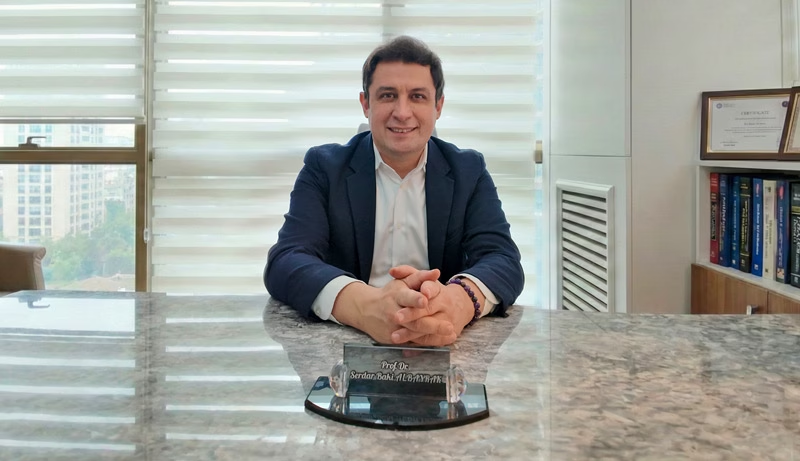
Prof. Dr. Serdar Baki Albayrak
Neurosurgeon · Full Professor of Neurosurgery
A child's brain keeps developing for years after surgery. For this reason, Prof. Albayrak plans each route with neuronavigation and monitors the nerves throughout.
He completed his neurosurgery training at Istanbul University in 2004. He then took clinical fellowships at the University of Helsinki and Harvard Medical School. At Harvard, he trained at Brigham and Women's Hospital.
27+Years
5,000+Operations
64Countries
33Publications
Figures from Prof. Albayrak's professional profile, September 2026. See his full publication list.
Request an AppointmentFrequently Asked Questions
Are pediatric brain tumors curable?
Many are, especially low-grade gliomas that surgery removes completely. Overall, MedlinePlus reports that about 3 in 4 children live at least 5 years. The outlook still depends mostly on the tumor type.
What causes brain tumors in children?
Usually the cause stays unknown, and nothing a parent did causes them. A few children have an inherited condition, such as NF1 or Li-Fraumeni syndrome. Then genetic counseling can help the wider family.
How common are brain tumors in children?
They are rare, although they rank second among childhood cancers, after leukemia. So most headaches and vomiting in children have other, harmless causes.
How much does pediatric brain tumor surgery cost in Turkey?
The cost depends on the operation, intensive care, tests and the hospital stay. So ask for the cost of your child's own plan at the consultation.
Prof. Albayrak's Published Research
None of Prof. Albayrak's papers reports a series of childhood brain tumors. The closest cover surgical imaging, pineal region tumors, embryonal tumor spread and headache in a child. His profile lists all 33 publications.
- Intra-operative magnetic resonance imaging in neurosurgery
- Microsurgical management of pineal region lesions: personal experience with 119 patients
- Cervical leptomeningeal and intramedullary metastasis of a cerebral PNET in an adult
- Rare Cause of Persistent Headache in a Child: Spontaneous Idiopathic Subdural Hematoma
Public health information
- MedlinePlus Medical Encyclopedia, US National Library of Medicine. Brain tumor: children.
- National Cancer Institute. Childhood Medulloblastoma and Other CNS Embryonal Tumors Treatment (PDQ), Patient Version.
- National Cancer Institute. Childhood Glioma (Including Astrocytoma).
- National Cancer Institute. Childhood Ependymoma.
- National Cancer Institute. Childhood Craniopharyngioma.
- National Cancer Institute. Childhood Diffuse Intrinsic Pontine Glioma (DIPG).
- National Cancer Institute. Childhood Central Nervous System Germ Cell Tumors Treatment.
- National Cancer Institute. Childhood Atypical Teratoid/Rhabdoid Tumor Treatment.
- National Cancer Institute. Late Effects of Treatment for Childhood Cancer.
- National Cancer Institute. Support for Families: Childhood Cancer.
- US Food and Drug Administration. FDA approves dabrafenib with trametinib for pediatric patients with low-grade glioma with a BRAF V600E mutation.
- UK Civil Aviation Authority. Surgical conditions: guidance for health professionals.
- GOV.UK, Department for Education. Education for children with health needs who cannot attend school.
This guide gives general medical information and does not replace a consultation. So diagnosis and treatment decisions need an examination by your child's own doctors.
Last updated: 1 October 2026. Website editor: Prof. Dr. Serdar Baki Albayrak's clinic, [email protected].
Plan Your Child's Consultation in Istanbul
Request an appointment with Prof. Dr. Serdar Baki Albayrak. The team then helps your family plan the dates of your visit.
Request an Appointment