
Paid online consultations are available by appointment. For booking, please contact us via Whatsapp.

What Is an Awake Craniotomy?
An awake craniotomy is brain surgery in which you wake up for part of the operation. While you talk or move, the surgeon tests the brain around the tumor. This shows which areas control speech or movement, so the surgeon can protect them.
You do not stay awake for the whole operation, though. In most cases, you sleep under sedation while the surgeon opens the skull. Then you wake up for the mapping, and you sleep again for the closing.
The brain itself feels no pain, because it has no pain receptors. Local anesthetic also numbs the scalp. So most people describe the awake part as tiring, not painful.
At a Glance
- Main goalRemove as much tumor as is safe while you keep speech and movement
- Who it suitsTumors next to speech, movement or vision areas
- AnesthesiaAsleep, then awake for mapping, then asleep again
- Awake partOften 15 to 45 minutes of simple tasks
- Whole operationUsually 4 to 8 hours
- Hospital stayOften 2 to 5 days
Where Are You in Your Decision?
Pick the line that sounds most like you. Each one then opens the matching part of this guide.
- 01My surgeon suggested awake surgeryWho it suits, and who it does not
- 02I am scared of pain or of panickingWhat you feel and what the team does
- 03I want to know how the day goesThe three stages and the mapping tasks
- 04Awake or asleep: which is right for me?Both approaches side by side
- 05I want to know about risks and recoveryHospital stay, fatigue and the first weeks
- 06I am planning surgery from abroadLanguage, length of stay and flights
Why Do Surgeons Keep Patients Awake During Brain Surgery?
In fact, every tumor operation balances two aims. The first aim is to remove as much tumor as possible. The second is to keep the functions that make daily life yours, such as speech, movement and sight.
An MRI shows the anatomy very well. However, speech and movement areas differ from person to person. In addition, a tumor can push them a few centimeters away from where a textbook places them.
So the surgeon asks the brain directly. With you awake, a tiny electrical current touches small spots on the brain surface. If your speech stalls or your hand twitches, that spot stays untouched.
More Tumor Out, Function Kept
For many gliomas, the amount of tumor removed affects how long the disease stays quiet. In addition, the surgeon can follow your speech live during the removal. As a result, the operation can go further where it is safe and stop where it is not.
Awake mapping is one tool for maximal safe removal. For the bigger picture of surgery for gliomas, see our guide to brain cancer surgery.
Who Is a Candidate for Awake Craniotomy?
Awake craniotomy suits people whose tumor or lesion lies in or near an eloquent area. Together, these areas control speech, movement, feeling or vision. A tumor far from them, by contrast, usually needs no awake phase.
Gliomas near speech or movement areas
This is the most common reason. For example, a tumor in the left frontal lobe can sit next to Broca's speech area.
Low-grade gliomas also often grow into working brain, so mapping helps the surgeon find the edge. Our pages on astrocytoma and frontal lobe tumors cover these tumors.
Insular gliomas
The insula lies deep, under the speech and movement areas. Therefore, surgeons often plan awake mapping for tumors there, mainly on the left side. Our insular glioma guide explains this tumor in depth.
Metastases, meningiomas and vascular lesions
A brain metastasis or a meningioma close to an eloquent area can also need mapping. The same applies to some cavernomas and arteriovenous malformations (AVMs). Finally, in epilepsy surgery, mapping helps find the seizure focus near working brain.
Who May Not Suit Awake Surgery
- People with severe anxiety or claustrophobia
- Memory or thinking problems that make teamwork hard
- Severe speech loss (aphasia), so the tasks cannot work
- A tumor far from eloquent areas, where general anesthesia is enough
- Anyone who does not yet feel ready for it
In the end, your surgeon makes the final call after an examination. Functional MRI and DTI tractography then help confirm it.
Questions at this stage
Is awake brain surgery common?
Yes, in centers that treat gliomas near speech areas, it is a standard technique. Still, most brain tumor operations take place under general anesthesia. So awake surgery stays a tool for specific tumors, not a routine choice.
Can children have an awake craniotomy?
Sometimes, in older children and teenagers who can follow tasks calmly. Younger children usually have surgery asleep, with nerve monitoring. For care in children, see our pediatric brain tumors guide.
When to See a Doctor or Seek Emergency Care
A new speech or movement problem needs a specialist review soon. A few signs, however, need emergency care at once, both before and after surgery.
Book a specialist visit if you notice:
- Trouble finding words that keeps getting worse
- Slowly growing weakness or clumsiness in one hand or leg
- A first seizure, even if you feel well afterwards
- A scan report that mentions a tumor near speech or motor areas
Go to the nearest emergency department (911, 999 or 112) for:
- A seizure that lasts longer than five minutes, or repeated seizures
- Sudden loss of speech or sudden weakness of one side
- A severe headache with vomiting or drowsiness
- After surgery: fever, a leaking wound or growing confusion
How to Prepare for an Awake Craniotomy
Preparation for awake surgery goes further than for standard surgery. First come special scans, and then a rehearsal with the team.
Brain Mapping Before Surgery
Functional MRI (fMRI) shows which areas light up when you speak or move. Then DTI tractography draws the nerve pathways deep in the brain. Together, they show whether the tumor pushes on these pathways or grows into them.
These scans also show whether you need the awake phase at all. When the tumor lies far enough from eloquent areas, the team chooses standard surgery instead.
Meeting the Team and Rehearsing the Tasks
A few days before surgery, you meet the surgeon and the anesthesiologist. A speech and language therapist may join too. Together, you practice the tasks, such as naming pictures, counting and squeezing a hand.
Above all, knowing what will happen lowers anxiety a lot. So bring every question to this meeting, and ask a relative to come with you.
Awake Craniotomy Procedure, Step by Step
Most teams use an asleep, awake, asleep plan. So you sleep through the parts that would feel unpleasant and wake only for the mapping.
Stage 1: Opening Under Sedation
First, the team places a drip and settles you in a comfortable position. A frame then holds your head still. Next, local anesthetic numbs the scalp, and light sedation lets you sleep while the surgeon opens the skull.
Stage 2: Waking Up and Mapping
Once the brain surface lies open, the anesthesiologist lightens the sedation. When you open your eyes, a team member stays right beside you. Then the surgeon touches the brain with a very small current while you do simple tasks.
Stage 3: Tumor Removal and Closing
Next, the surgeon removes the tumor under the microscope. You may stay awake for part of this, so the team can keep checking your speech or hand. If your speech slows or a limb feels numb, the surgeon stops at that point.
Finally, the sedation deepens again. The surgeon then puts the bone flap back and closes the skin.
How long does an awake craniotomy take?
The whole operation usually takes 4 to 8 hours, depending on the size and place of the tumor. However, you stay awake for only part of that time. The mapping itself often takes 15 to 45 minutes.
Do you remember being awake during brain surgery?
Many people remember parts of the awake phase, such as the tasks and the voices of the team. Others recall very little, because of the sedation before and after. Most describe the memory as calm rather than frightening.
What You Do During Brain Mapping
In general, the tasks depend on where the tumor lies. They stay simple, and you will have practiced them before surgery.
| Area near the tumor | Your task | What the team watches for |
|---|---|---|
| Speech and language | Name pictures, finish sentences, count aloud | A pause, a wrong word or a stalled sentence |
| Movement (motor cortex) | Squeeze a hand, move fingers or a foot | A twitch, weakness or a stop in movement |
| Feeling (sensory cortex) | Report tingling or numbness | Where the feeling appears on your body |
| Memory | Recall names, dates or words | Gaps in recall |
| Vision | Respond to pictures in parts of your view | Missing parts of the visual field |
There Are No Wrong Answers
If you cannot name a picture during mapping, do not worry. In fact, that pause is exactly what the team looks for. It marks a spot to protect, so each "mistake" gives useful information.
What language do I speak during mapping?
You speak the language you use best, because mapping tests your own speech network. So tell the team early which languages you speak. They then plan the tasks and an interpreter if one helps.
Is Awake Brain Surgery Painful?
No, for most people the awake phase does not hurt. Brain tissue has no pain receptors. The scalp and the skull do feel pain, but local anesthetic numbs them fully.
Instead, what people notice most is lying still for a long time. Some also feel a dry mouth, cold or a stiff neck. So the team keeps you warm, changes your position where possible and talks to you throughout.
If You Feel Anxious
First of all, fear before awake surgery is normal. A rehearsal, a clear plan and a familiar voice next to you all help. The anesthesiologist can also adjust medicines at any moment.
What if I panic during awake brain surgery?
Tell the team at once, because someone stays beside you the whole time. They can pause, calm you and adjust the sedation. If needed, they switch to general anesthesia and finish the operation safely.
What does awake brain surgery feel like?
Most people describe pressure, vibration and noise rather than pain. You may hear the team and the equipment around you. During mapping, a short tingle or a twitch can follow a stimulation, then stops right away.
Awake vs Asleep Brain Surgery
Not every tumor needs the awake phase. Under general anesthesia, nerve monitoring can still watch the movement pathways. However, it cannot test speech, so speech areas need you awake.
| Approach | What it can protect | Who it suits | Limit |
|---|---|---|---|
| Awake craniotomy with mapping | Speech, movement, feeling, some memory and vision | Tumors in or near speech areas; some motor area tumors | Needs a calm patient who can follow tasks |
| Asleep craniotomy with neuromonitoring | Movement pathways, some sensory pathways | Motor area tumors; children; people who cannot do the tasks | Cannot test speech |
| Standard craniotomy | Guided by navigation and imaging | Tumors far from eloquent areas | No live test of function |
| Biopsy only | Takes a small sample with little risk to function | Deep or widespread tumors that surgery cannot remove safely | Leaves the tumor in place |
In addition, awake mapping helps in some epilepsy surgery and in placing electrodes for deep brain stimulation for Parkinson's disease or tremor. Those operations follow their own plans.
Is awake brain surgery safer than surgery asleep?
For tumors near speech areas, awake mapping usually lowers the risk of lasting speech loss. For tumors far from those areas, however, it adds little. So the safer choice depends on where your tumor lies.
Awake Craniotomy Risks and Complications
As with any brain operation, awake craniotomy carries real risks. Your surgeon should explain each one for your own tumor and health.
- Seizures during mapping: the most common event; cold saline on the brain or medicine usually stops them quickly
- Short-term changes: word-finding trouble, weakness or numbness, which often improve over days to weeks
- Lasting deficit: possible, although mapping aims to keep this risk low
- Not completing the awake phase: the team switches to general anesthesia and continues
- General surgical risks: bleeding, infection, brain swelling and blood clots
What is the success rate of awake craniotomy?
No single figure fits everyone, because results depend on the tumor type, its place and its size. Your age and health also matter. Generally, awake mapping lets the surgeon remove more tumor near speech areas while keeping function in most people.
Awake Craniotomy Recovery Time
After surgery, most people spend the first night in intensive care and go home within a few days. Fatigue, however, often lasts weeks. So plan a slow return to normal life.
| Stage | What happens | Your part |
|---|---|---|
| First night | Intensive care; regular checks of speech and movement | Rest and report any new change |
| Days 1 to 3 | An MRI shows how much tumor the surgeon removed | Short walks with help |
| Days 2 to 5 | Discharge for most people | Simple painkillers for headache |
| Weeks 1 to 6 | Wound healing; tiredness slowly lifts | Daily walks, no driving, no heavy lifting |
| After the tissue report | The neuro-oncology team plans radiotherapy, chemotherapy or follow-up | Keep every follow-up visit and scan |
Speech and Physical Therapy
If speech or a hand feels weaker after surgery, therapy usually helps. A speech therapist or a physiotherapist then starts work early. Many short-term changes ease over the following weeks.
Driving After Surgery
However, rules on driving after brain surgery differ by country and tumor type. In the UK, for example, the DVLA guidance sets the rules. So check with your local licensing authority before you drive again.
Will I have a scar after awake brain surgery?
Yes, a scar on the scalp, which hair usually hides as it grows back. The team shaves only a small strip in most cases. The scar then fades over months.
Coming to Istanbul from the US, Canada, the UK or Europe
Most tumors that suit awake surgery allow a short planning period. So the trip can include the scans, the rehearsal and the operation in one visit.
Language and the Rehearsal
Prof. Albayrak consults in English and Turkish, too. If your best language is another one, say so at the first contact. Then the team can plan the tasks and an interpreter with you.
How Long to Stay in Istanbul
First, count the consultation, any new scans and the rehearsal. Then add the operation and a few days in hospital.
After discharge, stay nearby for the wound check. Overall, many people plan for about two weeks.
When You Can Fly Home
The UK CAA advises waiting about seven days after brain surgery before flying, because air can remain inside the skull. Your surgeon confirms the date after the check. The US CDC also warns that flying soon after surgery raises the risk of blood clots.
Follow-Up at Home
Before you leave, ask for the operation report, the discharge summary and copies of every scan. Then share them with your local neuro-oncology team, who will plan the next steps with the tissue report.
For insurance and Medicare, see planning brain surgery in Turkey from the US. For NHS rules, see planning from the UK. From Canada, check with your provincial health plan and private insurer before you book.
Your treatment in Istanbul
From Your First Message to Flying Home
Treatment in Istanbul follows four clear steps. Each one answers a practical question about your trip.
STEP 01
Request an appointment
Use the form on this page, WhatsApp or call +90 532 308 97 72. Then share your diagnosis, your country, the languages you speak and your travel dates.
STEP 02
Consultation, scans and rehearsal
First, Prof. Albayrak examines you at his clinic in Teşvikiye and goes through your MRI with you. Functional MRI and DTI can follow in Istanbul. If awake surgery suits you, the team then rehearses the tasks with you.
Questions worth asking include:
- Why do you recommend the awake phase for my tumor?
- Which tasks will I do, and in which language?
- What happens if I cannot finish the awake part?
What should I bring to the consultation?
Bring all MRI and CT images on a disc or USB drive, with the written reports. Also bring any biopsy or pathology report, seizure history and a list of medicines.
STEP 03
Surgery and hospital stay
If you choose surgery, the operation takes place in a hospital in Istanbul. Prof. Albayrak names the hospital at the consultation, along with the likely stay. In addition, a relative or companion can usually stay with you.
STEP 04
Recovery, fitness to fly and follow-up
After discharge, you rest at a nearby hotel. Then, before the flight, your surgeon checks the wound and confirms that you can fly.
Back home, seek urgent help for a seizure, fever, a leaking wound or new weakness.
When can I go back to work?
Many people with desk jobs return after four to eight weeks. Physical work, or work after radiotherapy, can take longer. So plan the date with your surgeon and your oncology team.
Your Awake Craniotomy Surgeon in Istanbul
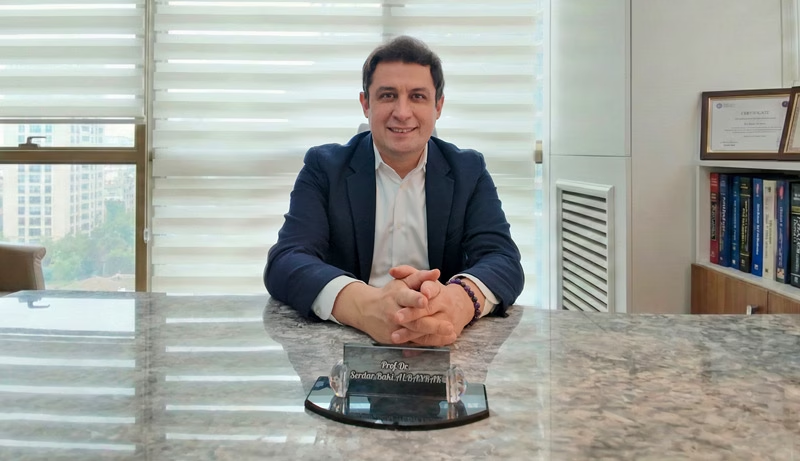
Prof. Dr. Serdar Baki Albayrak
Neurosurgeon · Full Professor of Neurosurgery
Prof. Albayrak uses awake mapping for tumors near speech and movement areas. He plans it with functional MRI and DTI, and he adds nerve monitoring during surgery. Before the day, his team rehearses the tasks with you.
After medical school at Marmara University, he trained in neurosurgery at Istanbul University. Clinical fellowships at the University of Helsinki and Harvard Medical School followed.
27+Years
5,000+Operations
64Countries
33Publications
Figures from Prof. Albayrak's professional profile, September 2026. See his full publication list.
Request an AppointmentFrequently Asked Questions
Can you be awake during brain surgery?
Yes. In an awake craniotomy, you sleep for the opening and the closing, and you wake up for the mapping. Local anesthetic numbs the scalp, and the brain itself feels no pain.
Which tumors need awake surgery?
Mainly gliomas in or near speech and movement areas, including many insular and left frontal tumors. Some metastases, meningiomas and vascular lesions near these areas can also need it.
My surgeon said my tumor cannot be fully removed. Does awake surgery change that?
Sometimes it does, because mapping can show that a part near speech or movement areas is safe to remove after all. In other cases, however, it confirms the limit. So a specialist opinion with functional scans helps you decide.
How much does an awake craniotomy cost in Turkey?
The cost depends on the scans, the length of the operation, the hospital stay and any intensive care. So ask for the cost of your own plan at the consultation, and see our guide to costs.
Prof. Albayrak's Published Research
Prof. Albayrak has no paper on awake craniotomy itself. Instead, the first paper reviews MRI during surgery, a tool for low-grade glioma and epilepsy surgery. The second studies glioblastoma cells.
Each link opens PubMed; his profile lists all 33 publications.
- Intra-operative magnetic resonance imaging in neurosurgery
- The effects of tibolone on the human primary glioblastoma multiforme cell culture and the rat C6 glioma model
Public health information
- MedlinePlus, US National Library of Medicine. Brain surgery.
- National Cancer Institute. Adult Central Nervous System Tumors Treatment (PDQ), patient version.
- National Institute of Neurological Disorders and Stroke. Brain and Spinal Cord Tumors.
- NHS. Brain tumours.
- GOV.UK, Driver and Vehicle Licensing Agency. Neurological disorders: assessing fitness to drive.
- UK Civil Aviation Authority. Surgical conditions: guidance for health professionals.
- US Centers for Disease Control and Prevention. Medical tourism.
This guide gives general medical information and does not replace a consultation. So diagnosis and treatment decisions need an examination by your own doctor.
Last updated: 17 October 2026. Website editor: Prof. Dr. Serdar Baki Albayrak's clinic, [email protected].
Plan Your Awake Craniotomy Consultation in Istanbul
Request an appointment with Prof. Dr. Serdar Baki Albayrak. The team then helps you plan the scans, the rehearsal and your visit.
Request an Appointment