
Paid online consultations are available by appointment. For booking, please contact us via Whatsapp.

What Is Moyamoya Surgery?
Moyamoya surgery, also called revascularization, gives the brain a new route for blood. The surgeon brings an artery or living tissue from the scalp onto the brain surface. As a result, blood can reach areas that the narrowed arteries no longer feed well.
In moyamoya disease, the ends of the internal carotid arteries narrow over years. The brain then grows a mesh of tiny, fragile vessels that look like a puff of smoke on an angiogram. In Japanese, that is what "moyamoya" means.
According to NINDS, surgery works best of all known treatments and lowers the risk of future strokes. Without surgery, however, most people go on to have repeated strokes. So the real question is usually when and how to operate, not whether.
At a Glance
- What it isSlow narrowing of the main brain arteries
- Typical signsBrief weakness on one side, headache, seizures, bleeding
- Key testsMRI, catheter angiogram, blood flow scan
- MedicineLowers stroke risk but cannot reopen the arteries
- Main operationDirect STA-MCA bypass, indirect methods or both
- Hospital stayAbout one week, including 1-2 days in intensive care
Where Are You in Your Decision?
Pick the line that sounds most like you. Each one then opens the matching part of this guide.
- 01My child has short spells of arm or leg weaknessHow moyamoya shows in children and adults
- 02A scan showed moyamoya and I need the full pictureAngiogram, blood flow maps and Suzuki stages
- 03Do I really need an operation?Who benefits, and why stents do not help
- 04Direct bypass, indirect bypass or both?The three surgical routes compared
- 05I want to know about recoveryIntensive care, new vessels and follow-up angiograms
- 06I am planning surgery from abroadLength of stay, flights and the second side
Moyamoya Symptoms in Children and Adults
Symptoms come from two problems: too little blood reaching the brain, or bleeding from the fragile backup vessels. MedlinePlus notes that the disease usually starts around age five or in the thirties and forties.
Short spells of weakness on one side
For most children, this complaint comes first. An arm or leg goes weak for a few minutes, and then it recovers. NINDS calls these spells transient ischemic attacks, or mini-strokes.
Crying, blowing on hot food, playing wind instruments or running hard often set them off. Fast breathing lowers carbon dioxide in the blood, and the brain arteries tighten in response.
Sudden severe headache from a brain bleed
In adults, the first sign is often bleeding. After years of strain, the thin backup vessels deep in the brain can tear. So a sudden, very severe headache, vomiting or confusion needs emergency care.
Seizures and headaches
Brain tissue that runs short of blood can also trigger seizures. In addition, many people with moyamoya live with recurring headaches. For seizures that continue after treatment, see our guide to epilepsy surgery.
Falling school grades or memory trouble
However, this quiet sign often goes unnoticed. A brain that runs on too little blood for months can slow attention and learning. In adults, it may show as forgetfulness or a change in personality.
How Children and Adults Differ
| Feature | Children | Adults |
|---|---|---|
| Main problem | Too little blood (ischemia) | Bleeding, or ischemia in about half |
| First sign | Brief arm or leg weakness, seizures | Sudden severe headache, confusion |
| Common triggers | Crying, blowing, fever, dehydration | High blood pressure, straining |
| Quiet sign | Falling school grades, poor attention | Forgetfulness, personality change |
| Speed | Often fast; the other side follows within years | Slower, but bleeding risk stays high |
Questions at this stage
Is moyamoya hereditary?
Partly. NINDS notes that some cases run in families, and a change in the RNF213 gene plays a part, mainly in people of East Asian origin. Still, most carriers never develop the disease.
What is the difference between moyamoya disease and moyamoya syndrome?
In fact, both look the same on an angiogram. The term "syndrome" applies when another condition sits behind the narrowing, such as sickle cell disease, neurofibromatosis type 1, Down syndrome or past radiation to the head. In that case, the plan also treats that condition.
When to See a Doctor About Moyamoya
Every brief attack shows that part of the brain ran short of blood. So even one spell deserves a scan, and a few signs need emergency care at once.
Book a specialist visit if you notice:
- Spells of arm or leg weakness that pass within minutes
- Weakness after crying, blowing or hard exercise
- New headaches together with falling school grades
- Moyamoya on a scan, even without symptoms
Call emergency services (911, 999 or 112) for:
- Sudden weakness or numbness on one side, even if brief
- Slurred speech or trouble understanding words
- The worst headache of your life, with vomiting
- A first seizure, sudden vision loss or fainting
The NHS lists these signs as a stroke emergency. Also, never wait to see whether a spell of weakness returns, because each attack can leave lasting damage.
How Doctors Confirm Moyamoya
Imaging of the blood vessels confirms moyamoya, because symptoms alone overlap with many conditions. Then a blood flow scan shows how urgent surgery is.
- Brain MRI: shows old silent strokes and any past bleeding
- MR angiography: shows the narrowed arteries and the smoke-like mesh
- Catheter angiogram (DSA): the gold standard; it maps the backup vessels and the scalp arteries for surgery
- Perfusion scan: perfusion MRI, SPECT or PET color-codes which areas get too little blood
So the angiogram also serves as the surgeon's road map. It shows which scalp artery can carry blood and where the brain needs it most.
What the Suzuki Stages Mean
Doctors grade the angiogram in six Suzuki stages. In stage 1, for example, the carotid ends narrow slightly.
By stage 3, the smoke-like mesh reaches its peak, and symptoms often appear. In stage 6, the internal carotid closes fully, and the brain lives on blood from scalp arteries.
Still, the stage alone does not set the date of surgery. A child in stage 3 with frequent attacks may need surgery sooner than an adult in stage 5.
Can moyamoya be misdiagnosed?
Yes. Hardening of the arteries (atherosclerosis) can narrow the same vessels, and brief attacks can look like migraine or seizures. So a catheter angiogram and a review of risk factors help confirm the diagnosis.
Can moyamoya affect only one side?
It can start on one side. In children, however, the other side often follows within a few years. So doctors keep checking the healthy side with yearly MR angiography.
Who Needs Moyamoya Surgery?
Surgery suits people with symptoms or with brain areas that a perfusion scan shows as short of blood. Without these, close follow-up can be enough for a while.
| Situation | What the scans show | General approach |
|---|---|---|
| No symptoms | Normal blood flow | Follow-up with scans about every six months |
| Brief attacks or a past stroke | Low blood flow in one or both sides | Revascularization surgery, planned without long delay |
| Child with symptoms | Any low-flow area | Surgery soon, since each attack can affect learning |
| Adult after a bleed | Fragile backup vessels under strain | Bypass to unload these vessels, after recovery from the bleed |
Why Medicine and Stents Are Not Enough
No medicine reopens the narrowed arteries or stops the disease. Low-dose aspirin may cut clot risk, but your doctor decides this carefully after a bleed. Good fluid intake and steady blood pressure also help before and after surgery.
Stents and balloons work in hardened arteries, but moyamoya differs. Here the inner wall of the artery thickens, so a stretched segment often narrows again within months. In addition, a catheter can tear the fragile backup vessels.
Can moyamoya be cured?
No treatment reverses the narrowing itself. However, surgery gives the brain a new and lasting blood supply. So many people stop having attacks and return to school or work.
Does my child with moyamoya need surgery?
A child with attacks or a low-flow area on the perfusion scan usually needs surgery, because the disease often moves fast in children. On the other hand, a child without symptoms and with good blood flow can stay under close watch.
Direct, Indirect or Combined Bypass: Moyamoya Surgery Options
Surgeons use two main routes to bring in new blood. Direct bypass works at once, while indirect methods let new vessels grow over a few months.
| Method | What the surgeon does | When blood flow improves | Often suits |
|---|---|---|---|
| Direct bypass (STA-MCA) | Stitches the scalp artery to a brain artery about 1 mm wide | Right away, on the operating table | Adults, and anyone who needs blood fast |
| Indirect methods (EDAS, EMS) | Lays the scalp artery or the temple muscle on the brain surface | Over about 3 to 6 months | Children, whose arteries are too thin for stitches |
| Combined | Direct stitch plus indirect tissue in one operation | At once, then more over months | Wide areas of low blood flow |
Direct Bypass: STA-MCA
To begin with, the superficial temporal artery (STA) runs under the skin of the temple. In a direct bypass, the surgeon joins it to a branch of the middle cerebral artery (MCA) on the brain surface. This stitch needs a high-power microscope and threads finer than a hair.
So blood starts to flow into the brain during the operation itself.
Indirect Methods: EDAS and EMS
In EDAS, the surgeon frees the scalp artery and lays it on the brain. In EMS, the temple muscle rests on the brain surface instead. Over the next months, new vessels sprout from this tissue into the brain.
A child's brain still grows new vessels well, so indirect methods often suit children. For this reason, many centers choose indirect surgery for children and a combined operation for adults.
Which is better, direct or indirect bypass?
Neither suits everyone, since direct bypass works at once but needs an artery wide enough to stitch. In contrast, indirect methods stay simpler and suit children well, yet they need months to work. So the angiogram and your age guide the choice.
Are both sides operated at the same time?
No. The side with the lower blood flow comes first. The other side then follows in a separate operation, usually a few months later.
How Moyamoya Bypass Surgery Works
Prof. Albayrak performs revascularization under the microscope, with brain monitoring during the operation. The plan follows the angiogram map from your tests.
Steps of the Operation
- First, you sleep under general anesthesia, and the team keeps blood pressure and carbon dioxide steady.
- Next, the surgeon finds the scalp artery in front of the ear and frees it along its length.
- Then a small window in the skull opens over the low-flow area.
- After that, under the microscope, the surgeon stitches the scalp artery to a brain artery, lays tissue on the brain, or does both.
- Finally, the bone goes back with a gap that protects the new vessels, and the skin closes in layers.
Monitoring the Brain During Surgery
Meanwhile, throughout the operation, the team watches the brain's blood flow and electrical activity. So any sign of strain appears early, while the surgeon can still act. Also, a steady blood pressure keeps the fragile vessels safe during anesthesia.
How long does moyamoya surgery take?
A one-sided direct bypass usually takes four to six hours. Most of that time goes to stitching the 1 mm artery under the microscope. Indirect methods take somewhat less time.
Will there be a visible scar?
The incision runs along the scalp artery above and in front of the ear. So it usually sits within the hair, and the hair covers it as it grows back.
Is Moyamoya Surgery Dangerous? Risks to Know
Every brain operation carries risk, and moyamoya adds fragile vessels to the picture. Still, living with untreated moyamoya often carries a higher risk.
- Stroke around the time of surgery: the brain is already short of blood, so changes in blood pressure or breathing can tip it over
- Bleeding: from the new connection or from the fragile vessels
- Hyperperfusion: a sudden rush of blood into a starved area can cause headache, brief weakness or, rarely, a bleed
- Seizures: mostly in the first days, and usually short-lived
- Wound problems: slow healing of the scalp along the incision
- Closure of the bypass: indirect vessels may then still take over
For these reasons, the days after surgery focus on steady blood pressure, enough fluids and calm breathing.
What is the success rate of moyamoya surgery?
No single figure fits everyone, because results depend on age, past strokes and the stage of disease. In general, NINDS reports that surgery lowers the risk of future strokes, and some people have no more attacks at all. So ask what to expect in your own case.
Moyamoya Surgery Recovery Time
Most people spend one to two days in intensive care and leave hospital within about a week. Full benefit from indirect methods, however, builds over three to six months.
A Typical Timeline
| When | What usually happens | What to watch |
|---|---|---|
| Days 1-2 | Intensive care; fluids through a drip, close blood pressure control | New weakness, speech change, seizures |
| Days 3-7 | Walking on the ward, then discharge | Headache, wound swelling |
| Weeks 2-4 | Light daily life; plenty of fluids | Dehydration, fever |
| Month 3 | Follow-up angiogram | How well new vessels grow |
| Month 6 | Second angiogram; the other side may come next | Any new attacks |
Daily Life With Moyamoya
Three rules help before and after surgery: drink enough, avoid fast breathing, and keep blood pressure steady. So parents try to limit long crying spells and games like blowing balloons. Calm exercise such as walking, swimming and cycling usually suits after recovery.
Also tell any anesthetist or dentist about moyamoya before a procedure, and carry a card that names the condition. Pregnancy remains possible, but plan it with your neurosurgeon and obstetrician.
When do the new vessels start working?
After a direct bypass, blood flows at once. After indirect methods, new vessels take about three to six months to grow. So attack risk does not drop to zero right away, and fluid and blood pressure advice stays strict during this time.
Do headaches go away after moyamoya surgery?
Headaches from low blood flow often ease once the new vessels work. Some migraine-like headaches, however, can continue, and medicine usually controls them. A sudden, very severe new headache still needs emergency care.
Coming to Istanbul from the US, Canada, the UK or Europe
Moyamoya surgery usually takes place on a planned date, so it suits a scheduled trip. Still, keep the return date flexible, because recovery and the flight rules set it.
How Long to Stay in Istanbul
First, count the consultation, any new angiogram and the operation. Then add about a week in hospital and at least a week nearby. Overall, many plans come to about two to three weeks for one side.
When You Can Fly Home
The UK CAA advises about 7 days without air travel after brain surgery, because trapped air in the skull can expand at altitude. Dehydration on a long flight also matters in moyamoya, so drink often. The US CDC adds that flying soon after surgery raises the risk of blood clots.
The Second Side and Follow-Up at Home
If both sides need surgery, plan a second trip a few months later. Before you leave, ask for the operation report and copies of the scans. Then arrange the 3-month and 6-month angiograms with your local doctor, or plan them in Istanbul.
For insurance and Medicare, see planning surgery in Turkey from the US. For NHS rules and travel insurance, see planning from the UK. From Canada, check with your provincial health plan and private insurer before you book.
Your treatment in Istanbul
From Your First Message to Flying Home
Treatment in Istanbul follows four clear steps. Each one answers a practical question about your trip.
STEP 01
Request an appointment
Use the form on this page, WhatsApp or call +90 532 308 97 72. Then share the diagnosis, your country and your travel dates. You can write in English or Turkish.
STEP 02
Consultation and tests in Istanbul
First, Prof. Albayrak examines you or your child at his clinic in Teşvikiye. Next, he goes through the angiogram and blood flow scans with you, and new tests can follow in Istanbul.
He then explains whether follow-up or surgery suits you, and which method fits. Questions worth asking include:
- Which side needs surgery first, and why?
- Would you choose a direct, indirect or combined method?
- When would the second side follow?
What should I bring to the consultation?
First, bring the MRI and angiogram images on a disc or USB drive, with the written reports. Also bring any perfusion scan, a list of medicines and notes on past attacks.
STEP 03
Surgery and hospital stay
If you choose surgery, the operation takes place in a hospital in Istanbul with a neuro intensive care unit. Prof. Albayrak names the hospital at the consultation, along with the likely stay. In addition, a parent or companion can usually stay with the patient.
STEP 04
Recovery, fitness to fly and follow-up
After discharge, you rest at a nearby hotel, drink plenty and walk a little each day. Then, before the flight, your surgeon checks the wound and confirms that you can fly.
Back home, seek urgent help for new weakness, speech trouble, a seizure or a severe headache.
When can my child go back to school?
Many children return to school within a few weeks. Contact sports and hard exercise, however, wait longer, so your surgeon sets the date after the follow-up scans.
Your Moyamoya Surgeon in Istanbul
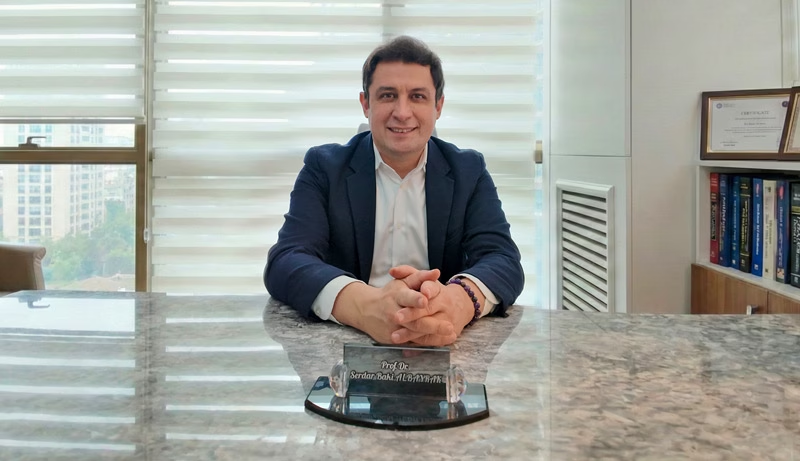
Prof. Dr. Serdar Baki Albayrak
Neurosurgeon · Full Professor of Neurosurgery
Moyamoya surgery joins arteries about 1 mm wide, so microsurgical skill matters most. Prof. Albayrak brings his experience in brain vessel microsurgery to each plan, with brain monitoring during the operation.
After medical school at Marmara University, he trained in neurosurgery at Istanbul University. Clinical fellowships at the University of Helsinki and Harvard Medical School followed.
27+Years
5,000+Operations
64Countries
33Publications
Figures from Prof. Albayrak's professional profile, September 2026. See his full publication list.
Request an AppointmentFrequently Asked Questions
Is moyamoya disease fatal?
Untreated moyamoya carries a real risk of disabling strokes and brain bleeds. With timely surgery, however, this risk falls a great deal. So most people treated in time go back to school or work.
Can moyamoya look like an aneurysm or AVM?
All three can cause a brain bleed, yet they differ on an angiogram. For the other two, see our guides to brain aneurysms and arteriovenous malformations (AVM). A cavernoma can also bleed, but it does not narrow arteries.
Can children have moyamoya surgery?
Yes, and children often do well after surgery. Indirect methods suit their thin arteries, and their brains grow new vessels readily. For other conditions in children, see our pediatric neurosurgery guide.
How much does moyamoya surgery cost in Turkey?
The cost depends on the method, one or two sides, the angiograms and the intensive care stay. For example, a one-sided indirect operation costs less than a combined bypass on both sides. So ask for the cost of your own plan at the consultation, and see our guide to costs.
Prof. Albayrak's Published Research
Prof. Albayrak has no paper on moyamoya itself. These three co-authored reviews cover the microsurgical anatomy of the middle cerebral artery, the same artery that receives a direct STA-MCA bypass. Each link opens PubMed; his profile lists all 33 publications.
- Microneurosurgical management of distal middle cerebral artery aneurysms
- Microneurosurgical management of middle cerebral artery bifurcation aneurysms
- Microneurosurgical management of proximal middle cerebral artery aneurysms
Public health information
- National Institute of Neurological Disorders and Stroke. Moyamoya Disease.
- MedlinePlus Genetics, US National Library of Medicine. Moyamoya disease.
- NHS. Symptoms of a stroke.
- NHS. Transient ischaemic attack (TIA).
- NHS. Sickle cell disease.
- NHS. DVT (deep vein thrombosis).
- UK Civil Aviation Authority. Surgical conditions: guidance for health professionals.
- US Centers for Disease Control and Prevention. Medical tourism.
This guide gives general medical information and does not replace a consultation. So diagnosis and treatment decisions need an examination by your own doctor.
Last updated: 13 October 2026. Website editor: Prof. Dr. Serdar Baki Albayrak's clinic, [email protected].
Plan Your Moyamoya Consultation in Istanbul
Request an appointment with Prof. Dr. Serdar Baki Albayrak. The team then helps you plan the dates of your visit.
Request an Appointment