
Paid online consultations are available by appointment. For booking, please contact us via Whatsapp.

What Is CSF Leak Repair Surgery?
CSF leak repair surgery closes a tear in the membrane around the brain and spinal cord. At the skull base, the surgeon usually seals it through the nose with a camera. For a spinal leak, however, a blood patch often comes first.
In general, cerebrospinal fluid (CSF) cushions the brain and keeps its pressure steady. So when it escapes, two problems follow: an open door for germs and low brain pressure.
Many small leaks close on their own within days. However, some never close. Those carry a lasting risk of meningitis until a surgeon seals them.
At a Glance
- Main signsClear fluid from one nostril, or a headache that eases when you lie down
- Key testBeta-2 transferrin in the fluid, then CT and MRI to find the hole
- First stepsHead-up rest, no straining, sometimes a lumbar drain
- Main operationsEndoscopic repair through the nose, open repair, spinal blood patch
- Main dangerMeningitis, an infection of the brain lining
- RecoveryTwo to four days in hospital after endoscopic repair; four to six weeks of care
Where Are You in Your Decision?
Pick the line that sounds most like you. Each one then opens the matching part of this guide.
- 01Is this fluid from my nose CSF or a runny nose?Clues, tests and how doctors confirm a leak
- 02My headache gets worse when I stand upSpinal CSF leaks and the blood patch
- 03Will the leak heal, or do I need surgery?Four situations where waiting no longer helps
- 04Endoscopic or open repair?All treatment options side by side
- 05I want to know about risks and recoveryResults, rules for the first weeks and timeline
- 06I am planning surgery from abroadLength of stay, flights and follow-up at home
CSF Leak Symptoms: Skull Base and Spinal Leaks
The site of the tear decides the symptoms. A skull base leak drips out through the nose or ear. In contrast, a spinal leak stays hidden and shows up as a headache.
| Type | Where the tear sits | Main sign | Common causes |
|---|---|---|---|
| Skull base leak (rhinorrhea) | Thin bone under the front of the brain | Clear, watery drip from one nostril | Head injury, sinus or pituitary surgery, raised pressure |
| Ear leak (otorrhea) | Temporal bone near the ear | Clear fluid from the ear, or down the nose | Skull fracture, ear surgery, thin bone |
| Spinal leak | Membrane around the spinal cord | Headache on standing that eases lying down | Lumbar puncture, spinal anesthesia, spine surgery, bone spur |
A drip from one nostril
For example, the fluid looks like water and usually comes from one side only. It drips more when you bend forward, strain or cough.
A salty taste at night
When you lie down, however, the fluid runs to the back of the throat instead. So many people notice a salty or metallic taste, often in the morning.
A headache that depends on posture
Low fluid lets the brain sag a little inside the skull. As a result, pain at the back of the head builds soon after you stand and fades when you lie flat. Ringing ears, nausea and a stiff neck can join it.
Meningitis, sometimes the first sign
Also, germs from the nose can reach the brain lining through the hole. In fact, doctors look for a hidden leak after any unexplained meningitis, especially after repeated attacks.
Questions at this stage
Is a CSF leak dangerous?
The leak itself rarely harms the brain; the danger lies in the open path it creates. For example, germs from the nose can travel through it and cause meningitis. So a leak that does not close needs repair, even if it causes little discomfort.
Can a CSF leak heal on its own?
Yes, many do: for instance, most leaks after a head injury stop within one to two weeks. Leaks after a lumbar puncture often stop within days. In contrast, spontaneous leaks, tumor leaks and wide bone gaps rarely close without treatment.
When to See a Doctor About a Possible CSF Leak
First of all, a clear drip from one nostril that lasts for days deserves a specialist visit. Signs of infection, however, need an emergency department straight away.
Book a specialist visit if you notice:
- Watery fluid from one nostril that allergy medicine does not help
- A drip that grows when you bend forward or strain
- A salty taste in the throat when you lie down
- A headache that starts when you stand and fades when you lie flat
Go to the nearest emergency department (911, 999 or 112) for:
- Nasal drip with fever, a severe headache and a stiff neck
- Dislike of light, vomiting or unusual sleepiness
- Clear fluid from the nose or ear after a head injury
- Watery drip that starts after brain, sinus or nose surgery
- Confusion on top of a posture headache
- A drip that returns after a repair
Why Speed Matters
For one thing, meningitis can develop within hours. Then treatment calls for urgent scans, a spinal fluid test and antibiotics through a vein. So never wait for a planned appointment once fever and a stiff neck appear.
CSF Leak or Runny Nose? How Doctors Tell the Difference
Many people use allergy sprays for months before anyone checks the fluid. Yet a few simple clues help, and one lab test gives a clear answer.
| Feature | CSF leak | Allergic runny nose | Sinusitis |
|---|---|---|---|
| Side | Usually one nostril | Both | One or both |
| Fluid | Clear as water, not sticky | Clear but mucus-like | Thick, yellow or green |
| On a tissue | Does not stiffen as it dries | Stiffens as it dries | Leaves a crust |
| Gets worse with | Bending forward, straining, getting up | Dust, pollen, seasons | A recent cold |
| Allergy medicine | No effect | Good effect | Partial |
Tests That Find the Leak
First, the doctor asks you to collect a little of the fluid in a small tube. A lab then looks for beta-2 transferrin, a protein that only spinal fluid contains.
Next, a thin-slice CT scan of the skull base shows the bone gap. Also, an MRI shows whether tissue sags through the gap. It hints at raised pressure too.
If neither scan shows the hole, a CT cisternogram follows. For this test, contrast goes into the spinal fluid and shows where it escapes. During surgery, a dye in the fluid can also mark the exact spot.
How can I tell at home if the fluid is CSF?
You cannot be sure at home, but a watery drip from one side that grows when you lean forward raises suspicion. A salty taste adds to it. In that case, ask your doctor for a beta-2 transferrin test.
Is clear fluid from the ear a CSF leak?
After a head injury, clear fluid from the ear is likely spinal fluid. Without an injury, an ear infection or skin problem is the more common cause. Either way, a beta-2 transferrin test and a CT scan settle the question.
Spinal CSF Leak Treatment
A spinal leak causes low pressure around the brain, which doctors call intracranial hypotension. Treatment starts gently and climbs step by step.
After a lumbar puncture or spinal anesthesia, the needle hole often seals within days. Meanwhile, rest, fluids and simple pain relief help.
Epidural Blood Patch
If the headache lasts, then an epidural blood patch is the usual next step. The doctor takes about 15 to 20 milliliters of your own blood from the arm. Then a needle places it just outside the spinal membrane, where it clots over the tear.
Many people feel better within hours. However, some need a second patch, especially when the leak site is unknown.
When a Spinal Leak Needs Surgery
Sometimes, however, a sharp bone spur or a hardened disc keeps cutting the membrane. In that case, a surgeon can remove the spur and stitch or seal the tear directly.
In addition, a few leaks come from an abnormal link between the fluid space and a vein. For this rare type, closing the vein by surgery or catheter is one of the options.
What is an epidural blood patch?
It is a short procedure that seals a spinal leak with your own blood. The doctor injects the blood just outside the spinal membrane, where it forms a clot over the tear. Most people go home the same day.
Can a spinal CSF leak look like a Chiari malformation?
Yes. Low fluid lets the lower brain sink, and an MRI can then resemble a Chiari malformation. So a posture headache with this MRI picture calls for a leak search before any Chiari surgery.
When Does a CSF Leak Need Surgery?
Prof. Albayrak waits when the leak is likely to close, and he repairs it when waiting only adds risk. Four situations point clearly toward surgery.
- The leak keeps going: fluid still drips after about two weeks of rest and a lumbar drain
- Meningitis has already happened: one attack makes a second more likely, so delay brings no benefit
- The bone gap is wide: a large fracture or sagging brain tissue will not close alone
- The leak is spontaneous or from a tumor: the cause remains, so the hole stays open
| Cause | Typical patient | Chance of closing alone |
|---|---|---|
| Head injury | Any age, after a fall or crash | High; most close within one to two weeks |
| After surgery | Recent sinus, pituitary or skull base operation | Varies; many need repair |
| Spontaneous | Often a middle-aged woman with raised pressure | Low; repair plus pressure control |
| Tumor | Vision or hormone changes | None; repair with tumor treatment |
| Present from birth | A child with repeated meningitis | None; surgery required |
When a tumor eats through the bone, the plan covers both problems together. Our guides to skull base tumors and pituitary tumor surgery explain those operations.
CSF Leak Treatment Options Compared
Each option suits a different leak. So the choice depends on where the tear sits, how big it is and why it formed.
| Option | How it works | Who it suits | Hospital stay |
|---|---|---|---|
| Conservative care | Head raised, no straining, stool softener | Small leak after a head injury | Observation, about 3 to 7 days |
| Lumbar drain | A thin tube in the lower back lowers fluid pressure | Leak after injury or surgery that does not stop | About 3 to 5 days |
| Endoscopic repair through the nose | A camera through the nostril; layered graft and tissue flap | Most leaks at the front and middle skull base | About 2 to 4 days |
| Open repair (craniotomy) | Opening the skull and patching the membrane from above | Wide fractures, several holes, sites a camera cannot reach | About 5 to 7 days |
| Epidural blood patch | Your own blood clots over a spinal tear | Spinal leaks | Usually same day |
Endoscopic Endonasal Repair
Today, endoscopic repair is the first choice for most skull base leaks. It leaves no cut on the face and also does not touch the brain.
First, the surgeon passes a thin camera through the nostril and finds the hole, often with a dye. Then he cleans the edges and closes the gap in layers with fat or thigh tissue. Finally, a flap of the nose lining with its own blood supply covers the repair.
That living flap matters most. Its blood flow helps the graft heal and so lowers the chance of a new leak. Prof. Albayrak also uses this route for pituitary tumors, so the anatomy is familiar ground.
Open Repair Through the Skull
Sometimes a camera cannot reach the hole, or the fracture runs wide. In those cases, the surgeon opens the skull and patches the membrane from above. As a result, this route takes longer and means a longer stay.
Treating the Pressure Behind a Spontaneous Leak
In addition, many spontaneous leaks come from raised pressure that thins the skull base over years. Often the cause is pseudotumor cerebri, so the plan also lowers that pressure with weight loss and medicine. If pressure stays high, a shunt is one of the options, as our guide to hydrocephalus treatment explains.
How long does CSF leak repair surgery take?
Endoscopic repair usually takes one and a half to three hours. An open repair takes about three to four hours. Both happen under general anesthesia, so you feel nothing.
Do I need a lumbar drain after the repair?
Not always. Prof. Albayrak adds a drain for a few days when the leak runs fast or the pressure is high. In that case, the drain protects the fresh graft while it seals.
CSF Leak Repair Risks and Success Rate
Most repairs hold after the first operation. Still, every operation carries risks, and your surgeon should explain each one for your case.
- A new leak: the repair can fail, more often with high pressure; a second repair then follows
- Meningitis: uncommon after repair; antibiotics cover the days while nasal packing stays in place
- Nasal crusting and blockage: common for a few weeks, eased by salt water rinses
- Change in smell: usually temporary, and smell returns in most people
- Headache from pressure: once the hole closes, pressure can rise for a while and needs treatment
What the Evidence Says
Reviews of endoscopic repair report that most leaks close with the first operation. In addition, a second repair closes most of the rest. So results depend on precise location, a living tissue flap and pressure control.
What is the success rate of CSF leak repair surgery?
No single figure fits everyone, and small, clearly located holes do best. However, spontaneous leaks with high pressure return more often. Your surgeon can explain your own chances once the tests are complete.
Will I lose my sense of smell?
At first, some people notice a weaker sense of smell while the nose heals. In most people, however, it comes back over time.
CSF Leak Surgery Recovery Time
Most people leave hospital two to four days after endoscopic repair. The graft, however, needs four to six weeks without sudden pressure to seal firmly.
| Stage | What happens | Your part |
|---|---|---|
| Days 1 to 4 | Head raised, nasal packing, antibiotics | Rest, short walks, no straining |
| Weeks 1 to 2 | Packing out, first endoscopic check | Salt water rinses, sneeze with your mouth open |
| Weeks 2 to 6 | Graft seals; crusting fades | No nose blowing, heavy lifting or flights |
| After 6 weeks | Control visit confirms the repair | Back to sport and travel when your surgeon agrees |
Rules That Protect the Repair
In short, anything that raises pressure in the head can push on a fresh graft. So for four to six weeks, avoid blowing your nose, straining, bending low and heavy lifting.
Also, keep your bowels soft and treat a cough early. If you need to sneeze, open your mouth to let the pressure out.
After a spontaneous leak, weight loss and pressure control also continue after surgery. Together, they lower the chance of a new leak.
When can I go back to work after CSF leak surgery?
Many people with desk jobs return within two to three weeks after endoscopic repair. Physical work, however, waits until the four to six week rules end.
Can a CSF leak come back after repair?
Yes, although a living tissue flap makes this less likely. The risk is highest when pressure inside the head stays high. So pressure control and the early rules both protect the result.
Coming to Istanbul from the US, Canada, the UK or Europe
A slow leak without infection suits a trip you arrange ahead. With fever or a stiff neck, however, get emergency care at home first and never board a plane.
How Long to Stay in Istanbul
For endoscopic repair, first count the consultation, the tests and two to four days in hospital. Then add the time until your surgeon clears you to fly. A spinal blood patch, by contrast, usually needs only a few days in the city.
When You Can Fly Home
The UK CAA advises waiting about seven days after surgery inside the skull, since trapped air can expand at altitude. After a skull base leak repair, however, surgeons often advise up to four to six weeks. So your surgeon sets the date at the check-up, based on how the graft looks.
Also, the US CDC warns that flying soon after surgery raises the risk of blood clots.
Follow-Up at Home
Before you leave, ask for the operation report, your scans and the rules for the coming weeks. Then share them with your local doctor or ear, nose and throat specialist.
For insurance and Medicare, see planning surgery in Turkey from the US. For NHS rules and travel insurance, see planning from the UK. From Canada, check with your provincial health plan and private insurer before you book.
Your treatment in Istanbul
From Your First Message to Flying Home
Treatment in Istanbul follows four clear steps. Each one answers a practical question about your trip.
STEP 01
Request an appointment
Use the form on this page, WhatsApp or call +90 532 308 97 72. Then share when the leak started, any past surgery or injury and your travel dates. You can write in English or Turkish.
STEP 02
Consultation and tests in Istanbul
First, Prof. Albayrak examines you at his clinic in Teşvikiye. Next, he goes through your scans and test results with you. A fluid test, a thin-slice CT or an MRI can follow in Istanbul.
He then explains whether the leak needs repair, and which route. Questions worth asking include:
- Where exactly is the hole, and why did it form?
- Will I need a lumbar drain?
- When can I safely fly home?
What should I bring to the consultation?
First, bring all CT and MRI images on a disc or USB drive, with the written reports. Also bring any fluid test results, operation notes and a list of your medicines.
STEP 03
Surgery and hospital stay
If you choose surgery, the operation takes place in a hospital in Istanbul. Prof. Albayrak names the hospital at the consultation, along with the likely stay. In addition, a relative or companion can usually stay with you.
STEP 04
Recovery, fitness to fly and follow-up
After discharge, you rest at a nearby hotel and follow the pressure rules. Then, before the flight, your surgeon checks the repair and confirms that you can fly.
Back home, then, seek urgent help for fever, a stiff neck, a new drip or a swollen leg.
Can someone travel with me?
Yes, and it helps. A companion can carry bags, since lifting is off limits for weeks. Also, they can watch for warning signs during the first days.
Your CSF Leak Surgeon in Istanbul
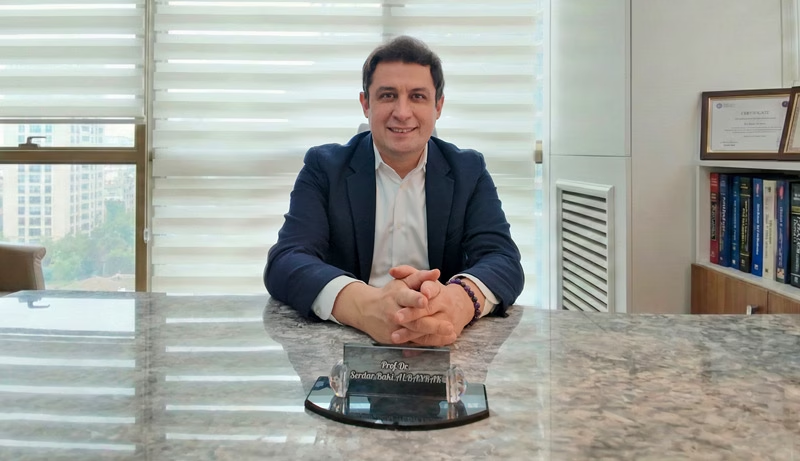
Prof. Dr. Serdar Baki Albayrak
Neurosurgeon · Full Professor of Neurosurgery
Prof. Albayrak treats skull base and spine conditions, including leaks after injury, surgery or raised pressure. He first locates the hole precisely, then seals it and treats the cause behind it.
After medical school at Marmara University, he trained in neurosurgery at Istanbul University. Clinical fellowships at the University of Helsinki and Harvard Medical School followed.
27+Years
5,000+Operations
64Countries
33Publications
Figures from Prof. Albayrak's professional profile, September 2026. See his full publication list.
Request an AppointmentFrequently Asked Questions
Which doctor treats a CSF leak?
Neurosurgeons and ear, nose and throat surgeons often treat skull base leaks together. The neurosurgeon handles the membrane and the pressure, while the ENT surgeon manages the nasal route. For spinal leaks, a neurosurgeon or pain specialist usually gives the blood patch.
Does weight affect a CSF leak?
Yes, especially in spontaneous leaks. For example, extra weight raises pressure in the abdomen and, in turn, inside the head. So weight loss helps the repair hold and lowers the chance of a new leak.
Can a sinus or pituitary operation cause a CSF leak?
Yes. Surgery close to the skull base can open the membrane, and the closure sometimes fails. Then the leak usually shows up within days or weeks.
How much does CSF leak repair surgery cost in Turkey?
The cost depends on the route, any lumbar drain and the length of stay. A blood patch, for example, costs far less than an open repair. So ask for the cost of your plan at the consultation, and see our guide to costs.
Prof. Albayrak's Published Research
Prof. Albayrak has no paper on CSF leak repair itself. Instead, the first paper describes a fluid-filled cyst that grew through a gap in the skull bone. The second looks at old contrast oil in the spinal fluid space, and the third at an infection after surgery.
Each link opens PubMed; his profile lists all 33 publications.
- Giant intradiploic leptomeningeal cyst of the posterior fossa
- Revisiting a historical phenomenon: Myodil droplets in the subarachnoid space
- Postoperative cerebral abscess formation caused by Toxocara canis in a meningioma cavity
Public health information
- MedlinePlus, US National Library of Medicine. Cerebrospinal fluid (CSF) collection.
- MedlinePlus. Meningitis.
- NHS. Meningitis.
- NHS. Lumbar puncture.
- MedlinePlus. Head Injuries.
- NHS. DVT (deep vein thrombosis).
- UK Civil Aviation Authority. Surgical conditions: guidance for health professionals.
- US Centers for Disease Control and Prevention. Medical tourism.
This guide gives general medical information and does not replace a consultation. So diagnosis and treatment decisions need an examination by your own doctor.
Last updated: 22 October 2026. Website editor: Prof. Dr. Serdar Baki Albayrak's clinic, [email protected].
Plan Your CSF Leak Consultation in Istanbul
Request an appointment with Prof. Dr. Serdar Baki Albayrak. The team then helps you plan the consultation, any tests and your stay.
Request an Appointment