
Paid online consultations are available by appointment. For booking, please contact us via Whatsapp.

What Is Recurrent Glioblastoma Surgery?
Recurrent glioblastoma surgery means a second operation to remove a glioblastoma that has grown back after the first treatment. It suits people whose new growth sits in one reachable place and who still feel fairly well. For them, it can ease symptoms and guide the next treatment.
Glioblastoma almost always returns at some point, because its cells spread into the brain beyond what any surgeon can see. So recurrence does not mean that the first operation failed.
No standard treatment exists for recurrence yet. Instead, a team of surgeons and oncologists chooses between surgery, radiation, medicines and clinical trials for each person.
At a Glance
- Main goalRemove the regrown tumor safely and relieve pressure
- Who it suitsOne reachable focus, good daily function
- First stepProve that the new growth is tumor, not radiation change
- ToolsNavigation, fluorescence, MRI during surgery, mapping
- Hospital stayOften a few days, longer after a large resection
- Next treatmentUsually starts once the wound has healed
Where Are You in Your Decision?
Pick the line that sounds most like you. Each one then opens the matching part of this guide.
- 01My scan shows something new. Is it really the tumor?Recurrence, pseudoprogression or radiation necrosis
- 02Could a second surgery help me?Who tends to benefit, and who does not
- 03I am comparing all treatment optionsSurgery, radiation, medicines and trials side by side
- 04How is a second operation different?Scar tissue, tools and the steps
- 05I want to know about risks and recoveryWound healing, stay and the next treatment
- 06I am planning surgery from abroadDocuments, timing, flights and follow-up
Signs That Glioblastoma Has Come Back
Most recurrences show up first on a routine follow-up MRI, often before any symptom. When symptoms do appear, they usually echo the ones you had at diagnosis.
A returning or new weakness
Weakness, numbness or speech trouble that had improved after surgery can come back. Likewise, a new gap in vision or a clear change in personality deserves attention. These changes tend to build over weeks rather than hours.
Headaches and seizures
A headache that grows worse each morning can point to rising pressure. Similarly, a first seizure, or seizures that return despite medicine, can signal new growth. Swelling from radiation can cause the same signs, though, so only a scan can tell them apart.
For first-time warning signs, see our brain tumour symptoms guide.
Questions at this stage
Does glioblastoma always come back?
In most people, yes, because tumor cells spread beyond the visible edge. Still, the time to recurrence varies widely from person to person. Regular MRI follow-up catches it early, which keeps more options open.
How fast does glioblastoma grow back after surgery?
It differs for each tumor. Some regrow within months of treatment, while others stay quiet for longer, especially with a methylated MGMT gene. So your follow-up plan, not an average, tells you when to look.
When to See a Doctor or Seek Emergency Care
A new symptom between scans needs a call to your team within days. A few signs, however, mean pressure inside the skull may be rising fast.
Contact your neuro-oncology team soon if you notice:
- Weakness, numbness or speech trouble that returns
- Headaches that grow worse over days
- More seizures, or a change in their pattern
- A scan report that mentions new enhancement or growth
Go to the nearest emergency department (911, 999 or 112) for:
- Sudden confusion, or a person who becomes hard to wake
- A seizure that does not stop, or one after another
- Sudden weakness of one side of the body
- Severe headache with repeated vomiting
Recurrence or Radiation Change?
A new bright area on MRI is not always tumor. After radiotherapy and chemotherapy, treated tissue can swell and light up just like a recurrence. So the first step is to prove what the new area is.
Pseudoprogression
In the first three months after chemoradiation, the scan can look worse while the tumor is in fact responding. This effect often settles on its own. For that reason, many teams repeat the MRI before they change treatment.
Radiation Necrosis
Months or years later, radiation can also damage tissue and cause swelling. It looks very similar to tumor on a standard MRI. However, its treatment differs, so mixing the two up leads to the wrong plan.
Advanced Scans That Help
Prof. Albayrak compares every new MRI side by side with the earlier ones. When the picture stays unclear, he adds perfusion MRI, MR spectroscopy or PET. Perfusion shows blood flow, spectroscopy shows tissue chemistry, and PET shows activity, which tends to run higher in tumor.
Does a suspicious MRI mean I need surgery right away?
No. First, your team clarifies whether the finding is tumor or treatment change, often with advanced scans or a short-interval MRI. Then they decide on surgery. Sometimes, however, surgery itself answers the question, because the tissue shows what the area contains.
Who Is a Candidate for a Second Surgery?
A second operation tends to help most when the new growth sits in one place and the surgeon can remove most of it safely. Your daily function matters just as much. The UK's NICE guideline also lists the time since your last treatment, your molecular markers and your own wishes.
| Factor | Points toward surgery | Points toward other options |
|---|---|---|
| Pattern of growth | One focal area, often at the edge of the old cavity | Several spots, or spread across both sides of the brain |
| Location | Reachable lobe, away from the deepest structures | Deep centers, brainstem or the corpus callosum |
| Daily function | Up and about, caring for yourself | Mostly in bed, needing help with most tasks |
| Symptoms | Pressure, swelling or seizures from the mass itself | No pressure effect and a small lesion |
| Time since treatment | Several months or more after chemoradiation | Very early growth, when pseudoprogression is still possible |
| Extent possible | Most or all of the enhancing tumor can come out | Only a small part can come out safely |
When Surgery Is Usually Not the Answer
Surgery rarely helps when the tumor has spread to many places or crossed deep into both hemispheres. It also adds little when a person can no longer manage daily life. In these cases, radiation, medicines or care focused on comfort often serve better.
If your first diagnosis was an IDH-mutant grade 4 tumor, the outlook and choices differ; see our astrocytoma guide.
Questions at this stage
My surgeon said a second surgery is not possible. Can another surgeon disagree?
Sometimes, yes. Surgeons weigh location and risk differently, and tools such as awake mapping can widen what is safe. A second opinion with your full scan history therefore helps you decide with confidence.
Is there an age limit for a second glioblastoma surgery?
No fixed limit exists. Instead, your general health and daily function count more than the number of years. Still, recovery takes longer with age, so the team weighs the expected gain carefully.
Recurrent Glioblastoma Treatment Options
Surgery is one of several paths, and many people combine two of them. The table shows what each option usually offers.
| Option | Often suits | Main aim | Good to know |
|---|---|---|---|
| Second surgery (re-resection) | One reachable focus, good function | Remove tumor, relieve pressure, get fresh tissue | Usually followed by another treatment |
| Re-irradiation or radiosurgery | Small, well-defined focus | Slow local growth without an incision | Limited by the dose you already had |
| Chemotherapy | Most people, alone or after surgery | Control growth across the brain | Choice depends on earlier drugs and MGMT status |
| Bevacizumab | Swelling that needs high steroid doses | Reduce swelling and symptoms | Approved for recurrence in the US; delays wound healing |
| Laser ablation (LITT) | Small, deep focus hard to reach openly | Heat the tumor through a thin probe | Less suited to large or swollen tumors |
| Clinical trial | People who meet the trial criteria | Access to new treatments | Some trials require fresh tissue from surgery |
| Supportive care | Everyone, at every stage | Control seizures, swelling and pain; protect quality of life | Goes alongside any other choice |
Prof. Albayrak decides on these options together with radiation and medical oncologists, not alone. For the first treatment of glioblastoma, see our brain cancer and glioblastoma guide.
What about tumor treating fields for recurrence?
Tumor treating fields use a wearable device that sends weak electric fields through the scalp. In the US, the device has approval for recurrent glioblastoma. However, the UK's NICE guideline advises against it for recurrent high-grade glioma, so availability depends on the country.
How a Second Glioblastoma Operation Works
A repeat operation follows the same path as the first one, through the earlier opening in the skull. Scar tissue and treated brain, however, make each step more careful.
What Changes the Second Time
Radiation thins the scalp and slows healing. So the surgeon plans the incision around the old scar and closes it with extra care. Inside, scar and treated tissue blur the border between tumor and healthy brain.
Tools That Guide the Surgeon
Navigation shows the surgeon's exact position on your MRI, much like a GPS. In addition, a fluorescent dye such as 5-ALA can make tumor cells glow under blue light. After radiation, though, treated tissue can glow too, so the surgeon reads it together with navigation.
MRI during surgery can check for leftover tumor before closing. If the growth lies near speech or movement areas, awake craniotomy with brain mapping protects those functions.
Fresh Tissue for the Next Plan
The removed tissue goes to the laboratory for a new report. It confirms whether the area held active tumor or mainly radiation change. Then the oncology team uses it to choose the next medicine or trial.
How long does a second glioblastoma surgery take?
It often takes three to six hours, depending on the size of the tumor and the scar tissue. Awake mapping or MRI during surgery can add time. Your surgeon gives you an estimate for your own case at the consultation.
First Surgery vs Second Surgery
Both operations aim for the most tumor out with the least harm. Yet the setting differs in a few practical ways.
| Feature | First surgery | Second surgery |
|---|---|---|
| Tissue | Untreated tumor with clearer edges | Tumor mixed with scar and radiation change |
| Wound | Healthy scalp | Thinner scalp after radiation; slower healing |
| Fluorescence | Usually marks tumor well | Treated tissue can glow too |
| Main goals | Diagnosis and maximal safe removal | Relief, fresh tissue and the next treatment step |
| Medicines to pause | Usually blood thinners only | Also bevacizumab, often for several weeks |
How many times can glioblastoma be operated on?
Some people have two or even three operations over the course of the illness. Each time, the team weighs the expected gain against the risk again. So no fixed number applies; the decision rests on your condition at that moment.
Risks and Recovery After a Second Operation
Most risks resemble those of the first surgery. Wound problems, however, become more likely after radiation and certain medicines.
- Wound healing problems and infection: the most typical concern after radiation; the team checks the scar closely
- New or worse weakness or speech trouble: often temporary as swelling settles, sometimes lasting
- Seizures: anti-seizure medicine usually continues after surgery
- Fluid leak or collection: occasionally needs a minor procedure
- Blood clots: early walking and leg exercises help prevent them
Recovery Week by Week
| Period | What happens | What to watch |
|---|---|---|
| Days 1 to 3 | MRI after surgery; sitting up and walking | Speech, strength, alertness |
| Days 3 to 7 | Discharge for many; steroids tapered | Wound, headache, seizures |
| Weeks 2 to 4 | Stitches out; tissue report reviewed | Slow-healing scar, fever |
| After the wound heals | Next treatment begins | Follow-up MRI every few months |
Is a second brain surgery more dangerous than the first?
The risk of wound problems runs higher, mainly because of radiation. Otherwise, the risks depend chiefly on where the tumor lies and how large it is. Your surgeon explains your own risk profile before you decide.
What a Second Surgery Can and Cannot Do
A second operation can relieve pressure, lower the need for steroids and clarify the diagnosis. It cannot cure glioblastoma, and no surgeon can promise a longer life.
Studies so far mostly look back at past patients. They suggest a benefit for people in good condition whose tumor comes out completely or nearly so. However, randomized trials have not yet confirmed it, and two of them, RESURGE and RECURRENT-GB, are still under way.
So a good decision balances realistic gains against the risks and your own priorities. For many people, more good time at home matters most.
What is the life expectancy after recurrent glioblastoma?
It varies widely, and averages say little about one person. Daily function, tumor markers, the extent of removal and the next treatment all play a part. Your neuro-oncology team can discuss what your own situation suggests.
Coming to Istanbul from the US, Canada, the UK or Europe
Recurrence leaves less time to plan than a first diagnosis. So it helps to gather documents early and to keep your home oncology team involved from the start.
What to Bring
- Every MRI since diagnosis on a disc or USB drive, with dates and reports
- The operation note and the pathology report, including MGMT and IDH results
- Your radiotherapy summary with dates and dose
- A list of medicines, including steroids, anti-seizure drugs and any bevacizumab dates
How Long to Stay in Istanbul
First, count the consultation and any new scans, then add surgery and a few days in hospital. After discharge, stay nearby until the wound check. Many people plan for about two weeks.
When You Can Fly Home
The UK CAA advises waiting about seven days after brain surgery before flying, because air can remain inside the skull. Your surgeon confirms the date after the check. The US CDC also warns that flying soon after surgery raises the risk of blood clots.
Follow-Up at Home
Before you leave, ask for the operation report, the discharge summary and the scan copies. Then your home team can start the next treatment once the wound has healed.
For insurance and Medicare, see planning brain surgery in Turkey from the US. For NHS rules, see planning from the UK. From Canada, check with your provincial health plan and private insurer before you book.
Your treatment in Istanbul
From Your First Message to Flying Home
Treatment in Istanbul follows four clear steps. Each one answers a practical question about your trip.
STEP 01
Request an appointment
Use the form on this page, WhatsApp or call +90 532 308 97 72. Then share the diagnosis, your country and your travel dates.
STEP 02
Consultation and scans
First, Prof. Albayrak examines you at his clinic in Teşvikiye and compares your scans with you. Perfusion MRI, spectroscopy or PET can follow in Istanbul. Together, you then decide between surgery and the other options.
Questions worth asking include:
- How sure are we that this is tumor and not radiation change?
- How much of the new growth can come out safely?
- What treatment would follow surgery, and where?
Should a family member come with me?
Yes, if possible. A companion helps with decisions, notes and travel, and can watch for changes after surgery. In addition, a relative can usually stay with you in the hospital.
STEP 03
Surgery and hospital stay
If you choose surgery, the operation takes place in a hospital in Istanbul. Prof. Albayrak names the hospital at the consultation, along with the likely stay. The team also plans the timing around any medicine you need to pause.
STEP 04
Recovery, fitness to fly and follow-up
After discharge, you rest at a nearby hotel. Then, before the flight, your surgeon checks the wound and confirms that you can fly.
Back home, seek urgent help for a seizure, fever, a leaking wound or new weakness.
When does treatment continue after a second surgery?
Usually once the wound has healed well, often a few weeks after surgery. Your home oncology team then starts the agreed treatment. So share the tissue report with them as soon as it is ready.
Your Recurrent Glioblastoma Surgeon in Istanbul
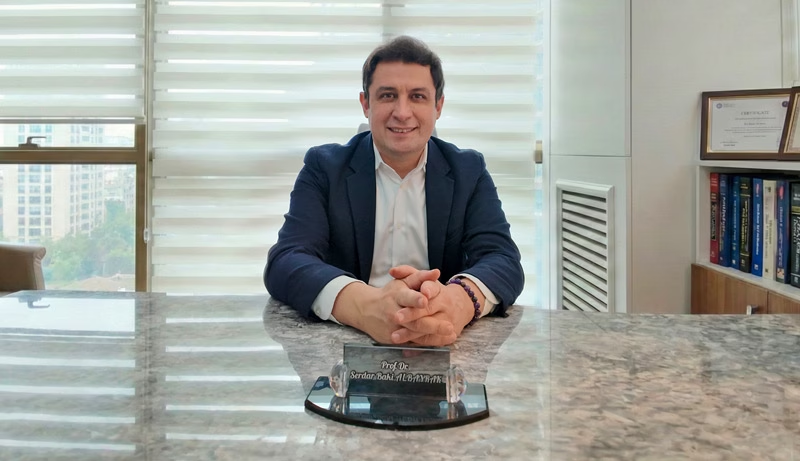
Prof. Dr. Serdar Baki Albayrak
Neurosurgeon · Full Professor of Neurosurgery
Prof. Albayrak first separates true recurrence from radiation change, comparing each new MRI with the earlier ones. If surgery suits you, navigation, fluorescence and MRI during surgery guide the removal.
After medical school at Marmara University, he trained in neurosurgery at Istanbul University. Clinical fellowships at the University of Helsinki and Harvard Medical School followed.
27+Years
5,000+Operations
64Countries
33Publications
Figures from Prof. Albayrak's professional profile, September 2026. See his full publication list.
Request an AppointmentFrequently Asked Questions
Can glioblastoma be removed a second time?
Yes, in many people whose new growth sits in one reachable place. The surgeon usually works through the earlier opening. Whether it makes sense for you depends on location, daily function and the next treatment available.
Is a recurrent brain tumor always glioblastoma again?
Usually a recurrence keeps the same type. Lower-grade gliomas, though, can return as a higher grade. So fresh tissue from a second surgery or a biopsy can change the diagnosis and the plan.
Can I get a second opinion on recurrent glioblastoma in Istanbul?
Yes. Prof. Albayrak sees international patients in person at his clinic, with all scans and reports in hand. See our brain tumor surgery overview for the conditions he treats.
How much does recurrent glioblastoma surgery cost in Turkey?
The cost depends on the scans, the length of the operation, intensive care and the hospital stay. So ask for the cost of your own plan at the consultation, and see our guide to costs.
Prof. Albayrak's Published Research
Prof. Albayrak has no paper on repeat glioblastoma surgery itself. Instead, the first paper reviews MRI during surgery, a tool for glioma removal. The second studies human glioblastoma cells in the laboratory.
Each link opens PubMed; his profile lists all 33 publications.
- Intra-operative magnetic resonance imaging in neurosurgery
- The effects of tibolone on the human primary glioblastoma multiforme cell culture and the rat C6 glioma model
Public health information
- National Cancer Institute. Adult Central Nervous System Tumors Treatment (PDQ), patient version.
- National Institute for Health and Care Excellence. Brain tumours (primary) and brain metastases in over 16s (NG99).
- NHS. Treatment for a malignant brain tumour.
- MedlinePlus, US National Library of Medicine. Brain tumor, primary, adults.
- UK Civil Aviation Authority. Surgical conditions: guidance for health professionals.
- US Centers for Disease Control and Prevention. Medical tourism.
This guide gives general medical information and does not replace a consultation. So diagnosis and treatment decisions need an examination by your own doctor.
Last updated: 20 October 2026. Website editor: Prof. Dr. Serdar Baki Albayrak's clinic, [email protected].
Plan Your Recurrent Glioblastoma Consultation in Istanbul
Request an appointment with Prof. Dr. Serdar Baki Albayrak. The team then helps you plan the scans, the decision and your visit.
Request an Appointment