
Paid online consultations are available by appointment. For booking, please contact us via Whatsapp.

Patient Guide · Choosing a Neurosurgeon
Who Is the Best Neurosurgeon in the World?
No official body ranks neurosurgeons worldwide. Instead, leading surgeons share traits you can check: high volume in your condition, published results, peer recognition and a full team.
Last updated 15 October 2026 · Medically reviewed by Prof. Dr. Serdar Baki Albayrak
27+Years of experience
5,000+Operations performed
64Countries served
97%MVD success rate
Short answer: there is no single best neurosurgeon in the world. Neurosurgery has many subspecialties: brain tumors, skull base, blood vessels, spine, epilepsy and children's surgery.
A surgeon who leads one of these fields may rarely operate in another. So the best choice is the surgeon with the most relevant experience for your diagnosis.
This guide explains how online "top 10" lists are made and which seven traits leading neurosurgeons share. It also gives you the questions that separate a strong surgeon from a well-marketed one.
Is There an Official Ranking of the World's Best Neurosurgeons?
No medical society, government or independent body publishes a worldwide ranking of individual neurosurgeons. What does exist is narrower:
- Hospital rankings. National and international rankings score hospitals and departments, not single surgeons. A top-ranked hospital still employs surgeons with very different focus areas.
- Professional awards. Neurosurgical societies give lifetime and research awards. These honor contributions to the field, and they do not compare surgeons with each other.
- Commercial "top 10" lists. Many lists that rank for this search are written by clinics, medical travel agencies or surgeons who include themselves. They can point you to names, but they are not independent rankings.
So treat any list as a starting point. Then verify each surgeon with the traits and questions below.
7 Traits the World's Top Neurosurgeons Share
Whether you compare surgeons in the United States, Europe or Turkey, the same seven benchmarks apply.
- High volume in your conditionA surgeon who removes several skull base tumors a month has a different skill set from one who mainly operates on lumbar discs. Ask for numbers for your diagnosis, not for neurosurgery in general.
- Published, reviewable resultsPeer-reviewed papers, conference talks and outcome data show how a surgeon's patients actually do. You can search a surgeon's name in PubMed in a few seconds.
- Recognized training and certificationLook for full neurosurgical residency, national board certification and fellowship training at established centers.
- A complete teamNeuroradiology, neuro-oncology, neuro-anesthesia, intensive care and rehabilitation decide much of the outcome. Strong surgeons work inside strong teams.
- Modern operating toolsNeuronavigation, intraoperative nerve monitoring, a surgical microscope with fluorescence and, for some tumors, intraoperative MRI help protect healthy brain tissue.
- Contribution to the fieldTeaching residents, developing techniques and holding patents for surgical instruments show a surgeon who improves methods instead of only repeating them.
- Clear, honest communicationA good surgeon explains the risks, the alternatives and the option of not operating. Be careful with guaranteed results.
How to Compare Surgeons: A Practical Checklist
Use this table when you compare two or three surgeons. Each row shows what to check and where to find it.
| Criterion | Why it matters | How to verify |
|---|---|---|
| Case volume | Repetition in the same operation lowers complication rates. | Ask how many operations like yours the surgeon performs each year. |
| Publications | Shows active work in the subspecialty. | Search the surgeon's name in PubMed or Google Scholar. |
| Certification | Confirms complete, supervised training. | Check the national board or medical chamber register. |
| Hospital | Intensive care and imaging affect safety. | Look for international accreditation such as JCI. |
| Technology | Better visualization protects function. | Ask about navigation, nerve monitoring and intraoperative imaging. |
| Team and follow-up | Recovery continues after discharge. | Ask who manages follow-up scans and rehabilitation. |
10 Questions to Ask Before You Choose a Neurosurgeon
These questions work in a first consultation, whether in person or online. A confident surgeon answers them directly.
- How many operations like mine do you perform each year?
- What are the main risks in my case, and how often do they happen in your hands?
- What happens if I do not have surgery, or if I wait?
- How much of the tumor or lesion do you expect to remove safely?
- Which tools will you use to protect speech, movement and vision?
- Who else reviews my case before surgery?
- Will you perform the key steps of the operation yourself?
- How long will I stay in hospital and in intensive care?
- When can I fly home, and who follows me after that?
- Who do I contact if a problem appears after I leave?
The Best Neurosurgeon Depends on Your Condition
Most patients search for the best neurosurgeon in the world after a specific diagnosis. The table shows which subspecialty fits each problem and what to look for.
| Condition | Subspecialty | What to look for |
|---|---|---|
| Glioma, glioblastoma, metastasis | Neuro-oncology surgery | Awake surgery and brain mapping, fluorescence guidance, tumor board |
| Meningioma, acoustic neuroma, pituitary tumor | Skull base surgery | Microsurgical and endoscopic experience, facial and hearing nerve monitoring |
| Aneurysm, AVM | Cerebrovascular surgery | Both clipping and endovascular options available in the same center |
| Trigeminal neuralgia, hemifacial spasm | Functional and cranial nerve surgery | Microvascular decompression volume and long-term pain-free rates |
| Parkinson's disease, tremor, epilepsy | Functional neurosurgery | DBS programming team, epilepsy monitoring unit |
| Spinal cord tumors, disc and spine disease | Spine surgery | Nerve monitoring, minimally invasive options, stability planning |
| Children's brain and spine conditions | Pediatric neurosurgery | Pediatric intensive care and pediatric anesthesia on site |
Which Countries Have the Best Neurosurgeons?
Excellent neurosurgery is available in the United States, Germany, Switzerland, Japan, South Korea and Turkey, among others. The country matters less than the center. For example, a high-volume department with full intensive care usually serves you better than a famous name without that support.
For international patients, practical factors also count. These include waiting time, total cost, language support and follow-up after you return home.
Why Many International Patients Choose Istanbul
Istanbul has several internationally accredited hospitals and a large population, so surgeons see rare conditions often. In addition, waiting times are usually short and costs are often lower than in Western Europe or the United States.
Direct flights reach most of Europe, the Middle East and Central Asia in a few hours. Our brain surgery in Turkey guide explains costs, hospital stay and travel in detail.
About Prof. Dr. Serdar Baki Albayrak
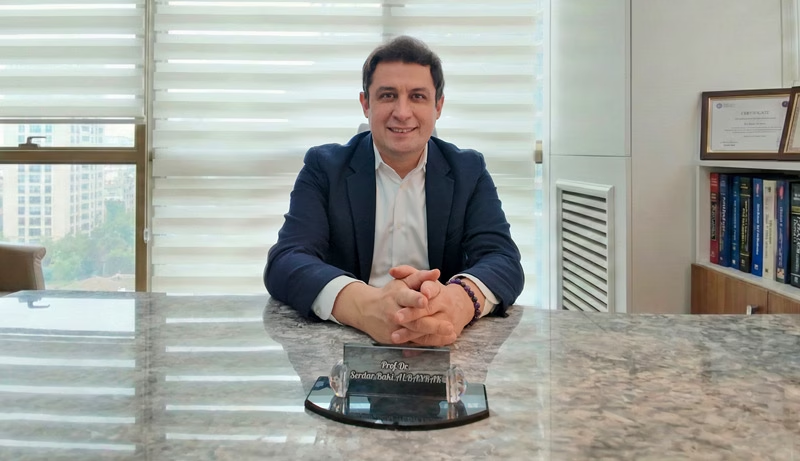
Prof. Dr. Serdar Baki Albayrak
Neurosurgeon · Brain and Spine Surgery, Istanbul
Prof. Albayrak focuses on brain tumors, skull base tumors, trigeminal neuralgia and complex spine surgery. He treats patients from 64 countries and has published widely in neurosurgical journals.
He is also a co-founder of a medical innovation group that develops and patents surgical instruments.
- Medical degree, Marmara University School of Medicine (1998)
- Neurosurgery residency, Istanbul University Istanbul Faculty of Medicine (2004)
- Advanced surgical training at Harvard Medical School (Brigham and Women's Hospital)
- Clinical fellowship at the University of Helsinki
27+Years
5,000+Operations
64Countries
97%MVD success
Choosing a Brain Tumor Surgeon
Brain tumor surgery is where the choice of surgeon matters most. The aim is to remove as much tumor as possible while keeping speech, movement and memory intact. Tumor type and location decide how hard that balance is.
Before you decide, ask three things. Does the surgeon offer awake surgery near speech or motor areas? Do they use fluorescence to see tumor edges? Will a tumor board review your case? Still dealing with unexplained headaches, seizures or vision changes? Our brain tumour symptoms guide explains which signs need an urgent scan.
Conditions Prof. Albayrak Treats
Start with the guide for your diagnosis. Each one explains the symptoms, tests, treatment options and recovery, and Prof. Albayrak reviews every page.
- Brain tumorsTypes, symptoms and surgery options
- Frontal lobe tumorsPersonality change, seizures and safe removal
- Skull base tumorsTumors at the base of the skull
- Glomus jugulare tumorsParagangliomas near the ear and jugular vein
- Spinal cord tumorsTumors inside and around the spinal cord
- Brain aneurysmsClipping and coiling for weak brain arteries
- Trigeminal neuralgiaMedicines, MVD and other options compared
- Epilepsy surgeryWhen seizures resist medicines
- Deep brain stimulationFor Parkinson's disease, tremor and dystonia
- Pediatric neurosurgeryBrain and spine surgery for children
The full list of condition guides also covers facial pain, nerve entrapment, blood vessel disorders, spasticity and more.
What Research and Patents Tell You About a Surgeon
Research output shows that a surgeon follows, questions and improves current methods. Also look at the topics. A surgeon who publishes on your condition has likely treated many patients with it.
Patents for surgical instruments show a different skill. The surgeon spotted a practical problem in the operating room and built a tool to solve it. Neither replaces case volume, but together they describe a surgeon who shapes the field. You can review Prof. Albayrak's work in the list of scientific publications.
Frequently Asked Questions
Who is the best neurosurgeon in the world?
No official body ranks individual neurosurgeons worldwide, so nobody can hold that title. The right surgeon for you is the one with high case volume in your exact condition, published results, recognition from peers and a complete hospital team behind them.
Who are the top 10 neurosurgeons in the world?
Online top 10 lists are not official rankings. Many are published by clinics, agencies or surgeons who appear in their own list. Use them as a starting point, then check each name against case volume, peer-reviewed publications, board certification and hospital accreditation.
Which country has the best neurosurgeons?
Excellent neurosurgery exists in the United States, Western Europe, Japan, South Korea and Turkey, among others. The center matters more than the country: look for high annual volume in your condition, intraoperative imaging, neuro-oncology and neuro-intensive care on site, and international accreditation.
How do I choose the best neurosurgeon for a brain tumor?
Ask how many operations for your tumor type and location the surgeon performs each year, which imaging and nerve monitoring tools they use, and whether a tumor board with oncology and radiation teams reviews your case before surgery.
Is it safe to travel abroad for neurosurgery?
It can be, if the hospital is internationally accredited, your records are reviewed before you travel, and a clear plan covers your hospital stay, follow-up imaging and communication with your doctor at home.
How can I book a consultation with Prof. Dr. Serdar Baki Albayrak?
Use the appointment form on the contact page or WhatsApp. The clinical team replies, explains the next steps and arranges an in-person or online consultation time.
This guide is for general information and does not replace a consultation with a qualified neurosurgeon.
Plan Your Treatment in Istanbul
Request an appointment with Prof. Dr. Serdar Baki Albayrak. The clinical team guides international patients through every step.
Request an Appointment