
Paid online consultations are available by appointment. For booking, please contact us via Whatsapp.

What Is Cranioplasty Surgery?
Cranioplasty surgery closes a gap in the skull with your own stored bone or a custom implant. Most often, it follows a craniectomy, an operation that removes part of the skull to give a swollen brain room.
So the goal goes beyond looks. In fact, a closed skull protects the brain again and restores the pressure balance inside the head.
In most cases, cranioplasty is a planned operation, not an emergency. Therefore you, your family and your surgeon can choose the timing and the material together.
At a Glance
- Who it helpsPeople with a skull gap after craniectomy, infection, a tumor or a skull fracture
- Usual timingOften six to twelve weeks after craniectomy; later after an infection
- MaterialsYour own bone, titanium, PEEK or bone cement (PMMA)
- OperationGeneral anesthesia, often one to two hours, through the old scar
- Hospital stayUsually three to five days
- Main riskInfection of the bone or implant
Where Are You in Your Decision?
Pick the line that sounds most like you. Each one then opens the matching part of this guide.
- 01Do I really need the bone put back?What an open skull does to the brain
- 02When is the right time for surgery?Early or late cranioplasty, side by side
- 03Own bone, titanium or PEEK?All four materials compared
- 04What happens during the operation?Five steps, from the scar to the last stitch
- 05I want to know about risks and recoveryWarning signs, rules and the timeline
- 06I am planning surgery from abroadLength of stay, flights and follow-up at home
Why Cranioplasty Is Necessary After Craniectomy
A skull gap leaves the brain under skin alone. Over time, this causes four problems, and each one is a reason to close the gap.
| Cause of the gap | Why the bone came out | Typical plan |
|---|---|---|
| Severe head injury | Brain swelling that medicine could not control | Own bone or implant once swelling settles |
| Stroke or brain bleed | Swelling after a large stroke or hemorrhage | Same approach as after an injury |
| Bone infection | The bone flap became infected after surgery | Implant after a longer wait |
| Tumor in the skull | A tumor grew into the bone | Implant, often in the same operation |
| Skull fracture | Shattered pieces could not go back | Implant shaped to the gap |
The brain has no hard cover
Even a small fall can then injure the brain directly. For this reason, most people wear a protective helmet until the skull closes.
The skin sinks inward
Over weeks, air pressure pushes the scalp and brain inward. As a result, headache, dizziness, poor focus and new weakness can appear. Doctors call this sinking skin flap syndrome, or syndrome of the trephined.
Brain fluid flows less freely
Also, the lost pressure balance can slow the flow of spinal fluid. Then fluid builds up in the brain's chambers, a problem known as hydrocephalus.
Rehabilitation slows down
In addition, blood flow to the brain under the gap can drop. So progress in speech, movement and thinking may stall during rehabilitation.
Questions at this stage
Is cranioplasty necessary, or can I live without the bone?
Some people live for years with a skull gap, but the risks above remain. For most people, closing the gap protects the brain and supports recovery. So your surgeon usually advises cranioplasty once your health allows it.
What is the difference between cranioplasty and craniotomy?
A craniotomy opens a window in the skull to reach the brain, and the bone usually goes back the same day. In a craniectomy, however, the surgeon leaves the bone out on purpose. Cranioplasty then puts the bone, or an implant, back weeks or months later.
When to Call Your Doctor Before or After Cranioplasty
First, report changes in the skull gap while you wait for surgery. After the operation, however, signs of infection or pressure need an emergency department at once.
Tell your surgeon soon if, before surgery, you notice:
- The skin over the gap sinks in more than before
- The gap starts to bulge outward
- New headache, dizziness or trouble focusing
- Rehabilitation progress that stops or goes backward
Go to the nearest emergency department (911, 999 or 112) for:
- Redness, warmth, discharge or a bad smell from the wound
- Fever above 38 °C (100.4 °F) with chills
- Fast swelling at the operation site
- A growing headache that pain relief does not ease
- Drowsiness, confusion, or a first or more frequent seizure
- New weakness in an arm or leg, or new trouble speaking
- Clear fluid leaking from the wound
Why Speed Matters
For one thing, an infection can spread to the implant or the brain lining. Then early antibiotics may save the implant, while delay often means its removal. So never wait for a planned visit once fever or wound discharge appears.
When Is Cranioplasty Done?
Prof. Albayrak often plans cranioplasty six to twelve weeks after the craniectomy. Still, three conditions come first: the swelling has gone, the scalp has healed and there is no active infection.
Doctors usually call surgery within the first three months early cranioplasty. After that, it counts as late cranioplasty.
| Feature | Early (first 3 months) | Late (after 3 months) |
|---|---|---|
| Recovery of brain function | Often faster, as pressure balance returns sooner | Slower; sinking skin flap risk grows |
| Ease of surgery | Less scar tissue; layers separate easily | Scalp sticks to the brain lining |
| Infection risk | Higher if the wound is not fully healed | Lower, since the scar has matured |
| Hydrocephalus risk | Lower | Rises as waiting goes on |
| Who it suits | Swelling gone, clean wound, good general health | Past infection, skin problems, fragile health |
| Time in a helmet | Short | Long |
Today, the trend favors early repair when conditions allow. After an infection, however, Prof. Albayrak waits at least three to six months. So each timeline is personal.
How long after a craniectomy can I have a cranioplasty?
Often six to twelve weeks, once swelling has gone and the scalp has healed. After an infection, the wait is usually at least three to six months. Your surgeon sets the date after an exam and a CT scan.
Can I have cranioplasty after a stroke?
Yes. After a large stroke or bleed, the same rules apply as after an injury. For example, the swelling must settle and your general health must allow anesthesia first.
Cranioplasty Materials: Own Bone, Titanium, PEEK or Bone Cement
There are four main ways to close the gap. The choice depends on the size of the gap, any past infection, your age and the state of your stored bone.
| Material | Strengths | Weak points | Who it suits |
|---|---|---|---|
| Your own bone (autologous) | No foreign material; grows with a child | Can slowly dissolve; a second operation may follow | Most people with well-kept bone; children |
| Titanium mesh or plate | Very strong, thin, resists infection | Conducts heat; edges show under thin skin; some MRI shadow | Large gaps, past infection, lost bone |
| PEEK implant | Flexible like bone; no heat; no shadow on CT or MRI; custom-made | Higher cost; production takes time | Large or complex gaps; people who need regular scans |
| Bone cement (PMMA) | Shaped by hand in surgery; quick to prepare | Warms as it sets; more prone to infection; brittle | Small or medium gaps |
Where Your Own Bone Waits
During a craniectomy, the surgeon keeps the removed bone in one of two ways. For example, it can go under the fat of the belly wall, where it stays alive. Otherwise, a bone bank stores it in a deep freezer.
The belly method needs a second small cut to take the bone out again. Freezer storage avoids that cut, but the bone tends to dissolve more after it goes back. Either way, the surgeon checks the bone first, and a weak or broken flap means an implant instead.
How a Custom Implant Takes Shape
First, a thin-slice CT scan of your skull becomes a 3D model. Next, the software mirrors the healthy side to design the missing piece. A maker then produces the titanium or PEEK implant to the millimeter.
As a result, the implant fits without shaping in surgery. Symmetry also tends to look better, and the operation is often shorter.
Is PEEK or titanium better for cranioplasty?
Neither suits everyone: PEEK feels closer to bone and causes no shadow on scans, so it suits people who need regular imaging. Titanium, by contrast, is very strong and resists infection well. Your surgeon weighs your gap, skin and history before choosing.
Can I have an MRI with a titanium skull plate?
Yes, in most cases. Titanium does not react to the MRI magnet, but it can cast a shadow near the implant. So tell the scan team about your implant before every scan.
How Cranioplasty Surgery Works
Cranioplasty takes place under general anesthesia and often lasts one to two hours. In most cases, the surgeon opens the old scar, so there is no new cut on the head.
- Lifting the scalp: the surgeon gently frees the skin and muscle from the brain lining. After a long wait, this step takes the most time.
- Protecting the lining: the lining is thin and often sticks to the scalp, so the work happens under a microscope or magnifying lenses. Any small tear gets a repair at once.
- Fitting the bone or implant: the piece goes into the gap and small titanium plates hold its edges.
- Placing a drain: a thin tube under the skin stops blood from collecting. It usually comes out within one to two days.
- Closing: the surgeon stitches muscle and skin in layers, then covers the wound with a dressing.
If your own bone sits in the belly wall, the surgeon first takes it out from there. This adds about half an hour. A custom implant, by contrast, skips that step.
When a tumor has grown into the bone, the plan covers both problems together. Our guides to meningioma and brain tumors explain those operations.
Is cranioplasty a major surgery?
Yes, it counts as brain surgery, although the surgeon works on the skull and does not enter the brain. It usually takes one to two hours. Most people walk within a day or two and go home within a week.
Will my hair grow back over the scar?
Yes, in most people. The surgeon shaves only a narrow strip along the old scar, so hair soon covers it again.
Cranioplasty Risks and Long-Term Effects
Cranioplasty is not among the hardest brain operations. Still, problems happen more often than many people expect, because most patients have lived through a serious brain illness.
- Infection: the most common and most important problem. An infected bone or implant often comes out, and a new one goes in months later.
- Blood or fluid under the skin: the drain helps; sometimes it still needs draining.
- Bone dissolving: your own bone can slowly shrink, more often in children and in broken flaps.
- Hydrocephalus: some people then need a shunt, as our guide to hydrocephalus treatment explains.
- Seizures: more likely after brain injury, so many patients get preventive medicine for a while.
- Bleeding on the brain surface: rare, but possible while the lining separates.
- A visible or palpable edge: under thin skin, you may feel the rim of a titanium plate.
How Planning Lowers the Risk
Good timing, the right material and careful technique all reduce these risks. For example, after an infection, a longer wait and a titanium or PEEK implant lower the chance of a new infection. So planning matters as much as the operation itself.
What is the success rate of cranioplasty?
Most cranioplasties close the gap for good with one operation. However, infection or bone dissolving can call for a second operation. Your surgeon can explain your own chances based on your history and material.
Can the body reject a skull implant?
True rejection is rare with titanium and PEEK. Most implant failures, in fact, come from infection or thin skin over the implant. So wound care and timing protect the result.
Cranioplasty Recovery Time
After cranioplasty, most people spend one night under close watch and go home in three to five days. Then the next six weeks call for gentle activity.
| Stage | What happens | Your part |
|---|---|---|
| First 48 hours | Pain relief, drain check, control CT | Rest, sit up, first short walks |
| First week | Discharge; the helmet usually ends | Walk daily, look after yourself |
| Week 2 | Stitches out | Keep the wound dry; wash hair when your doctor agrees |
| Weeks 2 to 6 | Wound settles; rehabilitation goes on | No heavy lifting, contact sport or bending low |
| Month 3 | Control CT checks fit and bone health | Back to most activities when your surgeon agrees |
| Long term | Yearly imaging if your own bone went back | Report any new dent, swelling or redness |
What Happens After Cranioplasty
Many people in rehabilitation make faster progress once the skull closes. For this reason, the therapy team often reviews the program after surgery.
Also, keep taking any seizure medicine until your doctor stops it. If you smoke, stop well before surgery, because smoking slows wound healing.
Cranioplasty in Children
A child's skull keeps growing, so the material choice changes. Surgeons prefer the child's own bone, since living bone grows with the head. However, bone dissolving happens more often in children, so follow-up scans come more often.
In some young children, the surgeon splits a piece of skull bone into two layers to cover the gap. For skull shape problems from birth, see our guide to craniosynostosis.
How long does it take to recover from a cranioplasty?
Most people go home within three to five days and avoid strain for about six weeks. Desk work often resumes within a few weeks. Full recovery, however, depends on the original brain injury and rehabilitation.
Do I still need a helmet after cranioplasty?
Usually not. Once the bone or implant is in place, the skull protects the brain again. Your surgeon tells you when to stop wearing it, often within the first week.
Coming to Istanbul from the US, Canada, the UK or Europe
Cranioplasty is a planned operation, so it suits a trip you arrange ahead. Before that, however, the swelling and any infection must have settled at home.
How Long to Stay in Istanbul
First, count the consultation, a fresh CT scan and three to five days in hospital. Then add the time until your surgeon clears you to fly. With your own stored bone or a hand-shaped implant, many people stay about two weeks in total.
A custom PEEK or titanium implant, however, needs production time after the CT scan. So the trip may become two visits, or one longer stay; your surgeon explains the options at the consultation.
When You Can Fly Home
The UK CAA advises waiting about seven days after surgery inside the skull, since trapped air can expand at altitude. So your surgeon sets the date at the check-up, often after a control CT.
Also, the US CDC warns that flying soon after surgery raises the risk of blood clots.
Follow-Up at Home
Before you leave, ask for the operation report, the implant details and your scans. Then share them with your local neurosurgeon and rehabilitation team.
For insurance and Medicare, see planning surgery in Turkey from the US. For NHS rules and travel insurance, see planning from the UK. From Canada, check with your provincial health plan and private insurer before you book.
Your treatment in Istanbul
From Your First Message to Flying Home
Treatment in Istanbul follows four clear steps. Each one answers a practical question about your trip.
STEP 01
Request an appointment
Use the form on this page, WhatsApp or call +90 532 308 97 72. Then share the date of the craniectomy, where your bone sits now and your travel dates. You can write in English or Turkish.
STEP 02
Consultation and tests in Istanbul
First, Prof. Albayrak examines you and the scalp over the gap at his clinic in Teşvikiye. Next, he goes through your scans with you. A thin-slice CT scan of the skull usually follows in Istanbul.
He then explains the timing and the material that suit you. Questions worth asking include:
- Is my own bone still strong enough to use?
- Would a custom implant suit me better?
- When can I safely fly home?
What should I bring to the consultation?
First, bring all CT and MRI images on a disc or USB drive, with the written reports. Also bring the craniectomy operation report, details of where your bone sits and a list of your medicines.
STEP 03
Surgery and hospital stay
If you choose surgery, the operation takes place in a hospital in Istanbul. Prof. Albayrak names the hospital at the consultation, along with the likely stay. In addition, a relative or companion can usually stay with you.
STEP 04
Recovery, fitness to fly and follow-up
After discharge, you rest at a nearby hotel and keep the wound dry. Then, before the flight, your surgeon checks the wound and confirms that you can fly.
Back home, then, seek urgent help for fever, wound discharge, a seizure or a swollen leg.
Can someone travel with me?
Yes, and it helps. A companion can carry bags, since lifting is off limits for weeks. Also, they can watch for warning signs during the first days.
Your Cranioplasty Surgeon in Istanbul
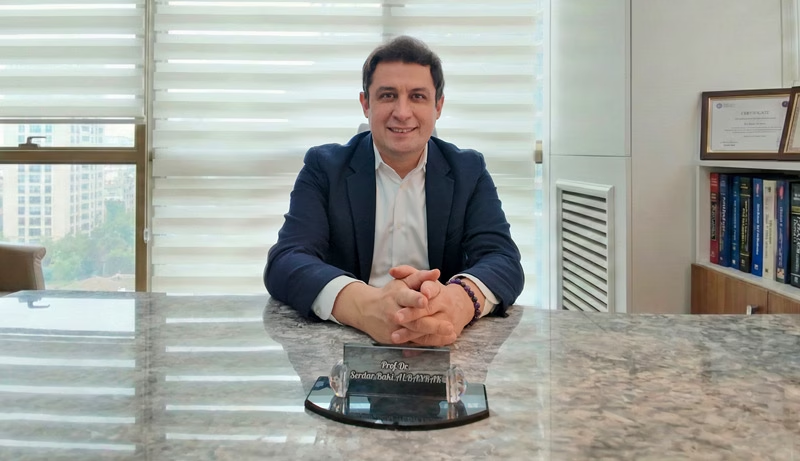
Prof. Dr. Serdar Baki Albayrak
Neurosurgeon · Full Professor of Neurosurgery
Prof. Albayrak repairs skull gaps after craniectomy, infection, tumors and fractures. He first weighs timing and material with you, then closes the gap with your own bone or an implant.
After medical school at Marmara University, he trained in neurosurgery at Istanbul University. Clinical fellowships at the University of Helsinki and Harvard Medical School followed.
27+Years
5,000+Operations
64Countries
33Publications
Figures from Prof. Albayrak's professional profile, September 2026. See his full publication list.
Request an AppointmentFrequently Asked Questions
Is cranioplasty safe?
For most people, the benefits outweigh the risks, and serious brain problems are rare. Infection, however, remains a real concern. So timing, material and wound care all matter.
Will my head look normal after cranioplasty?
In most cases, yes. A custom implant, in particular, mirrors the healthy side of the skull. A small dip or edge can still remain, especially near the temple.
Does a skull gap from a subdural hematoma need cranioplasty?
Usually not. Drainage of a chronic subdural hematoma uses small burr holes, and no large piece of bone comes out. Cranioplasty applies to the large gaps a craniectomy leaves.
How much does cranioplasty surgery cost in Turkey?
The cost depends mostly on the material and the length of stay. A custom PEEK implant, for example, costs more than your own bone. So ask for the cost of your plan at the consultation, and see our guide to costs.
Prof. Albayrak's Published Research
Prof. Albayrak has no paper on cranioplasty itself. Instead, the first paper describes a fluid-filled cyst that grew through a gap in the skull bone. The second studies brain swelling after injury, the problem that leads to craniectomy, and the third an infection after surgery.
Each link opens PubMed; his profile lists all 33 publications.
- Giant intradiploic leptomeningeal cyst of the posterior fossa
- Effect of magnesium, MK-801 and combination of magnesium and MK-801 on blood-brain barrier permeability and brain edema after experimental traumatic diffuse brain injury
- Postoperative cerebral abscess formation caused by Toxocara canis in a meningioma cavity
Public health information
- MedlinePlus, US National Library of Medicine. Brain surgery.
- MedlinePlus. Traumatic Brain Injury.
- National Institute of Neurological Disorders and Stroke. Traumatic Brain Injury (TBI).
- NHS. Stroke.
- NHS. Craniosynostosis.
- NHS. DVT (deep vein thrombosis).
- UK Civil Aviation Authority. Surgical conditions: guidance for health professionals.
- US Centers for Disease Control and Prevention. Medical tourism.
This guide gives general medical information and does not replace a consultation. So diagnosis and treatment decisions need an examination by your own doctor.
Last updated: 23 October 2026. Website editor: Prof. Dr. Serdar Baki Albayrak's clinic, [email protected].
Plan Your Cranioplasty Consultation in Istanbul
Request an appointment with Prof. Dr. Serdar Baki Albayrak. The team then helps you plan the consultation, any tests and your stay.
Request an Appointment