
Paid online consultations are available by appointment. For booking, please contact us via Whatsapp.

What Is Glossopharyngeal Neuralgia Surgery?
Glossopharyngeal neuralgia surgery treats sudden, stabbing pain in the throat, tongue base and ear when medicine no longer controls it. In most cases, the surgeon moves a small artery away from the ninth cranial nerve, an operation called microvascular decompression (MVD).
The glossopharyngeal nerve carries feeling from the back of the tongue, the tonsil area and part of the ear. So when an artery presses on it, each heartbeat can wear down its outer coating, and the nerve starts to fire pain signals.
Glossopharyngeal neuralgia is rare, far rarer than trigeminal neuralgia, and it usually starts after the age of 50. Many people therefore see dentists and ear, nose and throat doctors for months before anyone names it.
At a Glance
- What it treatsShock-like pain in the throat, tongue base, tonsil and ear
- Typical triggerSwallowing, talking, coughing, yawning or cold drinks
- First stepNerve pain medicine such as carbamazepine or oxcarbazepine
- Main operationMicrovascular decompression behind the ear
- Who it suitsPain that resists medicine, with an artery on the nerve on MRI
- Hospital stayUsually four to five days, first night in intensive care
Where Are You in Your Decision?
Pick the line that sounds most like you. Each one then opens the matching part of this guide.
- 01I am not sure this is glossopharyngeal neuralgiaHow it differs from trigeminal neuralgia, Eagle syndrome and throat problems
- 02My medicine is losing its effectMedicines, side effects and when to think about surgery
- 03I want to know if surgery suits meSigns for and against an operation
- 04MVD, rhizotomy or radiosurgery?Every option side by side
- 05I worry about swallowing and my voiceRisks, results and the recovery timeline
- 06I am planning surgery from abroadLength of stay, flights and follow-up at home
Glossopharyngeal Neuralgia Symptoms and Triggers
The key sign is a one-sided, stabbing pain deep in the throat that swallowing sets off. Between attacks, however, the pain disappears completely.
Electric shock attacks
People describe the pain as an electric shock or a knife in the throat. Each attack lasts a few seconds to two minutes. Yet attacks can return dozens of times a day, and some wake you at night.
Pain that shoots into the ear
The pain often spreads into the ear, below the angle of the jaw or down the neck. For this reason, many people first see an ear specialist. Rarely, both sides hurt, usually years apart.
Everyday triggers
- Swallowing, even your own saliva
- Cold, sour or very hot drinks
- Chewing, talking, singing or yawning
- Coughing, sneezing or brushing the back teeth
Over time, people start to fear eating. Weight loss and too little fluid then follow, so your doctor checks nutrition at the first visit.
Fainting with the pain
The ninth nerve takes part in a reflex that controls heart rate. So in a small group, a severe attack slows the pulse sharply. Doctors call this vagoglossopharyngeal neuralgia, and it needs urgent care.
Questions at this stage
Is glossopharyngeal neuralgia dangerous?
The pain itself does not damage the brain. However, attacks with fainting or a very slow pulse can be dangerous, and weight loss from fear of eating also harms health. So both need prompt medical care.
Does glossopharyngeal neuralgia go away on its own?
Some people have quiet spells that last months. Still, when an artery presses on the nerve, the attacks usually come back sooner or later. A quiet spell therefore does not mean a cure.
When to See a Doctor About Throat and Ear Pain
Sharp throat pain that keeps returning with each swallow deserves a specialist visit. A few signs, however, point to a heart rhythm problem or another serious cause.
Book a specialist visit if you notice:
- Stabbing pain in the throat or ear each time you swallow
- Pain that dental and throat treatment did not fix
- Medicine that worked at first but now helps less
- Weight loss because eating hurts
Go to the nearest emergency department (911, 999 or 112) for:
- Fainting, a blackout or a very slow pulse during an attack
- Chest pain or a racing heart with the pain
- Trouble breathing or you cannot swallow liquids
- Sudden weakness, slurred speech or double vision
Signs That Need Quick Tests
Pain that never stops, a hoarse voice, a lump in the neck or fast weight loss do not fit simple neuralgia. So an ear, nose and throat specialist should check the throat and voice box soon. Throat cancer can cause similar pain, and early tests matter.
Glossopharyngeal Neuralgia vs Trigeminal Neuralgia and Other Causes
Glossopharyngeal neuralgia copies many common throat and jaw problems. The pain site and its triggers, however, usually separate them.
| Feature | Glossopharyngeal neuralgia | Trigeminal neuralgia | Eagle syndrome | Throat cancer |
|---|---|---|---|---|
| Where | Tongue base, tonsil, throat, ear | Cheek, jaw, lips, forehead | Throat side, below the ear | Throat, often with ear pain |
| Feel | Electric shocks, seconds long | Electric shocks, seconds long | Duller, steadier ache | Constant, worse over weeks |
| Triggers | Swallowing, talking, coughing | Touching the face, chewing, washing | Turning the head, swallowing | Little link to triggers |
| Nerve | Ninth cranial nerve | Fifth cranial nerve | A long styloid bone irritates nearby nerves | Tumor in the throat or tongue base |
| Key test | Thin-slice MRI, anesthetic spray test | Thin-slice MRI | CT scan of the neck | Throat endoscopy, biopsy |
Other Causes Doctors Rule Out
In most people, an artery on the nerve causes the pain. Sometimes, however, another condition presses on or irritates the nerve, and the doctor then treats that cause first:
- A tumor at the skull base or near the brainstem
- Multiple sclerosis, especially when both sides hurt
- Head and neck cancer, mainly in the throat
- A long styloid bone (Eagle syndrome)
- Scarring after tonsil surgery, neck surgery or radiotherapy
How Doctors Confirm It
First, the diagnosis rests on your story: where the pain sits, how long it lasts and what sets it off. Then a neurological and an ear, nose and throat exam follow, often with a small camera through the nose.
- Thin-slice brain MRI (CISS or FIESTA sequence): shows the artery touching the nerve
- MR angiography: maps the course of that artery
- Contrast MRI: rules out a tumor or inflammation
- Neck CT: measures the styloid bone for Eagle syndrome
- Anesthetic test: numbing the tonsil area stops the pain for a while
- Heart rhythm recording: if you have fainted
A routine brain MRI often misses the artery. So Prof. Albayrak asks for the thin-slice protocol by name, and the radiologist then sets the right sequence.
Can you have glossopharyngeal and trigeminal neuralgia together?
Yes, though rarely. Cheek and throat pain then appear on the same side. In that case, the surgeon can check both nerves during the same operation.
My MRI showed nothing. Does that rule it out?
No. A standard scan often misses a small artery on the nerve, while the thin-slice sequence shows it far better. Also, a clear scan still helps, since it rules out a tumor.
Glossopharyngeal Neuralgia Treatment Before Surgery
Treatment starts with medicine, and most people get good control at first. Over the years, however, many need higher doses as the effect fades.
First-Line and Second-Line Medicines
Carbamazepine or oxcarbazepine comes first. Your doctor starts low and raises the dose step by step until the attacks stop.
If that fails, other options follow, such as gabapentin, pregabalin, lamotrigine or baclofen. Doctors also combine two medicines at times.
Side Effects That Change the Plan
Dizziness, sleepiness, poor balance and blurred vision come up most often. Carbamazepine can also lower sodium in the blood, so regular blood tests follow. In older people, falls become a real risk.
Medicine only quiets the pain; it does not remove the artery. So when doses climb or side effects grow, surgery becomes a fair question.
Can glossopharyngeal neuralgia be cured?
When an artery causes the pain, moving it away from the nerve treats the cause rather than the symptom. For this reason, MVD offers the best chance of lasting relief. Medicine, by contrast, controls attacks only while you take it.
Who Needs Surgery for Glossopharyngeal Neuralgia?
Surgery suits people whose pain resists medicine, or who cannot bear its side effects. The choice of operation then depends on age, general health and the MRI.
| Factor | Points toward MVD | Points toward other options |
|---|---|---|
| MRI | An artery clearly touches the ninth nerve | No vessel contact, or a tumor |
| Medicine | High doses, fading effect or side effects | Good control on a low dose |
| Health | Fit for general anesthesia | Serious heart or lung disease |
| Fainting | Attacks with a slow pulse; surgery earlier | No heart rhythm effect |
| Your wish | You want lasting relief and to keep the nerve | You prefer to avoid open surgery |
When attacks cause fainting, a cardiology team first records the heart rhythm. A temporary pacemaker can then protect you until the pain comes under control. In this group, Prof. Albayrak plans surgery much earlier.
Glossopharyngeal Neuralgia Surgery Options Compared
Each option balances relief, speed and risk to swallowing in a different way. So the surgeon chooses by the cause of the pain and by your health.
| Option | How it works | Who it suits | Main limit |
|---|---|---|---|
| Microvascular decompression | Moves the artery off the nerve through a small window behind the ear | Fit patients with an artery on the nerve | Needs general anesthesia and a skull opening |
| Nerve root section (open rhizotomy) | Cuts the pain fibers of the ninth nerve and upper vagus rootlets | No pressing vessel found at surgery | Lasting numbness; risk to swallowing and voice |
| Percutaneous rhizotomy | Heat or a chemical through a needle damages the pain fibers | Older patients unfit for open surgery | Swallowing problems; pain returns more often |
| Stereotactic radiosurgery | Focused radiation aims at the nerve root | High surgical risk, or a wish to avoid surgery | Works over weeks to months; relapse more common |
Why MVD Usually Comes First
MVD treats the cause and keeps the nerve whole. So taste, feeling and swallowing stay intact in most people. The same idea underlies microvascular decompression for trigeminal neuralgia and for hemifacial spasm.
When the Other Options Make Sense
If the surgeon finds no artery on the nerve, cutting the pain fibers becomes the choice. For older or frail patients, a needle procedure or radiosurgery avoids open surgery. Radiosurgery, however, takes place at a dedicated radiosurgery center, so Prof. Albayrak refers you there if it fits.
Is microvascular decompression brain surgery?
Yes, in the sense that the surgeon works inside the skull, next to the brainstem. However, the opening is small, about three centimeters, and the surgeon does not cut or pull back brain tissue. Instead, the approach follows a natural space between the brain and the skull.
How Microvascular Decompression for Glossopharyngeal Neuralgia Works
The operation takes about two hours under general anesthesia. During it, the surgeon moves the artery and places a soft Teflon cushion between the vessel and the nerve.
Step by Step
- You sleep under general anesthesia and lie on your side.
- Then the surgeon opens a bone window of about three centimeters behind the ear.
- Under the microscope, with endoscope help, the surgeon reaches the lower brainstem.
- Meanwhile, the team monitors the ninth, tenth and eleventh nerves without a break.
- Next, the surgeon frees the artery, most often the posterior inferior cerebellar artery, and sets the cushion.
- Finally, the bone flap goes back, and stitches close the skin.
Why Nerve Monitoring Matters Here
The ninth nerve runs right next to the fibers that control swallowing and the vocal cords. So continuous monitoring warns the surgeon before any stretch harms them. This step protects your voice and your swallow.
Glossopharyngeal Neuralgia Surgery Risks and Success Rate
Most problems after MVD are mild and short-lived. Still, every operation carries risks, and your surgeon should explain each one for your case.
- Swallowing trouble or hoarseness: usually temporary, in the first days or weeks
- Dizziness and poor balance: common at first, then fades
- Hearing loss: uncommon, on the side of surgery
- Spinal fluid leak or meningitis: rare, and treatable
- Pain that returns: low but not zero, mostly within two years
What the Evidence Says
Published surgical series report that most carefully chosen patients wake up free of the attacks. However, these are small studies, and no randomized trial compares MVD with other options. So no honest surgeon promises a fixed success rate.
What is the success rate of glossopharyngeal neuralgia surgery?
No single figure fits everyone. Results look best when the MRI shows a clear artery on the nerve and the pain is typical. Your surgeon can explain your own chances once the tests are complete.
How dangerous is microvascular decompression surgery?
Serious problems such as stroke or life-threatening bleeding are rare. The more common issues, like hoarseness or dizziness, usually settle. Even so, MVD is an operation inside the skull, so weigh it carefully with your surgeon.
What if the pain comes back after surgery?
A shifted cushion or a new vessel contact usually explains it. First, your doctor tries medicine again. Then, if needed, a second operation or another option follows.
Glossopharyngeal Neuralgia Surgery Recovery Time
Many people notice that the attacks stop right after surgery. Full recovery, however, takes several weeks, and full activity returns at about three months.
| Stage | What happens | Your part |
|---|---|---|
| Day 1 | Intensive care watch, first sips of fluid | Rest, report any choking |
| Days 2 to 3 | Walking, swallowing test, move to the ward | Soft food, short walks |
| Days 4 to 5 | Discharge; medicine starts to taper | Follow the taper plan |
| Week 2 | Stitch check | Daily walks, no heavy lifting |
| Weeks 4 to 6 | Return to desk work, light exercise | Build up activity slowly |
| Month 3 | Full activity, sport and long trips | Follow-up visit |
Coming Off Your Medicine
Your doctor does not stop the pain medicine on the day you leave hospital. Instead, the dose comes down over four to eight weeks, which avoids sudden swings. If pain returns during the taper, the plan changes quickly.
When can I eat normally again?
Most people start soft food within two or three days, after a swallowing test. Also, warm, soft meals help in the first weeks. A normal diet usually returns soon after discharge.
Coming to Istanbul from the US, Canada, the UK or Europe
This surgery is rarely urgent, so it suits a trip you arrange ahead. Fainting attacks, however, need local emergency care first, not a flight.
How Long to Stay in Istanbul
The hospital stay usually runs four to five days. Then add a few days at a nearby hotel for the wound check. In total, most people from abroad plan about ten days in Istanbul.
When You Can Fly Home
MVD takes place inside the skull. For this kind of surgery, UK Civil Aviation Authority guidance suggests waiting about seven days before flying, and your surgeon confirms the date.
Also, the US CDC warns that flying soon after surgery raises the risk of blood clots. So walk often, drink water and follow the advice you get at discharge.
Follow-Up at Home
Before you leave, ask for the operation report, the medicine taper plan and copies of your scans. Then share them with your local doctor.
For insurance and Medicare, see planning surgery in Turkey from the US. For NHS rules and travel insurance, see planning from the UK. From Canada, check with your provincial health plan and private insurer before you book.
Your treatment in Istanbul
From Your First Message to Flying Home
Treatment in Istanbul follows four clear steps. Each one answers a practical question about your trip.
STEP 01
Request an appointment
Use the form on this page, WhatsApp or call +90 532 308 97 72. Then share how long you have had the pain, your country and your travel dates. You can write in English or Turkish.
STEP 02
Consultation and tests in Istanbul
First, Prof. Albayrak examines you at his clinic in Teşvikiye. Next, he goes through your scans and your medicine history with you. A thin-slice MRI or a throat exam can follow in Istanbul.
He then explains whether surgery fits, and which option. Questions worth asking include:
- Does an artery press on my ninth nerve?
- How will you protect my swallowing and voice?
- What happens if the pain returns?
What should I bring to the consultation?
First, bring all MRI images on a disc or USB drive, with the written reports. Also bring a list of every medicine and dose you have tried, plus any heart rhythm records.
STEP 03
Surgery and hospital stay
If you choose surgery, the operation takes place in a hospital in Istanbul. Prof. Albayrak names the hospital at the consultation, along with the likely stay. In addition, a relative or companion can usually stay with you.
STEP 04
Recovery, fitness to fly and follow-up
After discharge, you rest at a nearby hotel. Then, before the flight, your surgeon checks the wound and confirms that you can fly.
Back home, seek urgent help for fever, a severe headache, clear fluid from the wound or nose, choking, breathlessness or a swollen leg.
When can I go back to work?
Many people with desk jobs return within four to six weeks. Physical work usually waits until about three months.
Your Glossopharyngeal Neuralgia Surgeon in Istanbul
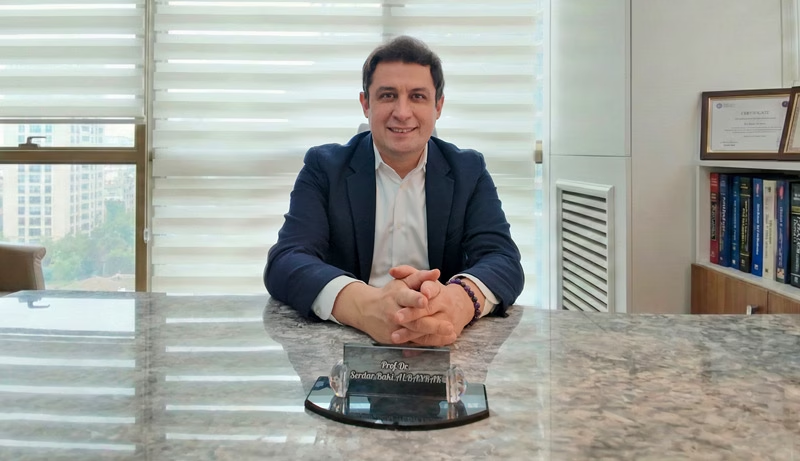
Prof. Dr. Serdar Baki Albayrak
Neurosurgeon · Full Professor of Neurosurgery
Prof. Albayrak performs microvascular decompression for cranial nerve conditions, including trigeminal neuralgia and hemifacial spasm. For glossopharyngeal neuralgia, he works with nerve monitoring to protect swallowing and voice.
After medical school at Marmara University, he trained in neurosurgery at Istanbul University. Clinical fellowships at the University of Helsinki and Harvard Medical School followed.
27+Years
5,000+Operations
64Countries
33Publications
Figures from Prof. Albayrak's professional profile, September 2026. See his full publication list.
Request an AppointmentFrequently Asked Questions
What doctor treats glossopharyngeal neuralgia?
A neurologist and an ear, nose and throat specialist usually make the first assessment. A neurosurgeon then joins when surgery comes up, and a cardiologist takes part if you have fainted. So care is often a team effort.
Is glossopharyngeal neuralgia a sign of cancer?
Most cases come from a harmless artery on the nerve. Still, throat and tongue base cancers can cause similar pain. For this reason, every patient needs a throat exam, especially with constant pain, hoarseness or weight loss.
How is this different from other facial nerve pain?
Glossopharyngeal neuralgia hurts in the throat and ear, while trigeminal pain sits in the face and jaw. Our guide to facial nerve pain covers the wider group.
How much does glossopharyngeal neuralgia surgery cost in Turkey?
The cost depends on the operation, the tests you need and the hospital stay. So ask for the cost of your own plan at the consultation, and see our guide to costs.
Prof. Albayrak's Published Research
Prof. Albayrak has no paper on glossopharyngeal neuralgia itself. Instead, the first paper reviews the same decompression operation for trigeminal neuralgia. The other two cover the lower brainstem and the back of the skull, where this surgery takes place.
Each link opens PubMed; his profile lists all 33 publications.
- Microvascular decompression as a surgical management for trigeminal neuralgia: a critical review of the literature
- Sudden cessation of respiration in a patient with a solitary metastatic focus of renal cell carcinoma in medulla oblongata
- Giant intradiploic leptomeningeal cyst of the posterior fossa
Public health information
- MedlinePlus, US National Library of Medicine. Glossopharyngeal neuralgia.
- Genetic and Rare Diseases Information Center (GARD), NIH. Glossopharyngeal neuralgia.
- National Institute of Neurological Disorders and Stroke. Trigeminal Neuralgia.
- MedlinePlus. Swallowing Disorders.
- NHS. Fainting.
- NHS. DVT (deep vein thrombosis).
- UK Civil Aviation Authority. Surgical conditions: guidance for health professionals.
- US Centers for Disease Control and Prevention. Medical tourism.
This guide gives general medical information and does not replace a consultation. So diagnosis and treatment decisions need an examination by your own doctor.
Last updated: 28 October 2026. Website editor: Prof. Dr. Serdar Baki Albayrak's clinic, [email protected].
Plan Your Glossopharyngeal Neuralgia Consultation in Istanbul
Request an appointment with Prof. Dr. Serdar Baki Albayrak. The team then helps you plan the consultation, any tests and your stay.
Request an Appointment