
Paid online consultations are available by appointment. For booking, please contact us via Whatsapp.

What Is a Temporal Lobe Tumor?
A temporal lobe tumor grows in the side part of the brain, just inside the temple and above the ear. This area handles memory, emotion, hearing and the understanding of speech. So the first sign is often a short seizure rather than a headache.
Each side of the brain has its own temporal lobe. Many tumors here grow slowly and respond well to surgery. Our overview of brain tumor treatment also covers tumors in other areas.
Surgery forms the main treatment for most of them. The aim is to remove the tumor while protecting language, memory and vision. In addition, removing it often eases or stops tumor-related seizures.
At a Glance
- Where it sitsThe side of the brain, inside the temple and above the ear
- First signMost often a seizure: a blank spell, an odd smell or a sudden sense of déjà vu
- Common typesGanglioglioma, DNET, glioma, meningioma and metastasis
- Main treatmentMicrosurgery that removes as much tumor as is safe
- Key decisionLeft or right side, and how close the tumor lies to language and memory areas
- Hospital stayUsually 3 to 5 days, then a few weeks of recovery
Which Symptom Brought You Here?
First, pick the line closest to your situation. It then takes you to the matching part of this guide.
- 01Brief blank spells, odd smells or déjà vuHow temporal lobe seizures look
- 02Memory lapses or trouble following speechSigns from the memory and language areas
- 03The MRI shows a mass in the temporal lobeWhich tumor it might be
- 04Unsure whether to operate or watchTreatment options compared
- 05A left or right temporal lobe tumorHow the side changes surgery and recovery
- 06Planning surgery from abroadLength of stay, flights and care back home
Temporal Lobe Tumor Symptoms
The most common symptom of a temporal lobe tumor is a seizure. Memory problems, trouble understanding speech, headaches and a gap in side vision may follow. Because the signs can feel subtle, many people live with them for months.
Seizures, auras and odd smells
The temporal lobe tends to produce seizures more than any other brain area. During a typical spell, the person stares, stops responding and later remembers nothing. Lip smacking, swallowing or aimless hand movements often come with it.
A warning feeling, called an aura, may come first. For example, people describe a rising feeling in the stomach, sudden fear or strong déjà vu. Some briefly smell burning rubber or something rotten that nobody else notices.
Memory and language
The hippocampus, on the inner side of the lobe, stores new memories. So a tumor nearby can make it hard to hold on to recent events or new names.
In most people, the back of the left temporal lobe also helps them understand speech. A tumor there can cause fluent but confused speech, or difficulty following what others say.
Vision, hearing and mood
Some vision fibers pass through the temporal lobe. A tumor can therefore dim the upper outer part of vision on the opposite side, often called a "pie in the sky" defect. Many people never notice it.
Seizures may also come as ringing or heard sounds. Near the amygdala, a tumor can bring sudden fear, anxiety or irritability. Our guide to brain tumour symptoms covers headaches and pressure signs in detail.
Questions at this stage
What does a temporal lobe tumor feel like?
Often it feels like nothing at all between short spells. During a spell, people describe a wave of fear, a familiar feeling or a strange smell, then a gap in memory. Later, headaches may appear as the tumor grows.
Is smelling something that is not there a sign of a tumor?
Sometimes, if the smell comes in short, repeated spells with no other cause. Nose and sinus problems, however, explain this complaint far more often. Still, if blank spells or memory gaps come with it, your doctor will likely order a brain MRI.
Does déjà vu mean I have a temporal lobe tumor?
Usually not, because most healthy people feel déjà vu now and then. Frequent déjà vu with fear, a stomach feeling or a blank spell afterward, however, suggests a seizure. In that case, an EEG and an MRI help find the cause.
When to See a Doctor
Most temporal lobe tumor symptoms build slowly, so you usually have time to book a visit. Some signs, however, call for emergency care.
Book a doctor's visit if you notice:
- Repeated blank spells, odd smells or déjà vu attacks
- New trouble remembering recent events or names
- Difficulty understanding what others say
- Headaches that feel new or get worse each week
Seek emergency care for:
- A first seizure, or a seizure that lasts over 5 minutes
- Repeated seizures without recovery in between
- A severe headache with vomiting, or growing drowsiness
- Sudden trouble speaking, or one pupil much larger than the other
These signs can mean rising pressure in the skull. So go to the nearest emergency department first, rather than waiting for a visit abroad.
Why the Exact Spot Matters
The temporal lobe has several parts with different jobs. So the exact spot of the tumor shapes both the symptoms and the surgical plan.
| Part of the temporal lobe | Main job | Typical sign from a tumor |
|---|---|---|
| Inner side (hippocampus, amygdala) | Storing new memories, emotion, fear | Blank spells, déjà vu, sudden fear, forgetfulness |
| Front tip (temporal pole) | Emotional memory, matching faces and names | Often silent for years, then a seizure |
| Upper edge (hearing area) | Processing sound | Seizures with ringing or heard sounds |
| Back of the left side | Understanding speech and reading | Confused speech, trouble following words |
| Deep white matter | Carrying vision fibers to the back of the brain | Loss of upper side vision on the other side |
| Uncus (inner front tip) | Processing smell | Brief smells that are not there |
Which Tumors Grow in the Temporal Lobe?
Gliomas, slow-growing epilepsy-related tumors such as ganglioglioma and DNET, meningiomas and metastases form the main groups. In young people with years of seizures, benign types lead. In older adults with fast-moving symptoms, however, glioblastoma or metastasis becomes more likely.
| Tumor type | Usual age | Behavior | Goal of surgery |
|---|---|---|---|
| Ganglioglioma | Children and young adults | Mostly benign | Full removal and seizure control |
| DNET | Children and young adults | Benign | Seizure control, often a cure |
| Low-grade glioma | About 20 to 45 | Slow, but can change over time | The widest safe removal |
| Glioblastoma | Over about 55 | Malignant | Maximal safe removal, then further treatment |
| Meningioma | Middle age, more often women | Mostly benign | Full removal with its attachment |
| Metastasis | Older adults with known cancer | Malignant | Removal of a single, reachable spot |
Only tissue tests after surgery confirm the exact type. For details by type, see our guides to astrocytoma, oligodendroglioma, meningioma and brain metastases.
Are temporal lobe tumors cancerous?
Some are and some are not. Ganglioglioma and DNET, common in young people with long-standing seizures, are mostly benign. Fast symptoms in later life, in contrast, point more toward a malignant tumor, and the pathology report gives the final answer.
What is the most common temporal lobe tumor?
It depends on age. In adults, gliomas lead, together with meningiomas and metastases. In children and young adults with seizures, however, ganglioglioma and DNET appear most often.
Tests Before Temporal Lobe Tumor Surgery
A neurological exam and an MRI with contrast confirm a mass in the temporal lobe. Further tests then map the brain around it, so the surgeon can plan a safe route.
- MRI with contrast: shows the position, the borders and any swelling
- Perfusion and spectroscopy MRI: give clues about how active the tumor looks
- Tractography (DTI): maps the vision and language fibers around the tumor
- Functional MRI: shows which side and which area handle language
- EEG: records where the seizures start
- Memory and language tests: measure your starting point before surgery
- Visual field test: finds a vision gap you may not have noticed
A first seizure in adult life always deserves an MRI with contrast. This simple rule also catches many tumors while they are still small.
Can an MRI tell whether a temporal lobe tumor is benign?
It gives strong clues, but not a final answer. Calcium, cysts and contrast uptake all hint at the type. Even so, your surgeon will not label the tumor until tissue tests confirm it.
Temporal Lobe Tumor Treatment Options Compared
Microsurgery that removes as much tumor as is safe forms the main treatment. Radiotherapy and chemotherapy then follow for malignant tumors. For a small, silent lesion that looks benign, however, MRI checks may come first.
Prof. Albayrak bases the choice on three questions: the tumor type and its growth speed, its distance from language and memory areas, and whether medicines control the seizures.
| Option | What comes out | Who it may suit |
|---|---|---|
| MRI checks | Nothing, for now | Small, silent lesions that look benign |
| Lesionectomy | The tumor only | Outer-surface tumors with few or no seizures |
| Extended lesionectomy | The tumor and the irritable tissue around it | Long-standing seizures that resist medicine |
| Anterior temporal lobectomy | The front of the lobe with its inner parts | Inner-side tumors with a seizure focus in the hippocampus |
| Awake surgery | The tumor, guided by live language mapping | Left-side tumors near the speech area |
| Biopsy | A small sample for diagnosis | Deep or widespread tumors unsuitable for removal |
Are temporal lobe tumors operable?
Most of them are, because the temporal lobe offers a fairly direct route from the side of the head. The real question concerns how much can come out safely. That depends on the tumor's spread and its distance from language and memory areas.
Temporal Lobe Tumor Surgery: What the Surgeon Does
The surgeon makes a curved cut in front of and above the ear, then opens a small window in the skull. Under the operating microscope, he separates the tumor from the brain around it and removes it.
Throughout, neuronavigation shows the tumor's borders in real time. Neuromonitoring also tracks the movement and vision pathways. The operation usually takes 3 to 6 hours, and longer with awake mapping.
Left Versus Right Temporal Lobe Surgery
In most people, the left temporal lobe holds language and verbal memory. So left-side surgery needs closer mapping, and short-term trouble finding words stays common afterward.
The right side, in contrast, usually allows a wider removal with less risk to speech. Even so, both sides carry the vision fibers. Memory and language tests before surgery help set safe limits for each side.
Awake Surgery Near Language Areas
When a tumor lies at the back of the left temporal lobe, near the speech area, Prof. Albayrak may advise awake surgery. You wake during the key stage and feel no pain, while the team tests your speech so he can protect those areas. Our awake craniotomy guide explains each stage.
Removing the Seizure Focus Too
The tumor itself rarely starts a seizure. Instead, the irritated brain tissue around it does. So when seizures have lasted for years, the surgeon may also remove that tissue, and sometimes the hippocampus.
If tests show seizures without any tumor, for example from hippocampal scarring, see our guide to epilepsy surgery. Tumors that reach the deep insula need their own plan, as our insular glioma guide explains.
Will surgery stop my seizures?
For tumor-related seizures, surgery offers the most effective treatment. Published series show that most suitable patients become seizure-free, especially when the tumor comes out fully and seizures started recently. So delaying surgery while seizures continue despite medicine rarely helps.
Can a temporal lobe tumor be removed completely?
Often, yes, especially benign tumors such as ganglioglioma, DNET or meningioma. Gliomas, however, spread into nearby brain, so some cells usually stay behind. For that reason, follow-up scans continue after any glioma surgery.
Risks of Temporal Lobe Tumor Surgery
The main risks specific to this surgery involve side vision, word finding and verbal memory. Most of these effects stay mild or improve. Like any brain operation, it also carries a risk of bleeding, infection and swelling.
- Vision: a gap in upper side vision on the other side, which many people never notice
- Word finding: short-term trouble recalling names, mainly after left-side surgery
- Verbal memory: some loss if the left hippocampus comes out, so tests estimate this risk first
- Mood: anxiety or low mood in the first weeks, which usually settles
- General: bleeding, infection, brain swelling and blood clots in the legs
Tractography, awake mapping and nerve monitoring lower these risks. Your own risk, however, depends on the side and the exact spot of the tumor.
Will I lose my memory after temporal lobe surgery?
Major memory loss after right-side surgery stays rare. Removing the left hippocampus, on the other hand, can reduce verbal memory to some degree. So your surgeon measures this risk before surgery and, where possible, spares the hippocampus.
Recovery After Temporal Lobe Tumor Surgery
Most people stay in hospital for 3 to 5 days and return to daily tasks within a few weeks. Recovery speed, however, depends on the tumor type, the size of the removal and your general health.
A Typical Timeline
| When | What usually happens |
|---|---|
| First 24 hours | Close watch in intensive care, then a CT or MRI scan |
| Days 2-5 | Walking, normal meals and discharge |
| Weeks 2-3 | Wound check and a talk about the pathology result |
| Weeks 4-6 | Return to desk work; further treatment starts, if needed |
| Months 3-6 | Follow-up MRI and a review of seizure medicine |
Seizure Medicine, Words and Driving
Language and memory exercises help if words or names feel slow at first. Above all, never stop seizure medicine on your own. Your neurologist usually reviews it after a seizure-free period, often with an EEG.
People who have seizures should not drive. UK drivers must tell the DVLA about a brain tumor, and the time off the road often runs from months to a year. Elsewhere, check your local licensing rules.
How long is recovery after right temporal lobe tumor surgery?
Many people walk within a day or two and go home within a week. Desk work often resumes after about 4 to 6 weeks. Tiredness, though, can last longer, especially if radiotherapy follows.
What is recovery like after left temporal lobe tumor surgery?
The timeline looks similar, but word-finding trouble appears more often in the first weeks. Speech and memory exercises then speed up progress. Most of these changes ease over the following months.
Temporal Lobe Tumor or Something Else?
Temporal lobe seizures often get mistaken for panic attacks, migraine aura or epilepsy without a tumor. All four cause brief, sudden spells that pass by themselves. A few clues, however, help tell them apart.
During a seizure, awareness usually clouds and the spell lasts seconds to a few minutes. A panic attack, in contrast, lasts longer and leaves a clear memory. Migraine aura usually ends with a headache, and the MRI looks normal in both.
Frontal lobe tumors tend to change personality and drive, while temporal tumors affect memory and understanding. Our guide to frontal lobe tumors covers that area. Large tumors, however, can reach both lobes, so the signs may overlap.
Coming to Istanbul from the US, Canada, the UK or Europe
Temporal lobe tumor surgery needs one trip for the consultation, tests, surgery and early recovery. Further treatment, if needed, then usually continues at home.
How Long to Stay in Istanbul
First, add up the consultation, any new mapping scans, the operation and a hospital stay of 3 to 5 days. Then rest near the hospital until your wound check. Overall, many plans come to about two weeks in Istanbul.
When You Can Fly Home
UK aviation guidance advises waiting about 7 days after brain surgery before flying. Air left inside the skull can expand at altitude. The US CDC also warns that flying soon after surgery raises the risk of blood clots.
Follow-Up at Home
Before you leave, ask for the discharge summary, the pathology report and copies of all scans. Then share them with your neurologist, who usually manages seizure medicine at home.
For insurance and Medicare, see brain surgery in Turkey: planning from the US. For NHS rules and travel insurance, see planning from the UK. From Canada, check with your provincial health plan and private insurer before you book.
Your treatment in Istanbul
From Your First Message to Flying Home
Your treatment in Istanbul follows four clear steps. Each step then answers one practical question.
STEP 01
Request an appointment
Use the form on this page, WhatsApp or call +90 532 308 97 72. A short message is enough: your diagnosis, your country and your travel dates.
You can write in English or Turkish, so use whichever feels easier. The team then agrees the consultation date with you.
STEP 02
Consultation and tests in Istanbul
First, Prof. Albayrak examines you at his clinic in Teşvikiye. Next, he goes through your MRI scans with you. If needed, mapping scans, an EEG or memory tests can follow in Istanbul.
He then explains whether surgery suits you, and which approach fits. Questions worth asking include:
- How much of the tumor can come out safely?
- Does the seizure focus need removal too?
- What does the side of the tumor mean for my memory and speech?
What should I bring to my temporal lobe tumor consultation?
First, bring your MRI scans on a disc or USB drive, with the written reports. Also bring any EEG report, a list of your medicines and a diary of your seizures. A relative who has seen your spells helps, too.
STEP 03
Surgery and hospital stay
If you choose surgery, the operation takes place in a hospital in Istanbul. Prof. Albayrak then names the hospital at the consultation, along with the likely stay.
STEP 04
Recovery, fitness to fly and follow-up
After discharge, you rest at a nearby hotel, ideally with a companion. Then, before the flight, your surgeon checks the wound and confirms that you can fly.
Back home, get urgent help for any of these signs:
- A seizure, especially a long or repeated one
- A severe or worsening headache, or repeated vomiting
- New confusion, drowsiness or trouble speaking
- Fever, redness or fluid leaking from the wound
Can my local neurologist manage seizure medicine after surgery in Istanbul?
Yes, in most cases. Your neurologist then adjusts it using the discharge summary and the scans after surgery. So book that visit before you travel, if you can.
Your Temporal Lobe Tumor Surgeon in Istanbul
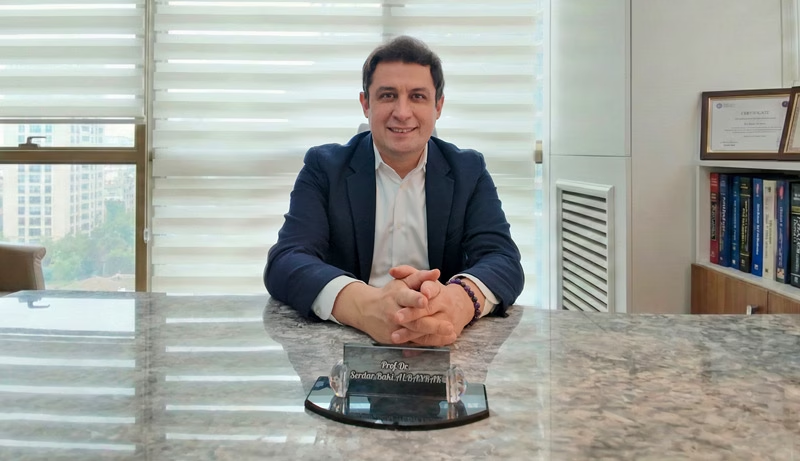
Prof. Dr. Serdar Baki Albayrak
Neurosurgeon · Full Professor of Neurosurgery
A temporal lobe tumor sits close to memory, language and vision pathways, so the plan starts with careful mapping. For this reason, Prof. Albayrak combines microsurgery with navigation, nerve monitoring and, near speech areas, awake surgery.
He completed his neurosurgery training at Istanbul University in 2004. He then took clinical fellowships at the University of Helsinki and Harvard Medical School. At Harvard, he trained at Brigham and Women's Hospital.
27+Years
5,000+Operations
64Countries
33Publications
Figures from Prof. Albayrak's professional profile, September 2026. See his full publication list.
Request an AppointmentFrequently Asked Questions
Can a temporal lobe tumor cause hearing loss?
Rarely, because each ear sends sound to both sides of the brain. Instead, the tumor tends to cause seizures with ringing or heard sounds. Hearing loss in one ear, in contrast, points more toward a tumor of the hearing nerve, covered in our acoustic neuroma guide.
Do children get temporal lobe tumors?
Yes, and benign temporal tumors cause many cases of drug-resistant seizures in children. Ganglioglioma and DNET lead in this age group. Early surgery can stop the seizures and protect learning, as our pediatric brain tumors guide explains.
Which specialists treat a temporal lobe tumor?
A neurosurgeon leads the diagnosis and surgery. A neurologist manages seizures, and a neuropsychologist tests memory and language. For malignant tumors, oncology and radiation oncology join the team.
How much does temporal lobe tumor surgery cost in Turkey?
The cost depends on the operation, the hospital stay and the tests you need. Mapping scans, awake surgery and your hotel stay also count. So ask for the cost of your own plan at the consultation, before you decide.
Prof. Albayrak's Published Research
None of Prof. Albayrak's papers focuses on temporal lobe tumors alone. The closest cover MRI during tumor surgery, a tumor that mimicked a glioma and the origin of meningiomas. Each link opens the record; his profile lists all 33 publications.
- Intra-operative magnetic resonance imaging in neurosurgery
- Cerebral metastasis of small-cell lung carcinoma mimicking a supratentorial cystic astrocytoma
- The Origin of Meningiomas
Public health information
- National Cancer Institute. Adult Central Nervous System Tumors Treatment (PDQ), patient version.
- MedlinePlus, US National Library of Medicine. Brain tumor - primary - adults.
- National Institute of Neurological Disorders and Stroke. Epilepsy and Seizures.
- NHS. Brain tumours.
- National Institute for Health and Care Excellence. Brain tumours (primary) and brain metastases in over 16s (NG99): recommendations.
- UK Civil Aviation Authority. Surgical conditions: guidance for health professionals.
- US Centers for Disease Control and Prevention. Medical tourism.
- GOV.UK. Brain tumour and driving.
This guide gives general medical information and does not replace a consultation. So diagnosis and treatment decisions need an examination by your own doctor.
Last updated: 31 October 2026. Website editor: Prof. Dr. Serdar Baki Albayrak's clinic, [email protected].
Plan Your Temporal Lobe Tumor Consultation in Istanbul
Request an appointment with Prof. Dr. Serdar Baki Albayrak. The team then helps you plan the dates of your visit.
Request an Appointment