
Paid online consultations are available by appointment. For booking, please contact us via Whatsapp.

What Is Failed Back Surgery Syndrome?
Failed back surgery syndrome (FBSS) means back or leg pain that does not go away after spine surgery, or that comes back after a short good spell. Doctors also call it post-laminectomy syndrome or persistent spinal pain syndrome.
The name sounds like blame, yet in most cases the surgeon made no mistake. Instead, the pain often has a clear source. Common ones are a new disc fragment, scar tissue, a worn level next to a fusion or a nerve hurt before surgery.
So the real task is to find which structure hurts. Once your doctor names that cause, a clear plan usually follows, and many people improve without another operation.
At a Glance
- What it meansPain that stays or returns after one or more back operations
- Common causesRecurrent disc, scar tissue, adjacent level wear, instability
- Key testMRI with and without contrast, plus standing bending X-rays
- First stepsMedicine, guided exercise and targeted injections
- Revision surgeryOnly with a clear target that explains your pain
- Other optionSpinal cord stimulation for lasting nerve pain in the leg
Where Are You in Your Decision?
Pick the line that sounds most like you. Each one then opens the matching part of this guide.
- 01I had surgery recently and still hurtWhich pain is normal and which needs a check
- 02I want to know why the pain came backThe main causes, their timing and their clues
- 03My MRI shows scar tissue or a new discWhy this difference decides the treatment
- 04I want to compare my treatment optionsMedicine, injections, revision surgery and stimulation
- 05A second operation is on the tableWho benefits, how it differs and what to expect
- 06I am planning a second opinion abroadRecords to bring, length of stay and flights
Which Pain After Back Surgery Is Normal?
Some pain after spine surgery is normal, so the trend matters more than any single day. Pain that eases week by week fits normal healing, while pain that stalls or grows deserves a check.
| Time after surgery | Expected | Warning sign |
|---|---|---|
| Week 1 | Wound pain, mild back stiffness | Cannot pass urine, both legs weak |
| Weeks 2 to 6 | Leg pain fades, numbness comes and goes | Fever, wound discharge, rising pain |
| 6 weeks to 3 months | Longer walks, fewer painkillers | Leg pain back to its old strength |
| 3 to 6 months | Gradual return to work and sport | Back pain so bad you cannot stand |
| After 6 months | Pain gone or mild | New pain from a different level |
Slow-fading numbness on its own does not mean failure. Nerves repair slowly, so feeling can take months to return.
Questions at this stage
How long does pain last after back surgery?
Leg pain often eases within days, while back stiffness can last four to six weeks. Numbness usually recovers last and can take months. However, if pain has not eased at all by three months, see your surgeon again.
Did my surgeon make a mistake?
Usually not. The most common causes develop regardless of surgical skill. Examples are a new disc fragment, scar tissue or wear at the next level. Still, a missed fragment or the wrong level can happen, so the review compares old and new scans.
When to See a Doctor About Pain After Spine Surgery
Most pain after back surgery can wait for a planned visit. A few signs, however, point to nerve compression or infection and need same-day care.
Book a specialist visit if you notice:
- No real change in leg pain three months after surgery
- Pain that returns after weeks or months of relief
- New pain at a level above or below a fusion
- Back pain that grows when you stand and eases when you lie down
Go to the nearest emergency department (911, 999 or 112) for:
- Loss of bladder or bowel control, or you cannot pass urine
- Numbness around the back passage or inner thighs
- Weakness in both legs, or a foot that suddenly drops
- Fever with growing back pain, or pus from the wound
The first three signs can mean cauda equina syndrome. This emergency needs surgery within hours. So never wait to see if it settles, and do not plan a trip abroad first.
Why Does Pain Continue After Back Surgery?
There is rarely one single cause. In fact, doctors often find two or three at once, and the timing of the pain gives the first clue.
| Cause | Typical timing | Main clue | Usual approach |
|---|---|---|---|
| Incomplete decompression or wrong level | Right after surgery | Leg pain never changes | Early MRI, sometimes revision |
| Recurrent disc herniation | 3 months to 2 years | Clear relief, then sharp leg pain returns | Contrast MRI, often revision |
| Scar tissue (epidural fibrosis) | 6 weeks to 6 months | Burning, tingling pain that creeps back | Non-surgical care, stimulation |
| Adjacent segment disease | 2 to 10 years | Pain starts one level above or below | Treatment aimed at the new level |
| Instability or non-union | 6 months to 2 years | Back pain on standing, relief lying down | Bending X-rays, CT, revision fusion |
| Nerve damage before surgery | Present from the start | Numbness and weakness stay, pain eases | Rehabilitation, nerve pain medicine |
| Infection | 2 weeks to 3 months | Throbbing night pain, fever | Blood tests, MRI, antibiotics |
Scar tissue around the nerve
Every operation heals with some scar. Around a nerve root, however, scar can stick to the nerve and limit its glide. The pain then feels burning and tingling, often stiffer in the morning.
Removing scar in a new operation rarely helps for long, because the body forms new scar. So doctors treat this cause without another operation where possible.
Wear next to a fusion
A fusion stops movement at one level, so the levels above and below take more load. Over years, those discs and joints can wear faster. Our spinal fusion surgery guide explains this in detail.
A level that moves too much
A wide decompression, loose screws or bone that never fused can upset the balance of a spinal level. Typically, back pain grows when you stand and walk, then eases quickly when you lie down. A slipped vertebra works the same way, as our spondylolisthesis guide shows.
Pain from outside the spine
Sometimes the spine was never the whole story. For example, the sacroiliac joint, a hip problem or narrowed leg arteries can copy sciatica. So a careful exam checks the hip, the pulses and the pelvis too.
Recurrent Disc Herniation or Scar Tissue?
This difference decides the whole plan. A new disc fragment often responds well to a second operation, while scar tissue usually does not.
| Feature | Recurrent disc herniation | Scar tissue (epidural fibrosis) |
|---|---|---|
| Pain-free spell | Clear, lasts weeks or months | Short; pain returns slowly |
| Type of pain | Sharp, shoots down the leg, worse bending forward | Burning, tingling, stiff in the morning |
| Contrast MRI | Stays dark on early images | Lights up at once |
| Shape | Smooth lump linked to the disc | Irregular sheet wrapped around the nerve |
| Nerve root | Pushed aside | Stays in place, stuck to the tissue |
| Benefit from a second operation | Often good | Low; surgery rarely advised |
Why Contrast Makes the Difference
Scar tissue has a blood supply, so it takes up the contrast dye and shines. A disc fragment has almost none, so it stays dark in the first minutes. That is why a plain MRI often cannot answer the question.
Both findings often sit side by side, though. For this reason, Prof. Albayrak never decides from the scan alone; your story and the exam carry the same weight.
How Doctors Find the Cause of Failed Back Surgery Syndrome
The review follows clear steps, from your pain map to targeted scans. Each step answers one question, so nothing gets ordered at random.
| Step | What happens | What it shows |
|---|---|---|
| 1. Pain map | Where the pain sits, spreads and peaks | Back source or nerve source |
| 2. Nerve exam | Strength, reflexes and feeling | Which nerve root suffers |
| 3. Old records | Operation report and earlier MRI side by side | Which level the surgeon opened and what came out |
| 4. Contrast MRI | Images before and after the dye | New disc versus scar tissue |
| 5. Standing bending X-rays | Films while you lean forward and back | Instability, loose screws |
| 6. CT and blood tests | Bone healing and signs of inflammation | Fusion status, infection |
In some people, nerve tests (EMG) show how old a nerve injury is. Also, a diagnostic nerve root block can point straight at the pain source when scans disagree.
Why do I need my old operation report?
The report tells which level the surgeon opened and what tissue came out. So comparing it with your new MRI shows whether the pain comes from the same level, a new one or something else entirely.
Failed Back Surgery Syndrome Treatment Options Compared
Treatment depends on the cause, so the first goal is a clear diagnosis, not another operation. The table below compares the main options side by side.
| Option | Who it suits | What it can do | Main limit |
|---|---|---|---|
| Medicine and guided exercise | Everyone, as a first step | Less pain, stronger core muscles | Cannot remove pressure on a nerve |
| Targeted injections | Nerve root, facet or sacroiliac pain | Relief and a clue to the pain source | Effect often temporary |
| Revision microdiscectomy | Proven recurrent disc on the same level | Frees the nerve again | Harder through scar; small rise in risk |
| Revision decompression and fusion | Instability, non-union, repeated recurrence | Stabilizes the level and frees nerves | Longer recovery; load moves to next levels |
| Spinal cord stimulation | Lasting leg nerve pain with nothing left to fix | Dampens pain signals; trial first | Device care; does not treat the cause |
Medicine, Exercise and Injections
Mechanical back pain often responds to anti-inflammatory medicine, while burning nerve pain needs nerve pain medicine instead. Your doctor chooses by pain type, so do not change doses yourself.
Also, a guided exercise program builds the core muscles that protect the spine. Injections then add relief and help confirm where the pain starts.
Is physical therapy safe after back surgery?
Yes, when it starts at the right time. Most surgeons advise walking and gentle stretching for the first four to six weeks. Then a core strengthening program follows, but avoid heavy lifting and twisting early on.
Who Needs Revision Spine Surgery?
A second operation makes sense only when three things line up. The scan shows a clear target, that target explains your symptoms, and non-surgical care has not helped enough.
If one of the three is missing, Prof. Albayrak waits and treats without surgery. A second operation with no clear target usually adds scar and can make pain worse. So "let us just take another look" is not a good reason to operate.
How Revision Surgery Differs
Revision surgery takes more care than a first operation. Under the microscope, the surgeon starts from healthy tissue and works toward the scar. Then the nerve comes free step by step.
In addition, the surgeon widens the bony opening a little. This way the nerve stays protected while the surgeon reaches the disc fragment.
What Results to Expect
Results depend on the diagnosis. With a clear recurrent disc, relief of leg pain often comes close to that of the first operation. Without a clear target, however, results drop sharply, and each new operation brings less benefit.
Leg pain also responds better than back pain alone. Smoking, poorly controlled diabetes and extra weight slow healing too, so tackling them improves your odds.
How many times can you have back surgery on the same level?
No fixed limit exists. Yet the expected benefit falls and the risk rises with each operation. For this reason, the bar for a third operation is much higher than for a second.
Should the screws come out if my pain continued after fusion?
Only in certain cases, such as a loose screw, a screw in the wrong place or infection. If the bone has fused and the screws hold firm, removing them rarely eases the pain. So bending X-rays and CT guide this decision.
Spinal Cord Stimulation for Failed Back Surgery Syndrome
Spinal cord stimulation suits lasting nerve pain in the leg when no fixable problem remains. A thin lead over the spinal cord sends mild pulses that dampen pain signals before they reach the brain.
The usual criteria are clear. No problem that surgery can correct, pain for at least six months and too little benefit from medicine. NICE guidance in the UK supports the method for this group after a successful trial.
First, a trial period of several days tests the effect. Only when the trial brings enough relief does a permanent system follow. Our detailed guide to spinal cord stimulation covers the device, the trial and the risks.
Recovery After Revision Back Surgery
Recovery after a revision microdiscectomy often feels much like the first time. After a revision fusion, however, it takes longer, and bone healing continues for months.
- First days: walking starts on the day of surgery or the next day
- First six weeks: short, frequent walks; no heavy lifting or twisting
- After six weeks: a core strengthening program, step by step
- Desk work: often within a few weeks after a revision discectomy
- Heavy work: later, especially after fusion, by your surgeon's advice
Lowering the Risk of Another Recurrence
Stopping smoking is the strongest single step, since it helps bone and discs heal. Also, keep a healthy weight and train the core muscles regularly. Together, these steps take load off the operated level.
If you have not had a first operation yet, read about herniated disc surgery or spinal stenosis surgery. A careful first decision prevents many later problems.
Coming to Istanbul from the US, Canada, the UK or Europe
Pain after back surgery is rarely urgent, so a second opinion trip can follow a calm plan. Emergency signs, however, need local care first, not a flight.
Records to Bring
- Every operation report and discharge summary
- All MRI and CT images on a disc or USB drive, old and new, with reports
- Implant details if you had screws or a fusion
- A list of your medicines, injections and physical therapy so far
How Long to Stay in Istanbul
First, plan a few days for the consultation and any new scans. If surgery follows, a revision discectomy usually needs a short hospital stay, while a fusion needs two to four days. Overall, many people plan for about two weeks.
When You Can Fly Home
The UK CAA sets no separate waiting time for spine surgery, so your surgeon decides when you can fly. The US CDC also warns that flying soon after surgery raises the risk of blood clots. So walk the aisle and keep your legs moving.
For insurance and Medicare, see planning surgery in Turkey from the US. For NHS rules, see planning from the UK. From Canada, check with your provincial health plan and private insurer before you book.
Your treatment in Istanbul
From Your First Message to Flying Home
Treatment in Istanbul follows four clear steps. Each one answers a practical question about your trip.
STEP 01
Request an appointment
Use the form on this page, WhatsApp or call +90 532 308 97 72. Then share when you had surgery, how the pain changed, your country and your travel dates. You can write in English or Turkish.
STEP 02
Consultation and tests in Istanbul
First, Prof. Albayrak examines you at his clinic in Teşvikiye. Next, he goes through your old and new scans and your operation reports with you. A contrast MRI, bending X-rays or CT can follow in Istanbul.
He then explains which cause he suspects and which option fits. Questions worth asking include:
- Does my scan show a clear target that explains my pain?
- What can I gain from another operation, and what can I lose?
- Which non-surgical step should I try first?
Is a second opinion worth it before revision surgery?
Yes, especially when a second operation is on the table. Two surgeons who point to the same target make your decision stronger. And if they disagree, the gap itself tells you to wait and test more.
STEP 03
Treatment and hospital stay
If you choose surgery, the operation takes place in a hospital in Istanbul. Prof. Albayrak names the hospital at the consultation, along with the likely stay. In addition, a relative or companion can usually stay with you.
STEP 04
Recovery, fitness to fly and follow-up
After discharge, you rest at a nearby hotel. Then, before the flight, your surgeon checks the wound and confirms that you can fly.
Back home, seek urgent help for fever, wound discharge, new weakness, numbness around the back passage, bladder trouble or a swollen leg.
Can I keep working with this pain?
Many people return to desk work fairly soon. Jobs with heavy lifting or long drives, however, are harder. So your doctor builds a stepwise return plan around your work.
Your Revision Spine Surgeon in Istanbul
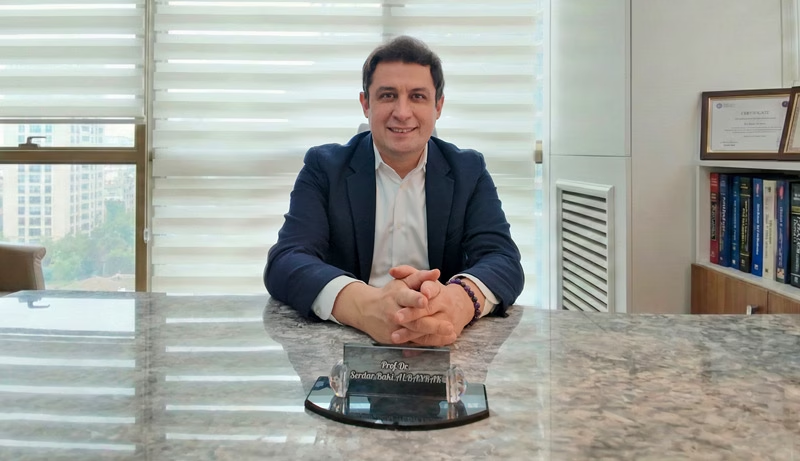
Prof. Dr. Serdar Baki Albayrak
Neurosurgeon · Full Professor of Neurosurgery
Prof. Albayrak performs spinal microsurgery, including revision operations, and spinal cord stimulator implantation. His research includes laboratory studies on scar tissue after spine and nerve surgery.
After medical school at Marmara University, he trained in neurosurgery at Istanbul University. Clinical fellowships at the University of Helsinki and Harvard Medical School followed.
27+Years
5,000+Operations
64Countries
33Publications
Figures from Prof. Albayrak's professional profile, September 2026. See his full publication list.
Request an AppointmentFrequently Asked Questions
Can failed back surgery syndrome be fixed?
Often you can improve a great deal. When tests find a fixable cause, such as a new disc or an unstable level, treatment aimed at it usually helps. Otherwise, injections, rehabilitation and stimulation can still ease pain and restore function.
Can scar tissue be removed with surgery?
Technically yes, but the effect rarely lasts, because each operation forms new scar. So surgeons seldom operate for scar alone. Non-surgical care and spinal cord stimulation usually serve these patients better.
Will the numbness in my leg be permanent?
It depends on how long the nerve stayed under pressure. After short pressure, feeling often recovers over months. After years of pressure, some numbness can remain, though it usually limits daily life less than pain does.
How much does revision spine surgery cost in Turkey?
The cost depends on the tests you need, the type of operation and the hospital stay. So ask for the cost of your own plan at the consultation, and see our guide to costs.
Prof. Albayrak's Published Research
Scar tissue is one of the main causes of pain after spine surgery. The first two papers are laboratory studies by Prof. Albayrak and colleagues on preventing that scar around the spinal canal and the sciatic nerve. The third describes a spinal infection, another cause covered on this page.
Each link opens PubMed; his profile lists all 33 publications.
- Topical application of tacrolimus prevents epidural fibrosis in a rat postlaminectomy model: histopathological and ultrastructural analysis
- Doxorubicin for prevention of epineurial fibrosis in a rat sciatic nerve model: outcome based on gross postsurgical, histopathological, and ultrastructural findings
- Spinal epidural abscess due to Brucella
Public health information
- National Institute for Health and Care Excellence. Spinal cord stimulation for chronic pain of neuropathic or ischaemic origin (TA159): recommendations.
- National Institute for Health and Care Excellence. Low back pain and sciatica in over 16s: assessment and management (NG59).
- National Institute of Arthritis and Musculoskeletal and Skin Diseases. Back Pain.
- MedlinePlus, US National Library of Medicine. Herniated disk.
- MedlinePlus. Spine surgery: discharge.
- NHS. Sciatica.
- NHS. DVT (deep vein thrombosis).
- UK Civil Aviation Authority. Surgical conditions: guidance for health professionals.
- US Centers for Disease Control and Prevention. Medical tourism.
This guide gives general medical information and does not replace a consultation. So diagnosis and treatment decisions need an examination by your own doctor.
Last updated: 28 October 2026. Website editor: Prof. Dr. Serdar Baki Albayrak's clinic, [email protected].
Plan Your Second Opinion After Back Surgery in Istanbul
Request an appointment with Prof. Dr. Serdar Baki Albayrak. The team then helps you plan the consultation, any tests and your stay.
Request an Appointment