
Paid online consultations are available by appointment. For booking, please contact us via Whatsapp.

What Is Oligodendroglioma Surgery?
Oligodendroglioma surgery removes as much of this slow-growing brain tumor as the surgeon can take out safely. It also provides the tissue for the gene tests that confirm the diagnosis. For most people, it forms the first step of treatment.
An oligodendroglioma grows from cells that resemble oligodendrocytes, the cells that insulate nerve fibers. It belongs to the glioma family and mostly sits in the outer layer of the brain, often the frontal lobe. Our overview of brain tumor treatment also covers other types.
Two gene changes define it: an IDH mutation and the loss of parts of chromosomes 1 and 19, called the 1p/19q codeletion. So this tumor often responds well to treatment, and many people live with it for many years.
At a Glance
- What it isA diffuse glioma with an IDH mutation and a 1p/19q codeletion
- GradesWHO grade 2 (slow) or grade 3 (faster, also called anaplastic)
- First signMost often a seizure; sometimes headaches or slow changes in thinking
- First treatmentSurgery to remove as much tumor as is safe, if possible
- After surgeryMRI checks, a targeted pill, or radiotherapy with PCV chemotherapy
- Follow-upRegular MRI scans for many years, often for life
Where Are You in Your Decision?
First, pick the line closest to your situation. It then takes you to the matching part of this guide.
- 01A first seizure, and the MRI shows a tumorSigns and what the scan suggests
- 02A report that says IDH-mutant, 1p/19q-codeletedWhat grade 2 and grade 3 mean
- 03Unsure whether to operate now or waitSurgery, watching and biopsy compared
- 04A tumor close to speech or movement areasHow mapping and awake surgery protect function
- 05Surgery is done: radiotherapy, PCV or a pill?Treatment after surgery by grade
- 06The tumor has grown backOptions for a recurrent oligodendroglioma
- 07Planning surgery from abroadLength of stay, flights and care back home
Oligodendroglioma Symptoms
According to NCI, a seizure forms the most common sign of an oligodendroglioma. Other symptoms depend on where the tumor sits. Because it grows slowly, signs can build over years.
Seizures
The tumor usually lies in the cortex, the outer layer of the brain, which can trigger seizures. A seizure may look like a full convulsion, a twitch on one side or a brief blank spell.
Seizure medicine often controls them. Removing the tumor can also reduce seizures or stop them.
Headaches and pressure
A larger tumor and the swelling around it raise pressure inside the skull. So headaches may feel worse in the morning, sometimes with nausea.
Thinking, mood and personality
A frontal tumor, for example, can dull drive and judgment, and family members often notice it first. Memory and concentration may also slip. Our guide to frontal lobe tumors explains these signs in detail.
Weakness, numbness and speech
Weakness or numbness on one side can develop slowly. Some people also struggle to find words or to follow speech, especially with a tumor on the left side.
Questions at this stage
What does an oligodendroglioma look like on an MRI?
NCI describes it as usually a single tumor with clear borders and some swelling around it. Spots of calcium, best seen on a CT scan, also hint at this type. Still, only tissue tests can confirm it.
When to See a Doctor
Most oligodendroglioma symptoms develop slowly, so you usually have time to book a visit. Some signs, however, call for emergency care.
Book a doctor's visit if you notice:
- A first seizure in adult life, even if it stopped by itself
- Headaches that feel new or get worse each week
- Slow changes in personality, memory or speech
- Weakness or numbness on one side
Seek emergency care for:
- A seizure that lasts over 5 minutes, or repeated seizures
- A sudden, severe headache
- Sudden weakness, numbness or trouble speaking
- Growing drowsiness or confusion
These signs can mean bleeding or rising pressure in the skull. So go to the nearest emergency department first, rather than waiting for a visit abroad.
How Doctors Confirm an Oligodendroglioma
An MRI with contrast shows the tumor, but only tissue tests confirm the type. Since 2021, the WHO system requires both an IDH mutation and a 1p/19q codeletion for this name.
So the tissue from surgery or a biopsy goes to a neuropathologist. NICE also advises gene tests on every glioma, alongside the microscope. Many reports add TERT and MGMT results, too.
| Feature | Grade 2 oligodendroglioma | Grade 3 (anaplastic) oligodendroglioma |
|---|---|---|
| Growth | Slow, often over years | Faster, with more active cells |
| On MRI | Often no contrast uptake | Contrast uptake more common |
| Gene markers | IDH mutation and 1p/19q codeletion | The same two changes |
| First treatment | Surgery, if possible | Surgery, if possible |
| After surgery | MRI checks, vorasidenib, or radiotherapy with PCV | Radiotherapy and PCV chemotherapy |
Oligodendroglioma Versus Astrocytoma
Both tumors carry an IDH mutation, but only an oligodendroglioma has the 1p/19q codeletion. That difference changes the chemotherapy plan and the outlook. If your report says astrocytoma instead, see our astrocytoma guide.
Is oligodendroglioma cancer?
Yes, it counts as a primary brain cancer, although grade 2 tumors grow slowly. NCI calls grade 2 low-grade and grade 3 malignant. It rarely spreads outside the brain.
What is the difference between grade 2 and grade 3 oligodendroglioma?
Grade 3 cells divide faster and look more abnormal under the microscope. So treatment after surgery starts sooner and includes radiotherapy with chemotherapy. Grade 2 tumors, in contrast, may allow a period of MRI checks.
Oligodendroglioma Treatment Options Compared
Treatment depends on the grade, the size and site of the tumor, your age and how much tumor remains after surgery. A tumor board then weighs these factors together.
At this board, Prof. Albayrak reviews each case with radiation oncology, medical oncology, neuroradiology and neuropathology colleagues.
| Option | Who it may suit | Points to weigh |
|---|---|---|
| Surgery (craniotomy) | Most people, as the first step | Gives the diagnosis; more removal usually means better control |
| Awake craniotomy | Tumors near speech or movement areas | Allows more removal while testing function live |
| Stereotactic biopsy | Deep or very widespread tumors | Confirms the type, but removes no tumor |
| MRI checks after surgery | Younger people with little or no tumor left | Delays side effects of other treatment |
| Vorasidenib (daily pill) | Grade 2 tumors after surgery, age 12 and over | Can delay radiotherapy; needs regular blood tests |
| Radiotherapy with PCV | Grade 3, or grade 2 with higher risk | Strong long-term control; tiredness and memory effects |
What is the first treatment for oligodendroglioma?
Surgery, if it is possible. NCI states that it aims to get tissue for the diagnosis and remove as much tumor as possible without new symptoms. Further treatment then follows the gene and grade results.
Oligodendroglioma Surgery: Maximal Safe Resection
The goal of surgery has two sides: remove as much tumor as possible and keep speech, movement and sensation intact. Prof. Albayrak treats this balance as the core of every glioma operation.
The usual operation, a craniotomy, opens a small window in the skull under anesthesia. Afterward, the bone goes back in place. Most operations take several hours.
Operate Now or Watch First?
Some small grade 2 tumors cause few symptoms, so waiting can seem tempting. However, a scan alone cannot confirm the grade or the gene profile. So many teams now favor early surgery when the tumor can come out safely.
Watching with MRI may still suit a few people, for instance when surgery carries high risk. In that case, ask how often scans will follow and which change would prompt surgery.
Tools That Help Protect Brain Function
Prof. Albayrak uses these methods, chosen for each tumor:
- Microsurgery: work under a high-power microscope, millimeter by millimeter
- Neuronavigation: a 3D map from your MRI that guides the route
- Neuromonitoring: live checks of movement and speech pathways during removal
- Fluorescence guidance: a dye that helps show tumor tissue under special light
His 2004 review in Acta Neurochirurgica also describes MRI scans during surgery. Such scans help especially with low-grade gliomas, whose edges look like normal brain.
Awake Surgery Near Speech and Movement Areas
Oligodendrogliomas often reach into the cortex, close to speech or movement areas. In an awake craniotomy, you wake during the mapping stage. The team then tests your speech and movement while the surgeon works.
The brain itself feels no pain, and the team stays with you throughout. Awake surgery also suits many insular gliomas.
When a Biopsy Comes First
Sometimes the tumor lies too deep or spreads too widely for safe removal. A stereotactic biopsy then takes a small sample through a tiny hole. That sample still allows the full gene tests.
Can an oligodendroglioma be completely removed?
Sometimes all visible tumor comes out on MRI. Yet this tumor spreads into nearby brain, so some cells usually stay. For this reason, follow-up scans continue even after a full removal.
Will surgery stop my seizures?
It often reduces them, especially when most of the tumor comes out. Many people still take seizure medicine for a while. Your neurologist then decides if and when to lower it.
Risks of Oligodendroglioma Surgery
Every brain operation carries real risks. Most serious problems stay uncommon, but you should know them before you decide.
- New weakness, numbness or speech trouble, often temporary
- Seizures in the first days
- Brain swelling, usually eased with steroid medicine
- Bleeding in the brain
- Infection of the wound or the brain lining
- Blood clots in the legs or lungs
Your own risk depends on the tumor's size and position, and on your health. So ask which risks matter most in your case.
Is oligodendroglioma surgery dangerous?
It carries the risks of any brain operation, especially near speech or movement areas. Mapping, monitoring and awake surgery, however, aim to keep these risks low. Many early problems also improve over weeks.
Treatment After Oligodendroglioma Surgery
The plan after surgery follows the grade, your age and any tumor left on the MRI. NICE gives clear thresholds, and your team then adapts them to you.
Grade 2: Three Main Paths
For grade 2, NICE advises radiotherapy followed by up to 6 cycles of PCV for people aged about 40 or over, or with tumor left on the MRI. Younger people with a full removal, in contrast, may start with MRI checks alone.
In 2024, the FDA also approved vorasidenib for grade 2 oligodendroglioma after surgery. This daily pill blocks the faulty IDH enzyme and so can delay radiotherapy. Your oncologist then checks whether it suits you.
Grade 3: Radiotherapy and PCV
For grade 3, NICE advises radiotherapy and 4 to 6 cycles of PCV chemotherapy. PCV combines three drugs: procarbazine, lomustine and vincristine. The order of the two treatments follows a talk with you about side effects.
Temozolomide, a capsule chemotherapy, also appears in some plans. However, NCI notes that trials still test its role in oligodendroglioma.
Do I need chemotherapy after oligodendroglioma surgery?
Not always. Grade 3 tumors usually get radiotherapy with PCV. For grade 2, however, MRI checks or a targeted pill may come first, depending on age and leftover tumor.
Recovery and Follow-Up After Oligodendroglioma Surgery
Recovery usually starts with a night or two in intensive care, then several days on the ward. Most people walk with help on the first day. The final plan, however, waits for the gene results.
A Typical Timeline
| When | What usually happens | What to watch |
|---|---|---|
| Days 1-3 | First MRI after surgery; first short walks | Headache, drowsiness, wound swelling |
| Week 1 | Discharge, often with seizure and steroid medicine | New weakness or confusion |
| Weeks 2-3 | Pathology and gene results; tumor board plan | Tiredness, low mood |
| Weeks 4-8 | Radiotherapy, PCV or a pill, if needed, often at home | Tiredness; blood counts during PCV |
How Often You Need MRI Scans
For grade 2 and grade 3 oligodendroglioma, NICE suggests this schedule. Your own team may then adapt it:
- Years 0-2: a scan at 3 months, then every 6 months
- Years 2-4: once a year
- Years 5-10: every 1 to 2 years
- After 10 years: consider a scan every 1 to 2 years for life
Living With an Oligodendroglioma
Tiredness often lasts for months, especially after radiotherapy. Physiotherapy, speech therapy and occupational therapy also help many people regain skills.
UK drivers must tell the DVLA and usually stop driving for a period after surgery. The length depends on the grade and on seizures, so check local rules elsewhere.
How long is recovery after oligodendroglioma surgery?
Most people go home within about a week and resume light tasks within a few weeks. Radiotherapy or PCV, however, can add tiredness for months. Rehabilitation helps if surgery affects speech or strength.
When an Oligodendroglioma Comes Back
An oligodendroglioma often regrows after some years, because cells stay behind in the brain. Regular MRI scans usually catch it early, before new symptoms appear.
Options then include a second operation, radiotherapy, chemotherapy or a clinical trial. Repeat surgery suits a regrowth that lies in a safe spot, and it also gives fresh tissue to check the grade. Our recurrent glioma surgery guide explains how teams tell regrowth from radiation changes.
What Shapes the Outlook
According to NCI, this tumor has one of the more favorable outlooks among gliomas. Still, no single number fits everyone. Grade, age, leftover tumor and general health all play a part.
For grade 3 tumors and glioblastoma, see our guide to brain cancer and its surgical treatment. Ask your own team for an estimate, rather than relying on online averages.
Is oligodendroglioma curable?
It rarely goes away for good, because some cells stay in the brain. Even so, many people live and work with a controlled tumor for many years. Treatment aims at that long-term control.
Does oligodendroglioma always come back?
Most diffuse oligodendrogliomas regrow at some point, often after years. So scans continue for life. A regrowth found early also leaves more options open.
Coming to Istanbul from the US, Canada, the UK or Europe
Oligodendroglioma care has two parts: surgery, then often months of scans, radiotherapy or chemotherapy. So many people have surgery in Istanbul and continue further treatment at home.
How Long to Stay in Istanbul
First, add up the consultation, any new scans, the operation and the hospital stay. Then rest near the hospital until your wound check. Overall, many plans come to about two weeks in Istanbul.
When You Can Fly Home
UK aviation guidance advises waiting about 7 days after brain surgery before flying. Air left inside the skull can expand at altitude. The US CDC also warns that flying soon after surgery raises the risk of blood clots.
Treatment and Follow-Up at Home
Before you leave, ask for the discharge summary, the full pathology report and copies of all scans. Your home team may also ask for the tissue blocks to repeat the gene tests. So book your oncology visit early, because treatment often starts within weeks.
For insurance and Medicare, see brain surgery in Turkey: planning from the US. For NHS rules and travel insurance, see planning from the UK. From Canada, check with your provincial health plan and private insurer before you book.
Your treatment in Istanbul
From Your First Message to Flying Home
Your treatment in Istanbul follows four clear steps. Each step then answers one practical question.
STEP 01
Request an appointment
Use the form on this page, WhatsApp or call +90 532 308 97 72. A short message is enough: your diagnosis, your country and your travel dates.
You can write in English or Turkish, so use whichever feels easier. The team then agrees the consultation date with you.
STEP 02
Consultation and tests in Istanbul
First, Prof. Albayrak examines you at his clinic in Teşvikiye. Next, he goes through your MRI scans with you. If needed, newer scans or mapping scans can follow in Istanbul.
He then explains whether surgery suits you, and what may follow. Questions worth asking include:
- How much of the tumor can come out safely?
- Do I need awake surgery?
- Which treatment will follow at home, and when?
What should I bring to my oligodendroglioma consultation?
First, bring your MRI scans on a disc or USB drive, with the written reports. Also bring any pathology report, a list of your medicines and notes on your seizures. A relative who knows your symptoms helps, too.
STEP 03
Surgery and hospital stay
If you choose surgery, the operation takes place in a hospital in Istanbul. Prof. Albayrak then names the hospital at the consultation, along with the likely stay.
STEP 04
Recovery, fitness to fly and follow-up
After discharge, you rest at a nearby hotel, ideally with a companion. Then, before the flight, your surgeon checks the wound and confirms that you can fly.
Back home, get urgent help for any of these signs:
- A seizure, especially a long or repeated one
- A severe or worsening headache, or repeated vomiting
- New weakness, confusion or trouble speaking
- Fever, redness or fluid leaking from the wound
Can I have radiotherapy or PCV at home after surgery in Istanbul?
Yes, in most cases. Your home oncology team then plans it from the pathology report and the scans after surgery. So contact them before you travel, if you can.
Your Oligodendroglioma Surgeon in Istanbul
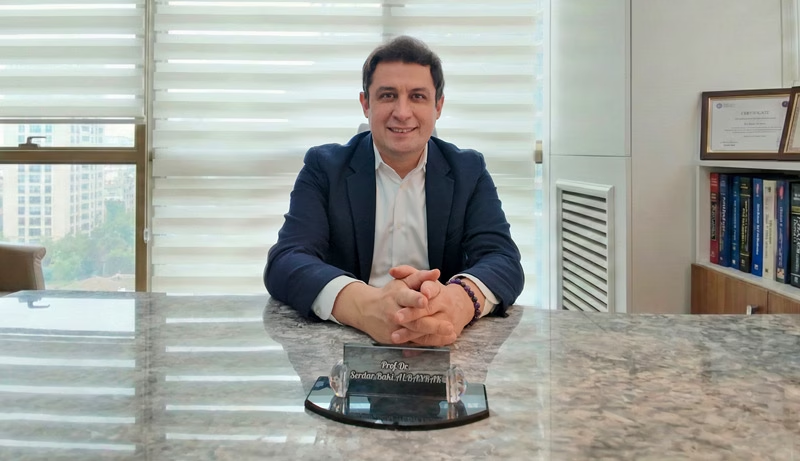
Prof. Dr. Serdar Baki Albayrak
Neurosurgeon · Full Professor of Neurosurgery
An oligodendroglioma often touches the cortex near speech or movement areas, so each millimeter counts. For this reason, Prof. Albayrak combines microsurgery with navigation, nerve monitoring and, where useful, awake mapping.
He completed his neurosurgery training at Istanbul University in 2004. He then took clinical fellowships at the University of Helsinki and Harvard Medical School. At Harvard, he trained at Brigham and Women's Hospital.
27+Years
5,000+Operations
64Countries
33Publications
Figures from Prof. Albayrak's professional profile, September 2026. See his full publication list.
Request an AppointmentFrequently Asked Questions
Is oligodendroglioma hereditary?
Usually not, and the cause of most cases stays unknown. NCI notes that past radiation and a few inherited gene changes raise the risk. So family members rarely need screening.
Who gets oligodendroglioma?
It can occur at any age, but NCI reports it most often in people aged 35 to 44. Children, in contrast, rarely develop this type.
How much does oligodendroglioma surgery cost in Turkey?
The cost depends on the operation, the hospital stay and the tests you need. Gene tests, awake mapping and your hotel stay also count. So ask for the cost of your own plan at the consultation, before you decide.
Prof. Albayrak's Published Research
None of Prof. Albayrak's papers focuses on oligodendroglioma alone. The closest cover MRI during glioma surgery, glioma research and a tumor that mimicked a glioma. Each link opens the record on PubMed; his profile lists all 33 publications.
- Intra-operative magnetic resonance imaging in neurosurgery
- The effects of tibolone on the human primary glioblastoma multiforme cell culture and the rat C6 glioma model
- Cerebral metastasis of small-cell lung carcinoma mimicking a supratentorial cystic astrocytoma
Public health information
- National Cancer Institute, NCI-CONNECT. Oligodendroglioma and Other IDH-Mutated Tumors: Diagnosis and Treatment.
- National Cancer Institute. Adult Central Nervous System Tumors Treatment (PDQ), patient version.
- National Institute for Health and Care Excellence. Brain tumours (primary) and brain metastases in over 16s (NG99): recommendations.
- US Food and Drug Administration. FDA approves vorasidenib for Grade 2 astrocytoma or oligodendroglioma with a susceptible IDH1 or IDH2 mutation.
- NHS. Brain tumours.
- UK Civil Aviation Authority. Surgical conditions: guidance for health professionals.
- US Centers for Disease Control and Prevention. Medical tourism.
- GOV.UK, Driver and Vehicle Licensing Agency. Neurological disorders: assessing fitness to drive.
This guide gives general medical information and does not replace a consultation. So diagnosis and treatment decisions need an examination by your own doctor.
Last updated: 30 October 2026. Website editor: Prof. Dr. Serdar Baki Albayrak's clinic, [email protected].
Plan Your Oligodendroglioma Consultation in Istanbul
Request an appointment with Prof. Dr. Serdar Baki Albayrak. The team then helps you plan the dates of your visit.
Request an Appointment