
Paid online consultations are available by appointment. For booking, please contact us via Whatsapp.

What Is Nerve Repair Surgery?
Nerve repair surgery rejoins a limb nerve torn by a cut, crush or stretch. Under a microscope, the surgeon trims the damaged ends and lines up the fiber bundles. Then fine stitches hold them, so new fibers can grow back toward muscle and skin.
Most of these injuries affect the hand, wrist, forearm or leg. For example, a kitchen knife or broken glass can cut a finger nerve or, deeper, the median nerve at the wrist. Fractures and machinery also tear nerves.
However, a nerve that is completely cut does not reconnect on its own. Therefore, the timing of the repair shapes how much feeling and strength come back.
At a Glance
- What it treatsA cut, crushed or scarred nerve in the hand, arm or leg
- Main methodsDirect stitching, a nerve graft, a nerve tube or a nerve transfer
- Best timingClean cuts within days; crushed or dirty wounds after two to three weeks
- Key testsCareful exam, nerve ultrasound, EMG and nerve conduction studies
- Regrowth speedRoughly one millimetre a day, about an inch a month
- After surgeryA splint for a few weeks, then hand therapy or physiotherapy for months
Where Are You in Your Decision?
Pick the line that sounds most like you. Each one then opens the matching part of this guide.
- 01I have just cut my hand, arm or legWhat to do today, before any planning
- 02I do not know if my nerve is cut or only bruisedInjury types, symptoms and the tests that tell them apart
- 03I want to know when surgery should happenThe timing window for each kind of injury
- 04I want to compare repair, graft and transferWhich method fits which gap and delay
- 05I want to know how long recovery takesSplint, therapy and the months of regrowth
- 06I am planning a delayed repair abroadRecords to bring, length of stay and flights
When Is a Nerve Injury an Emergency?
First, a fresh wound with heavy bleeding needs your nearest emergency department. So never delay this care to plan a trip abroad.
See a nerve specialist within days if:
- A finger or part of the hand feels numb after a cut
- You cannot bend, straighten or spread a finger
- The wrist or foot droops after a fracture
- A wound has healed, yet numbness or weakness stays
Go to the nearest emergency department (911, 999 or 112) for:
- Bleeding that does not stop with firm pressure
- A hand or foot that turns cold, pale or blue
- A deep cut with lost feeling or movement
- Severe, rising pain under a cast or tight dressing
Also, ask the emergency team to check the nerve before they close a wound. A numb finger after a cut deserves more than skin stitches, because early detection gives the best start.
Is the Nerve Cut, Bruised or Stretched?
Not every nerve injury needs surgery. So doctors grade the damage, often with the Seddon and Sunderland scales. The grade then decides between waiting and operating.
| Injury type | What happens inside the nerve | Heals on its own? | Usual approach |
|---|---|---|---|
| Neurapraxia (grade 1) | Fibers intact; signals pause for a while | Yes, usually within days to three months | Watch, splint, therapy |
| Axonotmesis (grades 2 to 3) | Fibers torn; outer sheaths still in place | Often, but slowly | Follow-up with EMG; surgery if no recovery |
| Severe axonotmesis (grade 4) | Nerve looks whole but scar fills the inside | Rarely | Remove the scarred part, then repair or graft |
| Neurotmesis (grade 5) | Nerve fully cut; the two ends lie apart | No | Microsurgical repair or a nerve graft |
Which Nerve, Which Symptom
Each nerve feeds certain muscles and skin, so the symptom points to the nerve. For example, a median nerve cut at the wrist numbs the thumb, index and middle fingers. Meanwhile, the ulnar nerve serves the ring and little fingers and many small hand muscles.
In addition, an upper arm fracture can injure the radial nerve and drop the wrist. In the leg, an injury beside the knee can affect the peroneal nerve. For that pattern, see our guide to foot drop surgery.
How Doctors Confirm a Cut Nerve
First, the doctor tests feeling in each finger and the strength of each muscle. Next, tapping along the nerve can show how far new fibers have grown. Nerve ultrasound or MR neurography also shows where the nerve breaks.
However, an EMG often misleads in the first three weeks. That is how long cut fibers take to break down. So after a sharp cut with lost feeling, surgeons often explore the wound directly instead.
Questions at this stage
Can severed nerves heal on their own?
Partly torn or bruised nerves often recover without surgery. A fully severed nerve, however, cannot find its other end alone. Instead, its fibers tangle into a painful lump called a neuroma, so repair becomes necessary.
Is a pinched nerve the same as a cut nerve?
No. A pinched nerve suffers slow pressure in a tight tunnel, such as carpal tunnel. That calls for release rather than repair, as our nerve entrapment guide explains.
When Should a Cut Nerve Be Repaired?
The type of wound sets the timing. So a clean, sharp cut does best with repair in the first few days. Crush and closed injuries, by contrast, need a period of watching first.
| Type of injury | Usual timing of nerve surgery | Why |
|---|---|---|
| Clean, sharp cut (glass, knife) | Right away or within about 72 hours | Clean ends, little tension, easiest stitching |
| Crushed, dirty or ragged wound | Wound cleaning at once; nerve repair after two to three weeks | The edge of healthy nerve has to become clear |
| Closed injury (fracture, stretch) | About three months of follow-up, then surgery if no recovery | Most of these nerves stay in one piece and recover |
| Gunshot wound | Often three to four months of follow-up | The shock wave usually stuns the nerve rather than cutting it |
| Weakness after an injection or operation | Early specialist review, then EMG follow-up | Type and course need defining early |
Why the Clock Matters
A muscle that receives no nerve signal slowly wastes. After roughly 12 to 18 months, it usually cannot respond, even if fibers finally arrive. So delays beyond about six months already reduce the chance of strength returning.
Feeling, on the other hand, tolerates delay better. That is why a late repair can still bring back useful sensation.
How soon after a nerve injury should surgery happen?
For a clean cut, surgeons aim for the first few days. For crushed or dirty wounds, they usually wait two to three weeks. After a closed injury, they often follow the nerve with EMG for about three months.
Is it too late to repair a nerve after several months?
Not always. A late repair can still restore some feeling. If the muscle has wasted, a nerve or tendon transfer can restore part of the movement instead.
Nerve Repair, Nerve Graft or Nerve Transfer?
The method depends on the gap between the ends, the injury site and the delay. The table then compares the main options.
| Method | When surgeons use it | How it works | Main limit |
|---|---|---|---|
| Direct repair (end to end) | The ends meet without tension | Fine stitches join the two ends | Not possible across a gap |
| Nerve graft | A gap lies between the ends | A small sensory nerve, often from the leg, bridges the gap | Numb patch where the graft came from |
| Nerve tube (conduit) | Short gaps in small sensory nerves | Fibers grow through an absorbable tube | Suits only short gaps |
| Neurolysis | Nerve intact but trapped in scar | Frees the nerve from surrounding scar | Does not fix a nerve torn inside |
| Nerve transfer | Injury far from the muscle, or late | A healthy nearby branch powers the muscle | The donor branch loses its own task |
| Tendon transfer | The muscle has wasted for good | A working tendon takes over the lost movement | Restores movement, not feeling |
Direct Repair
When the ends meet without strain, surgeons stitch them together directly. This is the most natural repair and the most common one. Tension, however, pulls a repair apart, so surgeons avoid it.
Nerve Graft Surgery
If a gap remains, a nerve graft bridges it. Typically, the surgeon takes a minor sensory nerve from the lower leg. As a result, a small patch on the outer foot stays numb, which most people get used to.
Nerve Transfer Surgery
A nerve transfer borrows a healthy branch close to the muscle. Since the new fibers have a short way to grow, the muscle may wake sooner. However, transfers near the neck and shoulder belong to brachial plexus surgery.
What is the success rate of nerve graft surgery?
No single rate fits everyone, since age, gap length, the nerve and the delay all count. Short grafts in young people do better than long grafts high in the arm. Your surgeon gives a personal outlook after the exam.
What Happens During Nerve Repair Surgery?
Nerve repair is microsurgery. The surgeon works under a microscope with stitches finer than a hair. You usually sleep under general anesthesia or have a numbing block.
- Cleaning the ends. First, the surgeon trims crushed and scarred tissue until healthy fiber bundles show.
- Lining up the bundles. Next, the bundles face their matching partners. Otherwise, fibers grow into the wrong muscle or skin.
- Stitching the outer layer. Then a few fine stitches close the outer sheath, or a graft goes in.
- Protecting the repair. Finally, a splint holds nearby joints so the nerve stays slack.
In deep or mixed nerves, a nerve stimulator also helps. It tells movement fibers from sensory fibers. It also shows whether a scarred stretch of nerve still carries a signal.
Hand injuries often damage tendons and vessels too. In that case, the neurosurgeon works alongside a hand or plastic surgery team.
How long does nerve repair surgery take?
A single finger nerve usually takes under an hour. When several nerves, tendons and vessels need repair, the operation can last several hours. Grafts also add time.
Is nerve repair surgery painful?
You feel nothing during the operation. Afterwards, wound pain usually settles within days with simple pain relief. Tingling and electric jolts may come later, but they often signal growing fibers.
Nerve Repair Surgery Recovery Time
Recovery after nerve repair takes months, not weeks. The stitched site heals in a few weeks. Then fibers grow toward the muscle and skin at roughly an inch a month.
| Time after surgery | What usually happens | What you do |
|---|---|---|
| Weeks 0 to 3 | A splint protects the repair | Move free joints as your surgeon allows |
| Weeks 3 to 6 | The splint comes off step by step | Start hand therapy and joint exercises |
| Months 2 to 6 | Tingling moves forward; first feeling returns | Sensory retraining, daily skin checks |
| Months 6 to 18 | First muscle twitches, then growing strength | Strength work with your therapist |
| Beyond 18 months | Gains slow and settle | Review of remaining loss and further options |
How Far the Nerve Has to Grow
Distance sets the pace. For example, fingertip feeling often returns several months after a wrist cut. A nerve torn near the armpit, however, may need over a year to reach the hand.
Hand Therapy and Physiotherapy
Therapy keeps joints from stiffening while the nerve grows. It also retrains your brain to read the new signals, so touch makes sense again. In fact, rising tingling during recovery often means the fibers are advancing.
When can I go back to work after nerve repair surgery?
Many people return to desk work after two to four weeks. Manual and heavy work usually waits two to three months. Your surgeon then sets the date from the repair and your progress.
Risks and What Shapes Your Result
Nerve repair carries the usual risks of surgery plus some specific to nerves. Most of all, recovery may stay incomplete, because not every fiber finds its old target.
- Infection, bleeding or a slow-healing wound
- Stiff joints if the splint stays on too long without exercise
- Cold sensitivity and clumsy fine movements, such as buttoning
- A painful neuroma at the repair or graft site
- A numb patch on the leg after a graft
Factors That Shape Recovery
Age matters first, since children regrow nerves faster and adapt better. Then come timing and level, since early repairs near the hand or foot do better. Pure sensory nerves also recover better than mixed nerves, while long grafts do less well.
Smoking, uncontrolled diabetes and vessel disease slow healing too. So stopping smoking before surgery helps your nerve as well as your wound.
Pain After a Nerve Injury
Burning or electric pain often comes from the nerve itself. Treatment starts with nerve pain medicines and desensitizing massage. If a neuroma keeps hurting, the surgeon removes it and then repairs or buries the nerve end.
Coming to Istanbul from the US, Canada, the UK or Europe
A fresh cut needs care close to home, ideally with repair in the first days. Delayed repair, graft, neurolysis, neuroma surgery and nerve transfer, however, fit a planned trip.
Records to Bring
- The emergency and operation notes from the original injury
- EMG and nerve conduction reports, with their dates
- Any ultrasound or MRI images on a disc, with reports
- Photos of the wound and a note of the injury date
Our checklist of documents for surgery abroad covers the rest.
How Long to Stay in Istanbul
First, plan a few days for the consultation and any new tests. Many repairs in the hand or arm then need only a short hospital stay. Overall, many people plan about a week to ten days, which your surgeon confirms.
When You Can Fly Home
Limb nerve repair is not brain surgery. So the UK CAA waiting time for skull surgery does not apply, and your surgeon decides. Also, after a new plaster cast, the CAA notes that many airlines restrict flying for 24 to 48 hours.
Long flights also raise the risk of blood clots. So walk the aisle and keep a splinted arm raised.
For flights and hotels, see stay and flight planning. From Canada, check with your provincial health plan and private insurer before you book.
Your treatment in Istanbul
From Your First Message to Flying Home
Treatment in Istanbul follows four clear steps. Each one answers a practical question about your trip.
STEP 01
Request an appointment
Use the form on this page, WhatsApp or call +90 532 308 97 72. Then share the date of your injury, your country and your travel dates. You can write in English or Turkish.
STEP 02
Consultation and tests in Istanbul
First, Prof. Albayrak examines feeling, strength and the scar at his clinic in Teşvikiye. Next, he goes through your reports with you. A new EMG or nerve ultrasound can follow in Istanbul if needed.
He then explains the injury type and which repair fits. Questions worth asking include:
- Is my nerve cut, scarred or only stunned?
- Do I need a direct repair, a graft or a transfer?
- How much feeling and strength can I hope to regain, given the delay?
Which specialist treats a cut nerve?
Neurosurgeons who perform peripheral nerve surgery treat these injuries. Hand and plastic surgeons also work in this field. When tendons and vessels suffer too, the teams often operate together.
STEP 03
Surgery and hospital stay
If you choose surgery, the operation takes place in a hospital in Istanbul. Prof. Albayrak names the hospital at the consultation, along with the likely stay. In addition, a relative or companion can usually stay with you.
STEP 04
Recovery, fitness to fly and follow-up
After discharge, you rest at a nearby hotel with the splint on. Then, before the flight, your surgeon checks the wound and confirms that you can fly.
Back home, your local doctor and hand therapist carry on with your discharge summary. Then seek urgent help for fever, wound discharge, a pale hand or a swollen calf.
Can I drive after nerve repair surgery?
Not while you wear a splint or lack grip and feeling. Once you control the wheel and pedals safely, agree on it with your doctor. Also check your licensing rules.
Your Peripheral Nerve Surgeon in Istanbul
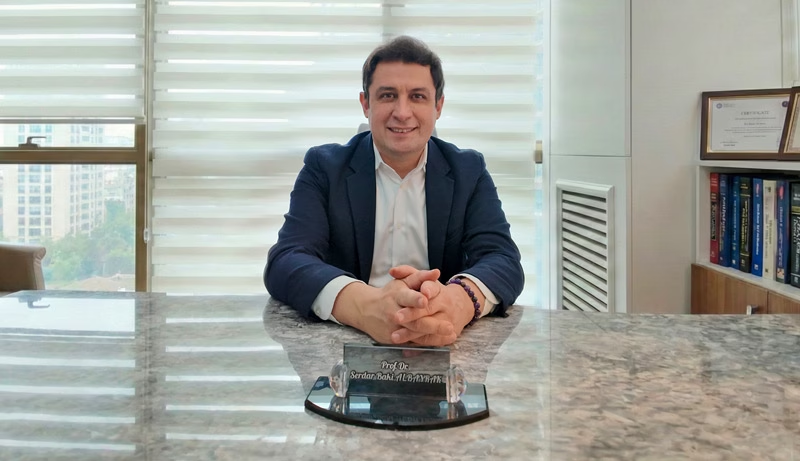
Prof. Dr. Serdar Baki Albayrak
Neurosurgeon · Full Professor of Neurosurgery
Prof. Albayrak repairs cut and scarred arm and leg nerves with microsurgery. He also times each repair to the type of wound. In addition, he co-authored research on nerve injury surgery and nerve scarring.
After medical school at Marmara University, he trained in neurosurgery at Istanbul University. Clinical fellowships at the University of Helsinki and Harvard Medical School followed.
27+Years
5,000+Operations
64Countries
33Publications
Figures from Prof. Albayrak's professional profile, September 2026. See his full publication list.
Request an AppointmentFrequently Asked Questions
Can surgery fix nerve damage?
It depends on the type of damage. Surgery can rejoin a cut nerve, bridge a gap or free a nerve from scar. It cannot restore a nerve that disease has damaged throughout, such as in diabetic neuropathy.
What is nerve repair surgery called?
Doctors call direct stitching neurorrhaphy, and a bridge from another nerve a nerve graft. Freeing a nerve from scar has the name neurolysis. Finally, moving a healthy branch to a muscle is a nerve transfer.
Does this page cover facial or spinal cord nerve injuries?
No, this guide covers nerves of the arms and legs. For weakness of the face, see our page on facial paralysis. Injuries inside the spine follow different rules, as our spinal cord injury guide explains.
How much does nerve repair surgery cost in Turkey?
The cost depends on the number of nerves, any graft or transfer and the length of stay. Tendon repair adds to it too. So ask for your own plan at the consultation, and see our guide to costs.
Prof. Albayrak's Published Research
The first paper reports surgical outcomes for peroneal nerve injury at the knee. Next, two laboratory studies by Prof. Albayrak and colleagues test ways to limit scar around a repaired nerve. Finally, a fourth study looks at protecting nerve fibers from injury.
Each link opens PubMed; his profile lists all 33 publications.
- Management outcome of peroneal nerve injury at knee level: experience of a single military institution
- Doxorubicin for prevention of epineurial fibrosis in a rat sciatic nerve model: outcome based on gross postsurgical, histopathological, and ultrastructural findings
- Topical Application of Cyclosporine Reduces Epineurial Fibrosis: Gross Postsurgical, Histopathological and Ultrastructural Analysis in a Rat Sciatic Nerve Model
- The Axon Protective Effects of Syringic Acid on Ischemia/Reperfusion Injury in a Rat Sciatic Nerve Model
Public health information
- NHS. Cuts and grazes.
- MedlinePlus, US National Library of Medicine. Cuts and puncture wounds.
- MedlinePlus. Ulnar nerve dysfunction.
- MedlinePlus. Radial nerve dysfunction.
- MedlinePlus. Electromyography.
- MedlinePlus. Nerve conduction velocity.
- National Institute of Neurological Disorders and Stroke. Peripheral Neuropathy.
- NHS. DVT (deep vein thrombosis).
- UK Civil Aviation Authority. Surgical conditions: guidance for health professionals.
- US Centers for Disease Control and Prevention. Medical tourism.
- GOV.UK. Check if a health condition affects your driving.
This guide gives general medical information and does not replace a consultation. So diagnosis and treatment decisions need an examination by your own doctor.
Last updated: 10 November 2026. Website editor: Prof. Dr. Serdar Baki Albayrak's clinic, [email protected].
Plan Your Nerve Repair in Istanbul
Request an appointment with Prof. Dr. Serdar Baki Albayrak. The team then helps you plan the consultation, any tests and your stay.
Request an Appointment