
Paid online consultations are available by appointment. For booking, please contact us via Whatsapp.

What Is Pituitary Tumor Surgery?
Pituitary tumor (tumour) surgery removes a growth from the pituitary gland under the brain. Today, surgeons usually reach it through a nostril, often with an endoscope, a thin camera. Doctors call this endoscopic transsphenoidal surgery, and it leaves no cut on the face.
Most pituitary tumors are benign adenomas that grow slowly and do not spread. However, they still cause trouble in two ways. Some press on the optic nerves, while others make too much of one hormone.
Surgery is not the first step for every tumor, though. For example, prolactinomas usually shrink with tablets. So Prof. Albayrak matches the plan to the tumor type, its size and your vision.
At a Glance
- Usual routeThrough a nostril with an endoscope, with no cut on the face
- Usually benignMost pituitary tumors grow slowly and do not spread
- Tablets first for prolactinomaMedicine controls most of these tumors without surgery
- Three aimsFree the optic nerves, control hormones and protect the gland
- Hospital stayUsually a few days, then recovery near the hospital
- Flying homeUK aviation guidance advises about 7 days after neurosurgery
The pituitary sits at the center of the skull base. Other tumors there also have their own guides: skull base tumors and acoustic neuroma surgery.
Where Are You in Your Decision?
Pick the line closest to your situation first. Each link then opens the part of this guide written for it.
- 01A scan found a pituitary tumor by chanceWhether a small, silent tumor needs any treatment
- 02Your side vision is narrowingWhy pressure on the optic nerves often calls for surgery
- 03Tests show too much growth hormone or cortisolAcromegaly and Cushing's disease
- 04You have a prolactinomaWhen tablets come first and when surgery helps
- 05The tumor grew back or bled suddenlySecond operations, radiation and emergencies
- 06You plan surgery from abroadLength of stay, flights and hormone care at home
Who Needs Pituitary Tumor Surgery?
Surgery helps most when a tumor presses on the optic nerves. It also comes first for tumors that make too much growth hormone or cortisol. Most prolactinomas, in contrast, shrink with tablets alone.
A tumor found by chance
Pituitary tumors are common, and many never cause symptoms. In fact, MedlinePlus notes that 10% to 20% of people may have one.
So a small tumor without hormone or vision problems often needs only follow-up. Doctors then repeat the MRI and blood tests, as many such tumors do not grow.
Narrowing side vision
The optic nerves cross just above the pituitary gland. So a large tumor that grows upward presses on them, and side vision fades first. For example, many people notice it only when they miss a car at their side.
In this situation, surgery is often the right step. Pressure that lasts too long can damage vision for good. In fact, blindness is the most serious risk.
Too much growth hormone or cortisol
A tumor that makes growth hormone causes acromegaly, with growing hands, feet and facial features. According to the NIDDK, a pituitary adenoma lies behind more than 9 in 10 cases.
A tumor that makes ACTH, in turn, drives the body to make too much cortisol. Doctors call this Cushing's disease. Typical signs include a rounder face, weight gain around the trunk and purple stretch marks.
For both, surgery usually comes first. Success then shows in blood tests, not only on the next scan.
Prolactinoma: tablets usually come first
A prolactinoma makes too much prolactin, the hormone behind breast milk. It accounts for about 40% of pituitary tumors, the largest single group.
Medicines called dopamine agonists, such as cabergoline, lower prolactin and shrink the tumor. In small prolactinomas, they normalize prolactin in about 4 of 5 patients.
Surgery becomes an option when the tablets cause side effects or stop working. Some women with a large prolactinoma also choose surgery before a pregnancy.
Regrowth, leftover tumor or sudden bleeding
Pituitary tumors can come back after treatment. Depending on the type, a second operation, medicine or radiation then follows.
Rarely, a tumor bleeds or loses its blood supply, which doctors call pituitary apoplexy. It causes a sudden, severe headache and often vision loss, so it needs emergency care.
Questions at this stage
Is a pituitary tumor cancer?
Almost never. Nearly all are benign adenomas, which do not spread to distant organs. In fact, very few pituitary tumors turn out malignant, according to the National Cancer Institute.
Can a pituitary tumor be treated with medicine?
Sometimes. Prolactinomas usually respond well to tablets, and medicines also help control acromegaly. Most other tumors that need treatment, however, need surgery first.
When to See a Doctor and When It Is Urgent
Most pituitary tumors grow slowly, so a routine visit is the right first step. A few signs, however, need urgent help the same day.
Book a doctor's visit if you notice:
- Side vision that slowly narrows
- Periods that stop, or milky breast discharge without pregnancy
- Lower sex drive or erection problems
- Growing hands and feet, or a changing face
- Weight gain in the face and trunk with purple stretch marks
Get urgent medical help for:
- A sudden, severe headache, the worst of your life
- Sudden vision loss, double vision or a drooping eyelid
- Vomiting or fainting with a known pituitary tumor
- After surgery: clear, watery fluid dripping from the nose
- After surgery: fever, or extreme thirst with heavy urination
The first three can mean pituitary apoplexy, which may need cortisol and emergency surgery. For signs of tumors elsewhere in the brain, see brain tumor symptoms.
Pituitary Adenoma Treatment Options Compared
The right option depends on the tumor type, its size and your vision. So the table runs from the gentlest choice to radiation.
| Option | Best suited for | How it works | Recovery | Main drawbacks |
|---|---|---|---|---|
| Follow-up scans (watchful waiting) | Small tumors with no hormone or vision problems | Repeat MRI and blood tests over time | None; daily life goes on | Treatment starts only if the tumor grows or makes hormones |
| Medicines | Prolactinoma (first choice); some cases of acromegaly or Cushing's disease | Tablets or injections lower hormone levels, and some shrink the tumor | No hospital stay | Often long-term use; side effects such as nausea or dizziness |
| Endoscopic transsphenoidal surgery | Most tumors that need surgery, including those pressing on vision | A thin camera through a nostril; no cut on the face | A few days in hospital; the nose heals over weeks | Fluid leak, temporary diabetes insipidus, low hormone levels |
| Microscopic transsphenoidal surgery | The same group; the choice depends on the surgeon's training | An operating microscope through the nose or under the upper lip | Similar to the endoscopic route | Risks and results similar to the endoscopic route (NIDDK) |
| Craniotomy (open surgery) | Very large tumors that spread where the nose route cannot reach | An opening in the skull | Longer hospital stay and recovery | Risks of open brain surgery; in the UK, 6 months off driving |
| Radiosurgery or radiotherapy | Tumor left after surgery, regrowth, or people who cannot have surgery | Focused radiation in one session, or daily over 4-6 weeks | No hospital stay | Works slowly, over years; about half of patients later need hormone tablets (NIDDK) |
Prof. Albayrak sets three aims for every plan. First, stop the excess hormone, and second, free the optic nerves. Third, protect the healthy pituitary tissue.
For most tumors that need surgery, he uses the endoscopic route through the nose. However, a very large tumor may spread beyond its reach, and then open surgery helps.
Which is better, endoscopic or microscopic pituitary surgery?
Both reach the tumor through the nose, and NIH information reports similar risks and results. An endoscope also gives a wider view, and NICE found shorter operating times. In both, success depends largely on the surgeon's skill and experience.
What Are the Risks of Pituitary Surgery?
Every pituitary operation carries risks, since it works near the optic nerves and major arteries. The main ones, according to NIH and NICE information, are these:
- A leak of brain fluid (CSF) through the nose, which may need bed rest or a repair
- Diabetes insipidus: heavy urination and strong thirst, often temporary
- Low levels of other pituitary hormones, which may need tablets
- Swings in blood sodium and water balance
- Infection, including meningitis, and bleeding
- Rarely, injury to the optic nerves or the carotid artery
- Nose problems such as sinusitis or a small hole in the nasal septum
To prevent a leak, the surgeon then seals the opening in the bone. Often, a little fat and tissue glue do this job. The team also watches urine, thirst and blood sodium closely in the first days.
What Results Can Pituitary Surgery Achieve?
Results depend most on the tumor type and size, and on the surgeon's experience. Smaller tumors also give the best chance of full control.
| Tumor type | Usual first treatment | What counts as success | NIH figures (NIDDK) |
|---|---|---|---|
| Prolactinoma | Tablets (dopamine agonists) | Normal prolactin and a smaller tumor | Tablets: about 4 in 5 small tumors. Surgery: about 90% of small and 50% of large tumors |
| Growth hormone tumor (acromegaly) | Surgery | Normal growth hormone and IGF-I levels 12 weeks after surgery | About 85% of small and 40-50% of large tumors right after surgery |
| ACTH tumor (Cushing's disease) | Surgery | Normal cortisol levels | Up to 90% with a highly experienced surgeon |
| Nonfunctioning tumor | Surgery if it presses on the optic nerves; otherwise follow-up | Relief of pressure and protection of the gland | No single figure; MRI follow-up, and radiation if it regrows (NCI) |
These are general NIH figures, not the results of one surgeon. So ask any surgeon what their own figures mean for your tumor.
Side vision often improves once the pressure comes off the optic nerves. However, the longer the pressure lasted, the less vision may return.
What is the success rate of pituitary tumor surgery?
It depends on the tumor type and size. For example, NIH figures show cure in about 85% of small growth hormone tumors. For large tumors, rates are lower, so medicine or radiation may follow.
Coming to Istanbul from the US, Canada, the UK or Europe
Pituitary surgery abroad needs one extra plan: who takes over your hormone care at home. So line up a local endocrinologist before you travel.
How Long to Stay and When to Fly
Your stay covers tests, the operation, a few days in hospital and recovery nearby. Neurosurgery can leave gas trapped inside the skull, and this gas expands at altitude. So the UK Civil Aviation Authority advises about 7 days before flying.
Flying soon after surgery also raises the risk of blood clots, says the US CDC. For major surgery, it suggests waiting 10-14 days because of cabin pressure changes. In practice, plan about two weeks in Istanbul and book a flexible ticket.
Hormone Care Back Home
Before you fly home, collect these papers for your endocrinologist and family doctor:
- A discharge summary with the operation and the tumor type
- Copies of your scans, hormone results and the tissue report
- A list of every medicine, with its purpose
If you go home on cortisol tablets, learn when to take an extra stress dose. MedlinePlus also advises carrying a medical ID that names the medicine. After surgery for Cushing's disease, for example, you may stop them after 6-18 months.
Driving, Insurance and Visas
In the UK, the DVLA says not to drive after transsphenoidal surgery until you recover. You may then drive again if no serious visual field loss remains. In the US, rules vary by state, so ask your doctor first.
From Canada, check with your provincial health plan and private insurer before you book. Medicare, NHS and visa rules also appear in the guide to brain surgery in Turkey.
Your treatment path
From First Tests to Hormone Follow-Up
Pituitary treatment follows four steps. Each step answers one practical question, so you always know what comes next.
STEP 01
Tests: confirm the tumor type first
The tumor type decides the treatment, so tests come before any choice. Three groups of tests usually complete the picture:
- Hormone blood tests: prolactin, growth hormone (IGF-1), cortisol, thyroid and sex hormones
- Pituitary MRI with contrast: the tumor, the optic nerves and nearby arteries
- Eye exam with a visual field test: any loss of side vision
In Cushing's disease, a small tumor may not show on MRI. Blood samples from the veins that drain the pituitary then confirm the source.
Other growths near the pituitary can look similar on MRI. Examples include a craniopharyngioma, a meningioma and a Rathke cleft cyst. However, hormone tests and the MRI pattern usually tell them apart before surgery.
Does a pituitary tumor show on a CT scan?
Large tumors often do, but small ones may not. MRI shows the gland in much finer detail, so doctors prefer it. CT helps when you cannot have an MRI, for example with some metal implants.
STEP 02
Consultation in Istanbul: agree on the plan
Prof. Albayrak examines you at his clinic in Terrace Fulya Center, Teşvikiye. He goes through your MRI, hormone results and eye tests with you. Then he explains each option, its risks and the recovery.
If tablets or follow-up scans suit you better, he tells you so. The plan also covers hormone care with an endocrinologist, before and after surgery.
These questions help at this visit:
- Does my tumor make a hormone, and which one?
- Does it touch the optic nerves?
- Do tablets suit me, or do I need surgery?
- Will I need hormone tablets afterward?
What should I bring to my appointment in Istanbul?
Bring your MRI scans on a disc or USB drive, with the written reports. Add all hormone results, eye test reports and a list of your medicines. Notes from any earlier operation help, too.
STEP 03
Transsphenoidal surgery through the nose, step by step
Surgery takes place in a hospital in Istanbul, which Prof. Albayrak names at the consultation. Under general anesthesia, it follows these steps:
- The surgeon passes a thin endoscope through one nostril
- Next, the surgeon opens the sphenoid sinus behind the nose
- A small window in the sella, the bony pocket that holds the gland, leads to the tumor
- Guided by navigation, the surgeon removes the tumor in small pieces and protects the normal gland
- Finally, the surgeon seals the opening, often with a little fat and tissue glue
Is pituitary surgery considered brain surgery?
Yes, neurosurgeons perform it, and it works at the base of the brain. However, the nose route avoids cutting through brain tissue. So recovery is usually quicker than after open brain surgery.
How long does pituitary surgery take?
Usually a few hours under general anesthesia. Large tumors, or tumors that wrap around the arteries, take longer. So ask your surgeon for a personal estimate at the consultation.
STEP 04
Recovery and hormone care
Most people sit up and walk within a day. At first, a stuffy nose and a mild headache are common. Meanwhile, the team checks urine, thirst, sodium and cortisol closely.
- First days: checks in hospital, then discharge once sodium and hormones settle
- First weeks: rest nearby and avoid bending over, which puts pressure on the head
- About 3 months: a full hormone panel and the first follow-up MRI
- After that: regular MRI and hormone checks
Before discharge, the team gives written rules for the first weeks. Ask, for example, when you may blow your nose, swim or fly.
How long is recovery after pituitary surgery?
Many people return to light activity within a few weeks. Hormone levels, however, can take months to settle.
Will I need hormone tablets after pituitary surgery?
Some people do, at least for a while. After surgery for Cushing's disease, for example, cortisol tablets often continue for months. Blood tests then show which hormones, if any, you need long term.
Your Pituitary Surgeon in Istanbul
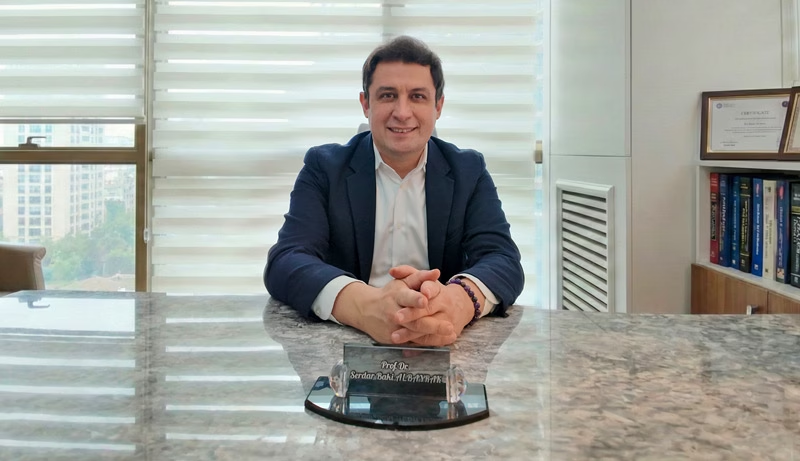
Prof. Dr. Serdar Baki Albayrak
Neurosurgeon · Full Professor of Neurosurgery
Pituitary surgery works millimeters from the optic nerves and the carotid arteries. So Prof. Albayrak plans it with endocrinology and eye specialists, from first tests to follow-up.
His first-author review of intraoperative MRI (2004) lists pituitary adenomas among its main uses. He trained in neurosurgery at Istanbul University. He then took clinical fellowships in Helsinki and at Harvard Medical School.
27+Years
5,000+Operations
64Countries
33Publications
Figures from Prof. Albayrak's professional profile, September 2026. See his full publication list.
Request an AppointmentFrequently Asked Questions
Is pituitary surgery dangerous?
Every operation carries risks, and this one works near the optic nerves and major arteries. Common problems, such as thirst or a small fluid leak, are often temporary. Still, ask your surgeon which risks apply to your tumor.
Can a pituitary tumor come back after surgery?
Yes, sometimes, especially when part of the tumor stays behind. For this reason, follow-up MRI and hormone tests continue for years. If it regrows, a second operation, medicine or radiation can help.
Are pituitary tumors hereditary?
Usually not, since most develop by chance. A few run in families, for example with MEN1 syndrome or Carney complex. So tell your doctor if relatives had pituitary or other hormone gland tumors.
Can I get pregnant after treatment for a prolactinoma?
Often, yes. Tablets that lower prolactin very often restore fertility. With a large prolactinoma, however, some women choose surgery before trying to conceive.
Prof. Albayrak's Published Research
Prof. Albayrak's publications below relate to pituitary surgery and its differential diagnosis. His MRI review names pituitary adenomas among its main uses; his chapter covers meningiomas. The full list of his 33 publications is on his profile.
Public health information
- National Cancer Institute. What Are Pituitary Tumors?
- National Cancer Institute. Pituitary Tumors Signs and Symptoms.
- National Cancer Institute. Pituitary Tumors Diagnosis and Prognosis.
- National Cancer Institute. Pituitary Tumors Treatment.
- MedlinePlus. Pituitary tumor.
- MedlinePlus. Pituitary apoplexy.
- MedlinePlus. Hypopituitarism.
- MedlinePlus. CSF leak.
- MedlinePlus. Brain surgery: discharge.
- NIDDK. Prolactinoma.
- NIDDK. Acromegaly.
- NIDDK. Cushing's Syndrome.
- NICE. Endoscopic transsphenoidal pituitary adenoma resection (HTG14).
- UK Civil Aviation Authority. Surgical conditions.
- US CDC. Medical tourism.
- GOV.UK, DVLA. Neurological disorders: assessing fitness to drive.
This page gives general medical information and does not replace a consultation. Diagnosis and treatment decisions need an examination by your own doctor.
Last updated: 1 October 2026. Website editor: Prof. Dr. Serdar Baki Albayrak's clinic, [email protected].
Plan Your Pituitary Surgery Consultation in Istanbul
Request an appointment with Prof. Dr. Serdar Baki Albayrak. The team then helps you plan the dates of your visit.
Request an Appointment