
Paid online consultations are available by appointment. For booking, please contact us via Whatsapp.

What Is Essential Tremor Surgery?
Essential tremor surgery calms the tremor by acting on the thalamus, deep in the brain. The main operation, deep brain stimulation (DBS), places a thin electrode in a tiny target. However, doctors consider it only when medicines no longer control a disabling tremor.
Essential tremor itself is one of the most common movement disorders. It makes the hands shake during action, such as drinking or writing. However, it is not Parkinson's disease, and it does not shorten life.
Besides DBS, focused ultrasound and similar methods can also treat the tremor. In contrast, they leave no implant but make a tiny permanent lesion in the same area.
At a Glance
- What it isShaking during action, mostly in both hands
- Not Parkinson'sParkinson's tremor shows at rest; this one comes with movement
- First treatmentDaily changes and medicines, such as propranolol or primidone
- When to consider surgeryA disabling tremor despite at least two medicines
- Main operationDBS of the thalamus (VIM), adjustable and reversible
- Flying homeUK guidance advises about 7 days after brain surgery
Where Are You in Your Decision?
First, pick the line that sounds most like you. Each line then opens the part of this guide that answers it.
- 01Not sure it is essential tremorHow it differs from Parkinson's and other tremors
- 02Medicines help less than beforeTreatment without surgery, and its limits
- 03Wondering whether surgery suits youWho qualifies, and who should wait
- 04Comparing DBS with focused ultrasoundFour surgical options side by side
- 05Worried about the risksSurgery, device and stimulation side effects
- 06Planning surgery from abroadStay, flights, programming and follow-up
Essential Tremor Symptoms
The main symptom is a rhythmic shaking of both hands during action. Also, it usually grows slowly over years, and one hand often shakes more.
Shaking during everyday tasks
Typically, the tremor appears when you hold a cup, write or button a shirt. It also shows when you stretch your arms out in front of you.
At rest, in contrast, the hands usually stay calm. Handwriting then becomes large and shaky, rather than small and cramped as in Parkinson's.
Head, voice and other areas
Over time, the tremor can spread to the head. It may then move as if saying yes or no; the voice can also sound shaky.
Less often, the jaw, tongue or legs shake too. Weakness or numbness, however, points to another cause.
What makes it worse
For example, stress, tiredness, caffeine and cold often make the shaking stronger. Some medicines can also worsen it, such as certain asthma medicines.
A small amount of alcohol may calm the tremor for an hour or two. Still, doctors do not recommend alcohol as treatment, because the risks outweigh the brief relief.
Questions at this stage
Can essential tremor turn into Parkinson's disease?
No: they come from different brain circuits, so one does not turn into the other. Still, some studies suggest a higher risk of Parkinson's later in life. So a new tremor at rest deserves a fresh check.
Is essential tremor hereditary?
Often, yes. According to NINDS, it runs in families in 50 to 70% of cases. Familial forms also tend to start earlier in life.
Essential Tremor vs Parkinson's Tremor
The key difference is timing: essential tremor comes with action, Parkinson's tremor at rest. This difference matters, because each condition needs a different treatment and a different DBS target.
| Feature | Essential tremor | Parkinson's disease |
|---|---|---|
| When it shakes | During action and with arms held out | At rest; it eases with movement |
| Sides | Both hands, often one more than the other | Starts on one side, spreads later |
| Other signs | Head or voice tremor | Slowness, stiffness, small steps, less facial expression |
| Handwriting | Large and shaky | Gets smaller |
| Family history | Common | Usually absent |
| Alcohol | Often eases it briefly | No clear change |
| First medicines | Propranolol, primidone | Levodopa |
| DBS target | Thalamus (VIM) | Subthalamic nucleus or globus pallidus |
Other Causes of Shaking Hands
Several other conditions also cause tremor, so doctors rule them out first:
- An overactive thyroid, too much caffeine or some medicines, which strengthen normal tremor
- Dystonic tremor, with muscles that pull the neck or hand into a posture; see dystonia and its surgical treatment
- Cerebellar tremor, which grows as the hand nears a target, for example after a stroke or with a cerebellar tumor
- Functional tremor, which changes with attention and fades with distraction
When to See a Doctor About a Tremor
See a doctor if a tremor gets worse over time or affects daily life. The NHS also gives this advice, since treatment can often reduce the shaking.
Book a doctor's visit if:
- A new tremor appears, or an old one worsens
- Shaking makes eating, writing or work hard
- Your tremor medicines cause side effects
- Your head or voice starts to shake
Call 911, 999 or 112 at once for:
- A tremor on one side that starts within hours
- Tremor with weakness, slurred speech or a drooping face
- Tremor with high fever, sweating and confusion
- Fast-rising tremor and restlessness after a new medicine
Essential tremor grows over years, not hours. So a sudden change suggests another problem, such as a stroke, infection or drug reaction. Get help where you are.
A new one-sided tremor with headache or weakness can also signal a growth; see brain tumour symptoms.
How Doctors Diagnose Essential Tremor
No blood test or scan proves essential tremor, so the diagnosis rests on an examination. Tests then rule out other causes.
- Examination: hands at rest and held out, finger to nose, writing and spiral drawing
- Blood tests: thyroid and liver tests, and copper levels in some cases
- Brain MRI: when the tremor affects one side or other signs appear
- DaT scan: when Parkinson's disease remains possible; in essential tremor, it looks normal
- Tremor recording: measures the shaking, which helps before surgery
Doctors confirm it after at least three years of tremor without other neurological signs. MedlinePlus notes that the shaking usually runs at 4 to 12 movements per second.
Is there a test for essential tremor?
Not a single one. In fact, blood tests and scans usually look normal in essential tremor. Instead, they rule out thyroid disease, medicine effects and Parkinson's disease.
Essential Tremor Treatment Without Surgery
Treatment follows how much the tremor limits daily life. A mild tremor may need no treatment at all. A disabling one, however, usually starts with medicines.
Medicines for Essential Tremor
The two most common medicines are propranolol, a beta-blocker, and primidone, an anti-seizure medicine. According to NINDS, medicines help about half of people with tremor. Yet they reduce the shaking rather than stop it.
Propranolol, for example, can cause tiredness or a slow heartbeat, and it may worsen asthma. Primidone, in turn, can cause drowsiness and balance problems, so doctors start it slowly. Also, never change these medicines on your own.
Botulinum Toxin Injections
Injections can also ease head and voice tremor, which medicines help less. Their effect lasts about three to four months, so they need repeating. In the hands, however, they can weaken grip, so doctors rarely choose them there.
Daily Steps That Help
First, cutting down on caffeine and sleeping well often reduce the shaking. Weighted cutlery, a heavier bracelet and cups with lids also make meals easier. In addition, an occupational therapist can suggest tools for your own routine.
When to Consider Surgery for Essential Tremor
Surgery becomes an option when the tremor disrupts daily life despite medicines. Usually, that means at least two medicines tried at adequate doses. For example, you may struggle to hold a cup, eat, sign your name or work.
Surgery is worth discussing if:
- Tremor stops you from eating, writing or working
- Two or more medicines failed or caused side effects
- Your doctor has confirmed essential tremor
- Your general health allows an operation
Surgery may need more thought if:
- Heart disease or another illness remains uncontrolled
- Memory problems have become severe
- Another condition may explain the tremor
Who Selects Patients for Surgery
In the UK, NICE supports DBS for tremor outside Parkinson's disease. It also advises that a specialist movement disorder team selects patients.
Is there an age limit for essential tremor surgery?
There is no strict upper limit. Instead, the surgeon weighs your general health, memory and goals. In fact, some people over 80 do well after DBS.
Which doctor should I see for essential tremor?
Start with a neurologist, ideally one who treats movement disorders. Once medicines stop helping, a neurosurgeon joins to discuss surgery. Ideally, both work together in one team.
Essential Tremor Surgery Options Compared
Overall, all four operations target the same tremor junction in the thalamus. DBS stimulates it with adjustable current, while the others make a tiny permanent lesion.
Prof. Albayrak treats essential tremor with DBS. The other methods appear here so that you can compare them.
Four Options Side by Side
| Option | How it works | Both sides? | Can it change later? | Main downsides |
|---|---|---|---|---|
| Deep brain stimulation (DBS) | An electrode in the thalamus, linked to a chest battery | Yes, often in one operation | Yes; the team adjusts it or switches it off | Brain surgery, an implant, battery changes, infection risk |
| MRI-guided focused ultrasound | Sound waves heat a tiny spot, with no incision | Usually one side; some centers treat the other side months later | No; the lesion stays | Numbness or unsteadiness; some skulls block the waves |
| Radiofrequency thalamotomy | A thin probe heats a tiny spot through a small hole in the skull | Usually one side | No; the lesion stays | Bleeding, numbness, unsteadiness; speech risk on both sides |
| Radiosurgery thalamotomy | Focused radiation makes the lesion, with no opening | Usually one side | No; the lesion stays | Benefit builds slowly over months; side effects can appear late |
Focused Ultrasound: Who It Suits
MRI-guided focused ultrasound sends sound waves through the skull to heat one tiny spot. You stay awake in the scanner while the team tests your tremor step by step.
It generally suits one-sided tremor in people who prefer to avoid an implant. In 2018, however, the UK's NICE found the evidence on its benefit limited. It also asks that patients hear about options that treat both sides.
Radiofrequency and Radiosurgery
Radiofrequency thalamotomy heats the target with a thin probe through a small hole. Radiosurgery, in contrast, aims focused radiation at it without any opening. On both sides, however, such lesions carry a higher risk of speech and balance problems.
For tremor in both hands, DBS therefore usually fits better.
Is focused ultrasound better than DBS for essential tremor?
Neither suits everyone. Focused ultrasound avoids an implant but usually treats one side, permanently. DBS treats both sides, including head and voice tremor, and stays adjustable.
Deep Brain Stimulation for Essential Tremor
In DBS for essential tremor, a thin electrode sits in the VIM of the thalamus. A battery under the collarbone powers it, much like a heart pacemaker. Our deep brain stimulation guide explains the device and its batteries in detail.
The Operation Step by Step
Prof. Albayrak plans the route with a stereotactic frame and neuronavigation. As a result, the electrode can reach a target only millimeters wide. In his practice, the whole operation usually takes about 3-5 hours.
- A light frame holds your head still, and scans map the target.
- Through a small opening in the skull, the surgeon guides the electrode to the VIM.
- While you are awake, test stimulation runs as you hold a cup or draw a spiral.
- Once the tremor settles, the electrode stays in place; the other side follows if needed.
- Under general anesthesia, the surgeon then places the battery below the collarbone.
Why You Stay Awake for the Test
The brain itself feels no pain, and local anesthetic numbs the scalp. Often, the tremor then stops the moment the test current flows. That moment confirms the position before the team fixes the electrode in place.
Do I have to be awake during essential tremor surgery?
In Prof. Albayrak's practice, you stay awake only for the testing part. Then the team puts you to sleep to place the battery. Some centers use general anesthesia throughout, with imaging during surgery.
Risks and Side Effects of Essential Tremor Surgery
DBS is brain surgery, so it carries real risks, although serious problems are uncommon. Many side effects of stimulation, moreover, ease once the team changes the settings.
Surgery and device
- Bleeding in the brain, which can cause a stroke
- Infection at a wound or around the battery
- A wire that breaks or moves, needing another operation
- Short-term confusion, mostly in older adults
- Battery replacement every few years; rechargeable ones last longer
Stimulation
- Tingling in the hand or face
- Slurred speech or unsteady walking, more often with both sides
- A feeling of pulling in the muscles
- Most of these ease with new settings
Lesion methods avoid an implant, but numbness or poor balance can last. Your own risk also depends on age, general health and the number of sides treated. For typical figures from large patient series, see the risks in our DBS guide.
Programming, Results and Recovery
DBS works in two steps: surgery places the electrode, and programming tunes it. Then, in Prof. Albayrak's practice, the best settings usually emerge within about three months.
A Typical Timeline
| When | What usually happens |
|---|---|
| Days 1-3 | Hospital stay; walking and wound care begin |
| About 1 week | Wound check; your surgeon confirms whether you can fly |
| Weeks 2-4 | Switch-on, once the swelling around the electrode settles |
| Weeks 4-6 | Back to work for most people; still no heavy lifting |
| Months 2-3 | Further programming visits until the settings feel right |
How Much Will the Tremor Improve?
Many people regain everyday tasks, such as drinking from a cup or writing. Still, zero tremor is not always possible, and head or voice tremor responds less. Over the years, the team may also raise the settings as the tremor slowly progresses.
Daily Life With the Device
In the first months, avoid heavy lifting, extreme neck bending and knocks to the battery. Even so, most people return to work within four to six weeks.
Carry your device ID card at all times, including when you travel. Many modern systems also allow MRI scans under set conditions. So always show the card before any scan.
Will I still need tremor medicines after DBS?
Many people need lower doses, and some stop their medicines. However, your doctor makes these changes gradually, guided by your tremor. Do not stop any medicine on your own.
Coming to Istanbul from the US, Canada, the UK or Europe
DBS for essential tremor needs a travel plan for two stages: the operation, then programming. So agree on both with the team before you book flights.
How Long to Stay in Istanbul
First, allow time for the consultation, tests, the operation and 2-3 days in hospital. Then rest at a nearby hotel until a wound check about a week later. Overall, that usually means about two weeks in Istanbul.
Switch-On and Programming
Because switch-on usually follows 2-4 weeks after surgery, choose one of three plans. You can stay longer in Istanbul, return for switch-on, or start programming at home.
For the third plan, find a DBS center or neurologist near home before surgery. Also ask which device brand you will receive, since programming equipment differs by brand.
When You Can Fly Home
First, UK aviation guidance advises about 7 days between brain surgery and a flight. The US CDC also warns that flying after surgery raises the risk of blood clots. So your surgeon confirms the date after the wound check.
Follow-Up and Driving at Home
Before you leave, ask for your discharge summary, device details and current settings. Then share them with your local doctor and programming team.
In the UK, you must not drive after DBS until a doctor confirms your recovery. DVLA guidance adds that you need not report the DBS itself. Elsewhere, rules differ, so ask your doctor before you drive.
For insurance and Medicare, see brain surgery in Turkey: planning from the US. For NHS rules and travel insurance, see planning from the UK. From Canada, check with your provincial health plan and private insurer before you book.
Your treatment in Istanbul
From Your First Message to Programming
Essential tremor surgery in Istanbul follows four steps. Each step then answers one practical question.
STEP 01
Request an appointment
Use the form on this page, WhatsApp or call +90 532 308 97 72. A short message is enough, such as your diagnosis, country and travel dates.
STEP 02
Consultation and tests in Istanbul
First, Prof. Albayrak examines your tremor at his clinic in Teşvikiye. If another cause remains possible, further tests come first. Before surgery, a brain MRI, blood tests and an anesthesia check then follow.
Also bring a list of the tremor medicines you have tried and their effects.
STEP 03
Surgery and hospital stay
If you choose DBS, the operation takes place in a hospital in Istanbul. Prof. Albayrak names the hospital at the consultation, along with the likely stay.
STEP 04
Recovery, switch-on and follow-up
After discharge, you then rest at a nearby hotel, ideally with a companion. About a week later, your surgeon checks the wounds and confirms that you can fly.
Back home, get urgent help for any of these signs:
- Fever, redness or discharge at a wound or over the battery
- A sudden, severe headache or a seizure
- New weakness, confusion or trouble speaking
What if my tremor suddenly returns after DBS?
First, check the battery and device status with your patient controller. If the tremor stays, then contact your programming team promptly. A sudden return can mean a flat battery or a wire problem.
Your Essential Tremor Surgeon in Istanbul
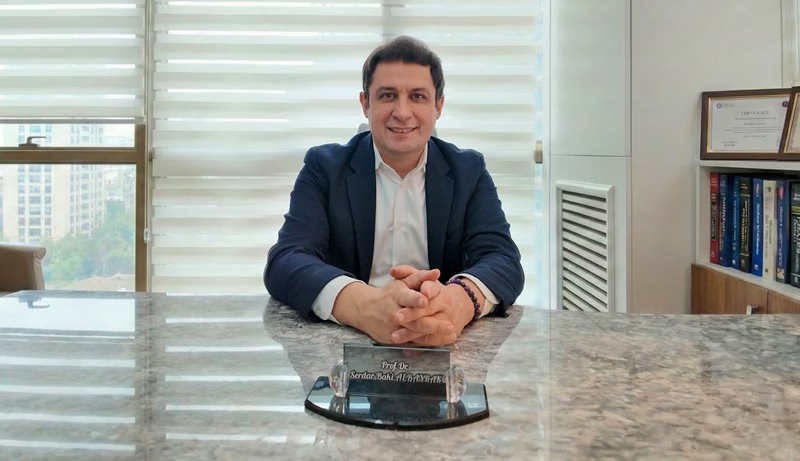
Prof. Dr. Serdar Baki Albayrak
Neurosurgeon · Full Professor of Neurosurgery
Prof. Albayrak performs DBS for essential tremor with a stereotactic frame and neuronavigation. He tests the electrode while you are awake, so the tremor itself confirms the target.
He completed his neurosurgery training at Istanbul University in 2004. Clinical fellowships then followed at the University of Helsinki and at Harvard Medical School. Consultations take place in English or Turkish.
27+Years
5,000+Operations
64Countries
33Publications
Figures from Prof. Albayrak's professional profile, September 2026. See his full publication list.
Request an AppointmentFrequently Asked Questions
Can essential tremor be cured?
Not yet. Medicines and surgery control the tremor, but none removes its cause. Still, DBS can return everyday tasks to many people for years.
Does essential tremor get worse with age?
Usually, it grows slowly stronger over the years. It often spreads from the hands to the head and voice. Tremor that starts later in life also tends to progress faster.
What is the success rate of essential tremor surgery?
Many people regain tasks such as eating and writing after DBS. However, studies measure success differently, and results vary. So ask your surgeon what to expect for you.
How much does essential tremor surgery cost in Turkey?
Overall, the cost depends on the device, the hospital stay and the tests you need. A rechargeable battery, for example, changes the total. So ask for the cost of your plan at the consultation, before you decide.
Prof. Albayrak's Published Research
Prof. Albayrak has not published on essential tremor itself. His closest paper reviews intra-operative MRI, the imaging that guides precise brain surgery. See his full list of 33 publications.
Public health information
- National Institute of Neurological Disorders and Stroke. Tremor.
- MedlinePlus Medical Encyclopedia, US National Library of Medicine. Essential tremor.
- MedlinePlus Genetics, US National Library of Medicine. Essential tremor.
- NHS. Tremor or shaking hands.
- NHS. Symptoms of a stroke.
- NICE. Deep brain stimulation for tremor and dystonia (excluding Parkinson's disease), HTG122.
- NICE. Unilateral MRI-guided focused ultrasound thalamotomy for treatment-resistant essential tremor, HTG474.
- UK Civil Aviation Authority. Surgical conditions: guidance for health professionals.
- US Centers for Disease Control and Prevention. Medical tourism.
- GOV.UK, Driver and Vehicle Licensing Agency. Neurological disorders: assessing fitness to drive.
This guide gives general medical information and does not replace a consultation. Diagnosis and treatment decisions need an examination by your own doctor.
Last updated: 1 October 2026. Website editor: Prof. Dr. Serdar Baki Albayrak's clinic, [email protected].
Plan Your Essential Tremor Consultation in Istanbul
Request an appointment with Prof. Dr. Serdar Baki Albayrak. The team then helps you plan the dates for surgery and programming.
Request an Appointment