
Paid online consultations are available by appointment. For booking, please contact us via Whatsapp.

What Is Neuromonitoring During Surgery?
Intraoperative neuromonitoring (IONM) checks your brain, spinal cord and nerves live while you sleep. Small electrodes send tiny signals along these pathways and record the answers. If an answer weakens, the team then warns the surgeon at once.
Neuronavigation does a different job. Like GPS, it shows where an instrument sits on your MRI or CT. Monitoring tells the surgeon how the nerves work, while navigation tells him where he is.
This article explains both tools. For tumors, see our brain tumor surgery page. For disc problems, see herniated disc surgery.
At a Glance
- When it startsAfter you fall asleep; you feel nothing
- What it watchesMovement, feeling, hearing and key nerves
- Who reads itA neurophysiology specialist, beside the surgeon
- Main useBrain tumors, skull base and complex spine surgery
- NavigationA live map of your MRI or CT, like GPS
- Main limitIt lowers risk but cannot remove it
What Would You Like to Know?
First, pick the question closest to yours. Each line then takes you to the matching part of this article.
- 01How does monitoring work while I sleep?Electrodes, signals and the person who reads them
- 02What do SSEP, MEP and EMG mean?Each test, in one table
- 03Do I need it for my operation?Brain, skull base and spine
- 04What if a signal changes?What the team does next, and the limits
- 05How does navigation guide the surgeon?GPS for the brain and spine
- 06I am planning surgery in IstanbulWhat to ask before you travel
How Does Neuromonitoring Work During Brain Surgery?
Think of it as a parking sensor for your nerves. Once you sleep, a technologist places small electrodes on the scalp, arms and legs. Then a machine sends tiny signals and records how your nervous system answers.
- Setup: placing the electrodes usually takes about 15 to 20 minutes, after anesthesia starts
- Baseline: the team first records your normal signals, so every later reading has a reference
- Live watch: a specialist follows the waves on a screen for the whole operation
- Warning: if a wave drops or slows, the specialist tells the surgeon right away
Three People, One Signal
The surgeon, the monitoring specialist and the anesthetist work as one team. However, some anesthetic drugs dampen the signals. So the anesthetist adjusts them to keep the readings clear.
Prof. Albayrak makes neuromonitoring a standard step in operations with nerve risk. For example, he uses it near the spinal cord and near movement or speech areas.
Does neuromonitoring hurt?
No. The team places the electrodes once you sleep and removes them before you wake. Afterwards, small red marks may show on the skin, but they usually fade within hours.
SSEP, MEP, EMG and the Other Tests Explained
Each test watches one part of the nervous system. So the team picks a mix that fits your operation. For example, a brain tumor case often uses three at once.
| Test | What it watches | Typical use |
|---|---|---|
| SSEP (sensory evoked potentials) | The pathways for touch and position sense | Spine surgery, spinal cord tumors |
| MEP (motor evoked potentials) | The pathways that move arms and legs | Brain tumors near movement areas, spinal cord surgery, scoliosis |
| Free-run EMG | Muscle activity when a nerve gets irritated | Facial nerve, nerve roots |
| Triggered EMG | A nerve's answer to a direct, tiny pulse | Finding a nerve; checking spinal screws |
| D-wave | The main movement tract inside the spinal cord | Tumors inside the spinal cord |
| BAEP | The hearing nerve and brainstem | Acoustic neuroma, brainstem surgery |
| VEP (visual evoked potentials) | The pathway from the eyes to the brain | Selected tumors near the optic nerves |
| EEG and cortical mapping | Brain surface activity; where movement sits | Tumors near the motor cortex, epilepsy surgery |
EMG and EEG also exist as ordinary clinic tests, which MedlinePlus explains simply. In surgery, however, the same ideas run nonstop for hours.
For speech, monitoring under anesthesia has a limit, because you cannot talk while asleep. So, near language areas, the surgeon may choose awake craniotomy with brain mapping instead.
Which Operations Use Neuromonitoring?
Monitoring helps most where one wrong millimeter could cost movement, feeling or hearing. For simpler, low-risk operations, many surgeons decide case by case.
Brain and Skull Base
- Tumors next to movement or sensory areas, often together with navigation
- Acoustic neuroma surgery, where EMG protects the facial nerve and BAEP watches hearing
- Skull base tumors and brainstem tumors, close to the nerves for swallowing and the face
- Aneurysm and AVM surgery, to warn of reduced blood flow
Spinal Cord and Spine
- Spinal cord tumors, especially those inside the cord
- Tethered cord release, where EMG separates working nerve roots from the tight band
- Deformity correction and fusion with screws, such as spinal fusion surgery
- Decompression for cervical myelopathy, where the cord already has less reserve
Is Neuromonitoring Necessary for Every Operation?
No. Research supports it most in high-risk work, such as spinal cord tumors and deformity correction. For routine lumbar disc surgery, however, the benefit looks less clear, and practice varies.
So the honest answer depends on your scan and your operation. Ask your surgeon which tests he plans, and why. Equally, ask what he does instead when he leaves monitoring out.
Is neuromonitoring used in herniated disc surgery?
Sometimes. In a simple one-level lumbar operation, many surgeons rely on direct sight under the microscope. When the operation involves screws, a narrow canal or the neck, monitoring becomes more common.
What Happens When a Signal Changes?
A change does not mean damage has happened. Rather, it works as an early warning. The team then checks the cause step by step, usually within minutes.
- Check the setup: a loose electrode or a drug change can mimic a real drop
- Support the body: the anesthetist may raise blood pressure or adjust the anesthetic
- Pause and relieve: the surgeon stops, loosens a retractor or rinses the area with warm fluid
- Change the plan: he may reposition a screw or leave a thin layer of tumor in place
Most signals then recover. If one does not, that finding still guides care after surgery.
What Monitoring Cannot Do
Monitoring lowers risk, but it cannot promise a perfect result. False alarms occur, and in rare cases a problem shows no warning at all. Equally, it does not replace the surgeon's experience and careful technique.
Monitoring, Navigation and Other Tools Compared
Each tool answers one question. So the safest plan often combines two or three of them.
| Tool | Question it answers | Main limit |
|---|---|---|
| Neuromonitoring | Do my movement, feeling and nerve pathways still work? | Cannot test speech under anesthesia |
| Neuronavigation | Where exactly is the instrument on my scan? | Brain shift during surgery |
| Awake mapping | Where do speech and movement sit in my brain? | Needs a calm, cooperative patient |
| 5-ALA fluorescence | Which tissue holds fast-growing tumor cells? | Weak in low-grade tumors |
| Ultrasound or MRI during surgery | How much tumor is left right now? | Adds time; MRI needs a special room |
Our article on 5-ALA brain tumor surgery explains the glowing dye in detail.
How to Prepare, and the Small Risks
You need no special preparation. Still, tell the team a few things first, since they affect the electrodes and drugs.
- Every medicine you take, including herbal products
- Any past seizure, nerve damage or neurological illness
- A pacemaker or any other implant
- Skin allergies, for example to adhesive tape
Possible Side Effects
Side effects stay uncommon and usually minor. Small red marks at the electrode sites fade quickly.
MEP pulses make muscles twitch, so a soft bite block protects your tongue. Rarely, the pulses can also trigger a short seizure, which the team treats at once.
Tell the team before surgery about:
- Seizures or epilepsy in the past
- Any pacemaker or implant
- Loose teeth or dental work
- All medicines and supplements
Go to the nearest emergency department if, after you go home, you have:
- New weakness or numbness in an arm or leg
- A sudden, severe headache or vomiting
- A seizure or new confusion
- Loss of bladder or bowel control
Questions to Ask Your Surgeon
Good questions show how these tools fit your own operation. So bring this list to your consultation, together with every scan on disc.
- Which monitoring tests will you use for my operation, and why?
- Who reads the signals, and do they sit in the room?
- Will you use navigation, and how do you handle brain shift?
- Should I have awake surgery instead, given where my tumor sits?
- What will you do if a signal drops during the operation?
- Which of my medicines should I stop or report?
Comparing the answers helps you judge any plan calmly. A second opinion also fits here, as long as it does not delay urgent surgery.
Planning Brain or Spine Surgery in Istanbul From Abroad
A consultation comes first, before any decision. Bring every MRI and CT on disc and the written reports. Prof. Albayrak then examines you and explains which tools your operation needs.
Monitoring and navigation add little to the trip itself. However, navigation may need a fresh planning scan in Istanbul, so allow a day. Also, read our article on flying after brain surgery before you book the return.
Our guide covers US planning, UK planning and a travel checklist. Then, for the weeks after surgery, see recovery after brain tumor surgery.
Your care in Istanbul
From Your First Message to a Clear Plan
Your care in Istanbul follows four clear steps. The consultation comes first, so nothing commits you to surgery in advance.
STEP 01
Request an appointment
Use the form on this page, WhatsApp or call +90 532 308 97 72. A short message is enough: your diagnosis, your country and your travel dates.
You can write in English or Turkish, so use whichever feels easier. The team then agrees the consultation date with you.
STEP 02
Consultation in Istanbul
First, Prof. Albayrak examines you in Teşvikiye and goes through your scans with you. He then explains whether surgery fits and which safety tools he plans to use. Bring these to the visit:
- Every MRI and CT on disc, with the dates
- Any earlier surgery or nerve test report
- A list of your medicines, including herbal products
STEP 03
Surgery, if you need it
If you choose surgery, the operation takes place in a hospital in Istanbul. Prof. Albayrak names the hospital at the consultation, and also gives the likely stay.
STEP 04
Discharge report and next steps
Before you leave, you get a written summary and a plan for the next scan. Then your doctor at home can continue from there.
Does the discharge report include the monitoring results?
Yes, the summary notes any important signal change and how it settled. So keep it with your scans, and show it to your doctor at home.
Your Neurosurgeon in Istanbul
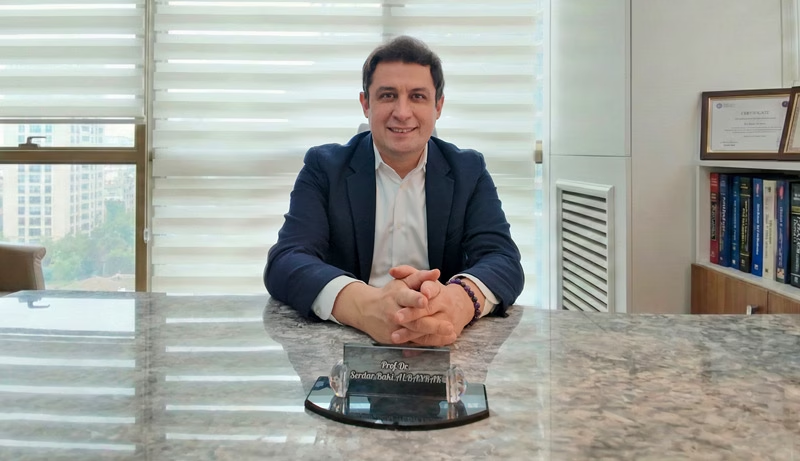
Prof. Dr. Serdar Baki Albayrak
Neurosurgeon · Full Professor of Neurosurgery
Prof. Albayrak operates on the brain and spine with the microscope, monitoring and navigation. Above all, he aims for treatment that keeps your movement, feeling and speech safe.
He completed his neurosurgery training at Istanbul University in 2004. He then took clinical fellowships at the University of Helsinki and Harvard Medical School. At Harvard, he trained at Brigham and Women's Hospital.
27+Years
5,000+Operations
64Countries
33Publications
Figures from Prof. Albayrak's professional profile, September 2026. See his full publication list.
Request an AppointmentFrequently Asked Questions
Does neuromonitoring make the operation longer?
Only a little. Setup takes about 15 to 20 minutes after you fall asleep. A pause after a warning adds time, but that pause protects you.
Can children have neuromonitoring?
Yes. Children's brain and spine operations use it as well. The team adjusts the electrodes and pulse strength to the child's size and age.
Will I remember anything from the monitoring?
No. Under general anesthesia you sleep through it. Awake craniotomy differs, because there you talk with the team during part of the operation.
Does navigation mean a robot does the operation?
No. Navigation only shows positions on a screen. The surgeon makes every move and decision, and he checks the screen against his view.
Prof. Albayrak's Published Research
None of his papers studies neuromonitoring as such, so these two cover the closest ground. The first reviews MRI during surgery, which updates navigation when the brain shifts. The second describes tethered cord release in children, where nerve roots need careful protection.
Each link opens PubMed. His full list of 33 publications is also on his profile.
- Intra-operative magnetic resonance imaging in neurosurgery
- Tethered cord syndrome in childhood: special emphasis on the surgical technique and review of the literature with our experience
Public health information
- MedlinePlus. Electromyography.
- MedlinePlus. EEG.
- NHS. EEG (electroencephalogram).
- National Cancer Institute. Adult Central Nervous System Tumors Treatment (PDQ), patient version.
This article gives general medical information and does not replace a consultation. So decisions on surgery and its tools require an examination by your own doctor.
Last updated: 17 November 2026. Website editor: Prof. Dr. Serdar Baki Albayrak's clinic, [email protected].
Facing Brain or Spine Surgery?
Request an appointment with Prof. Dr. Serdar Baki Albayrak. Bring your scans to the consultation, and leave with a clear plan for your operation.
Request an Appointment